Manufacturing in China is undergoing a significant transformation: the country is moving from the image of the 'World's Factory,' based on large-scale and low-cost production, towards an innovation-oriented economy. Instead of attributing China's competitive advantage solely to state subsidies, a more detailed analysis shows that the key driver of growth has been long-term investment in technology, human capital, infrastructure, and industrial coordination.
Evolution of the Industrial Ecosystem
Over the past decade, China has become the world's largest market for industrial robots. According to the Ministry of Industry and Information Technology (MIIT), by 2025, the installed base in the country will exceed half of the global volume. Furthermore, industry reports indicate that China is leading in the growth of service and advanced humanoid robot supplies, highlighting the rapid development of the intelligent robotics sector.
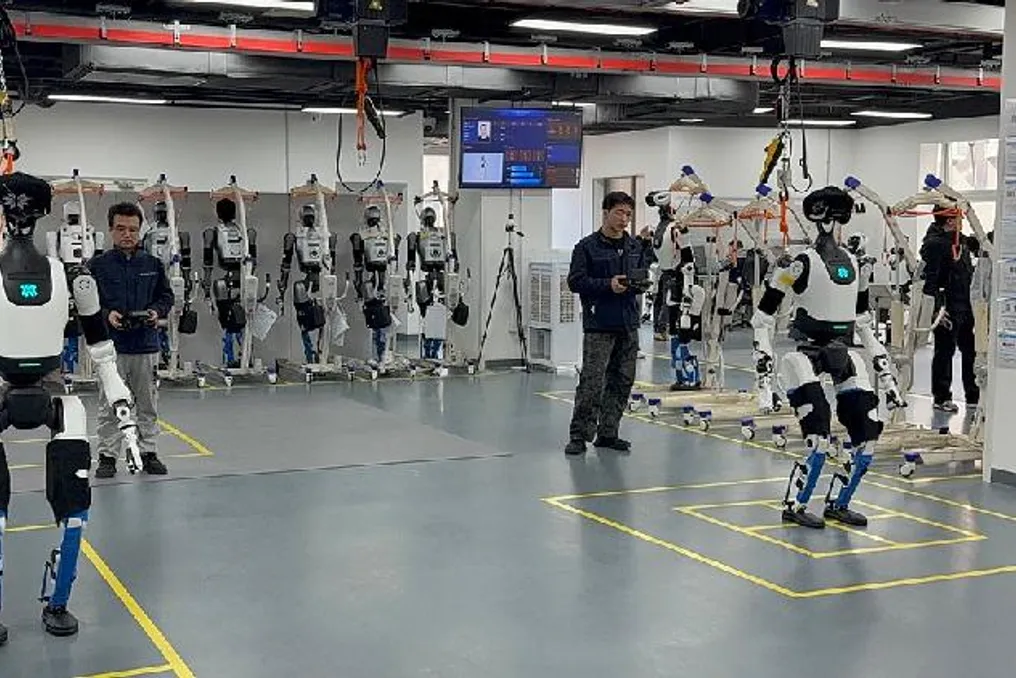
According to academic Qiao Hong of the Chinese Academy of Sciences, China has established a basic technological foundation for humanoid robot mega-factories. This system allows for the production of products with relatively higher quality while reducing costs. Factories are not only assembling robots with robots but also seeing a substantial increase in the domestic substitution of critical components such as servo systems, controllers, and precision reducers.
Strength of the Industrial Structure
China's competitiveness is supported by a powerful industrial system with a well-developed supporting infrastructure. China remains the only country in the world that covers all industrial categories according to the UN classification, including 41 major industrial sectors, 207 industrial categories, and 666 industrial subcategories. This allows companies to quickly move from research to commercialization while reducing production costs through complete supply chain coordination, driven by market competition and expanded practical application, rather than short-term policy support.
Talent and Market-Driven Innovation
In addition to its unique industrial foundation, China possesses the largest cohort of research personnel in the world, as over 270 million people have received higher education, and the tertiary education enrollment rate exceeds 60%. This talent is enhanced by a specific institutional structure: government investments are directed towards fundamental research, major scientific facilities, and strategic technologies, laying the groundwork for future innovations. Meanwhile, companies take on the role of implementing the crucial 'last mile' in terms of market application.
Chinese enterprises have become the main driver of innovation, accounting for over 77% of the total national research and development expenditure. This market-driven momentum is supported by innovation ecosystems that foster close collaboration between industry, academia, and research institutions. For example, in the Zhongguancun area of Beijing, over 20,000 high-tech enterprises operate near world-class universities, leading research institutes, and venture capital funds, creating one of the world's most dynamic innovation hubs.
Development of Key Industries
The results of these efforts are evident in developing industries. In 2025, China's artificial intelligence (AI) industry exceeded 1.2 trillion yuan (approximately 167 billion US dollars), comprising over 6,200 enterprises. Innovative clusters, such as the autonomous driving demonstration zone in Beijing's i-City and the Zhangjiang AI Island in Shanghai, serve as important testing grounds for next-generation technologies, demonstrating the translation of scientific research into industrial-scale products and sectors.
Global Spread of Innovation
China's innovative potential is increasingly spreading onto the world stage. According to the Ministry of Commerce, by March 2026, there were 332 foreign research centers in Beijing, 55 of which were opened in the current year, and 647 such centers in Shanghai, including 15 new ones. Multinational corporations are now not just manufacturing in China; they are implementing innovations there.
This trend is also visible in investment flows. In the first quarter of 2026, actual foreign direct investment in China's high-tech industries reached 102.73 billion yuan (15.05 billion US dollars), a 30.7% increase compared to the previous year, accounting for 41.2% of the country's total FDI, according to ministerial data. At the Davos summit in Dalian in the summer of 2026, participants agreed that China's progress in green energy, digital economy, and advanced manufacturing contributes to increased confidence amid growing global uncertainty.
Steven Mergenthaler, Managing Director and CTO of the World Economic Forum, noted that China's experience in applying AI across various industries can serve as a valuable lesson for developing economies, enabling them to cultivate their own competitive advantages and better position themselves in the global AI value chain.