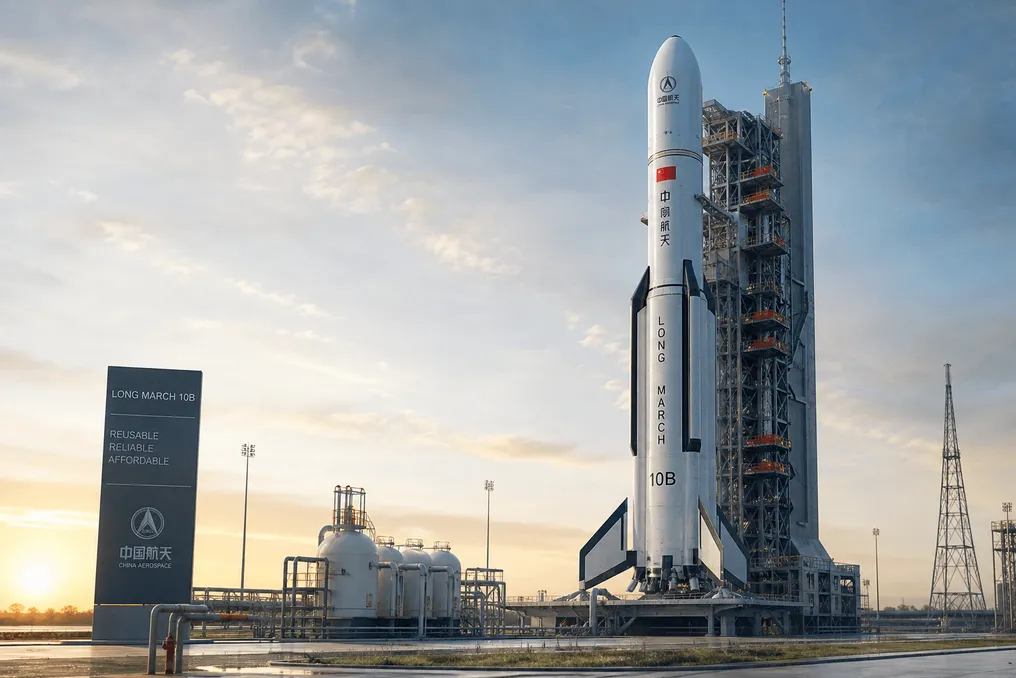
The successful recovery of the first Long March 10B rocket flight on July 10 marked a turning point for China's commercial space industry. However, the industry faces a significant challenge: demonstrating the capability for rapid, reliable, and cost-effective reuse of recovered boosters.
Comparison with Global Peers
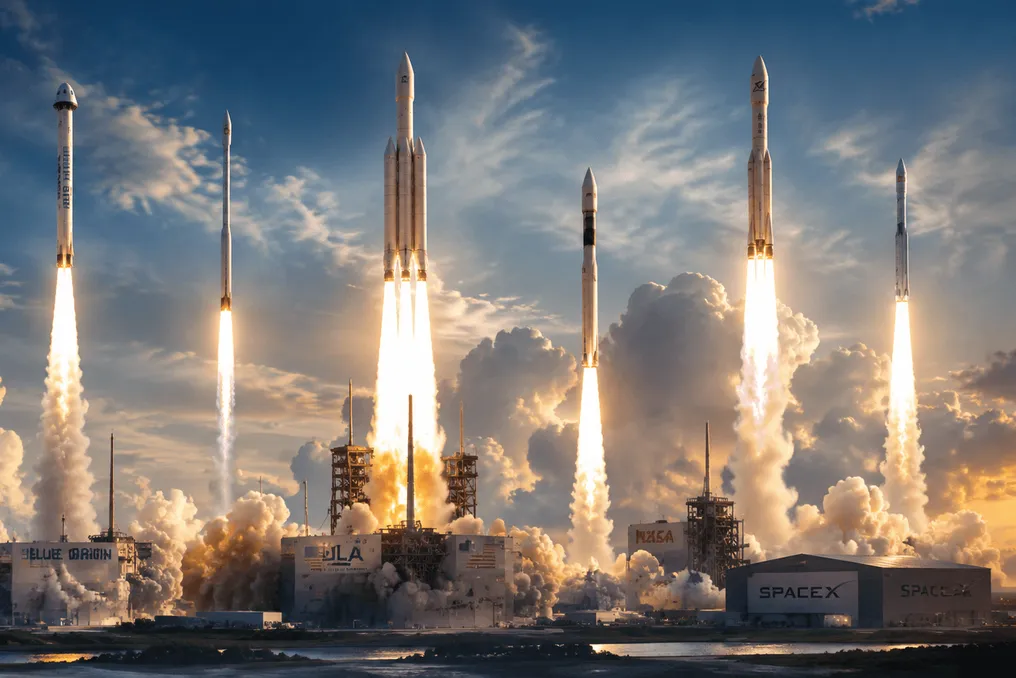
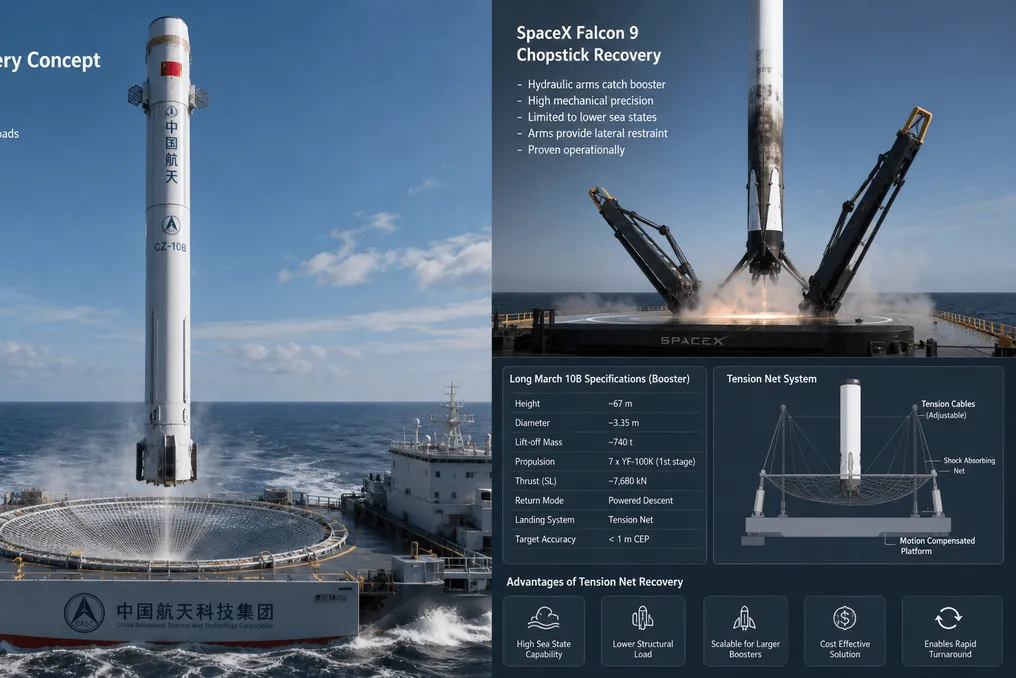
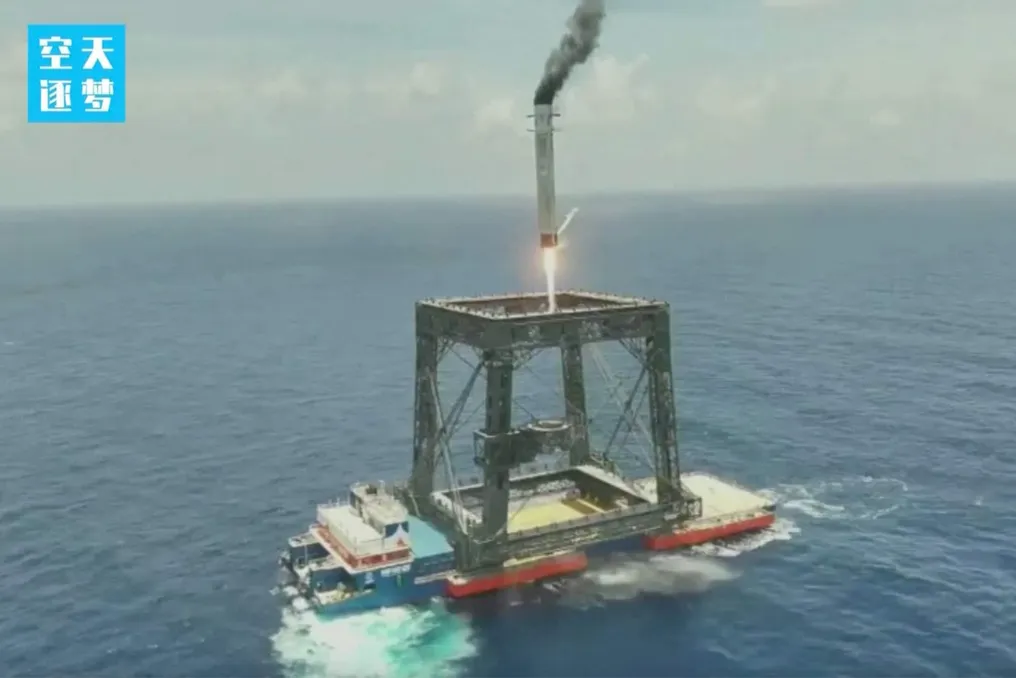
In contrast to SpaceX Falcon 9, which did not recover on its first flight, and New Glenn, which only managed recovery on its second attempt, the CZ-10B achieved the world's first successful flight followed by recovery on a sea platform located 431 kilometers from Wenchang, at an altitude of 144 meters.
Strategies of Chinese Companies
Chinese commercial rocket companies are actively working towards achieving reflight goals. The company LandSpace Zhuque-3 is developing a stainless steel rocket with a liquid-fuel engine running on oxygen and methane, utilizing a landing gear recovery system similar to Falcon 9. After the first attempt in December 2025 ended with an anomaly during final descent, Zhuque-3 Y2 passed static fire tests on June 29. Success in this area will allow China to become the first nation to demonstrate both pure recovery and recovery using landing legs.
Another approach is implemented by JianYuan Technology YX-1, which uses a mechanical manipulator capture method on a sea platform, similar to a 'pole' method. This method combines the fast cycle advantages inherent in Starship tower captures with the safety and flexibility of marine operations. In May 2025, YX-1 successfully demonstrated a controlled water landing, after which the recovered engine underwent four engine-firing tests, confirming the 'flight-descent-recovery-reignition' chain.
Economics and Challenges of Reusability
The economic viability of each method differs. Pure recovery allows for the elimination of complex sea platforms in favor of lighter rockets without the extra weight of landing gear. The 'pole' capture provides the fastest cycle, potentially taking hours instead of days. Landing legs have been proven, but they reduce payload capacity. All three approaches face the same fundamental problem—proving the possibility of multiple uses.
SpaceX has demonstrated over 600 landings and 602 Falcon 9 reflights. Collectively, all Chinese programs have only one instance of recovery. Industry analysts note that the economics of reuse become favorable after the fifth launch, but achieving ten or more launches requires solving issues related to engine life, thermal protection, structural fatigue, and corrosion from marine operations. The CZ-10B design targets over 10 reflights with a 72-hour cycle time.
Blue Origin's recent experience with New Glenn, where the second-flight booster delivered a payload to the wrong orbit, and the subsequent explosion in the test stand destroyed the sole launch pad, serves as a warning about the gap between engineering demonstration and operational reliability. The market reacted immediately: on the day of the CZ-10B recovery, 25 aerospace stocks reached daily limits on the Shanghai and Shenzhen exchanges, and the China Aerospace ETF rose by 5.74%, with trading volume exceeding the 20-day average by threefold. The technology verification phase for China's reusable rockets is complete; the commercial testing phase has begun.