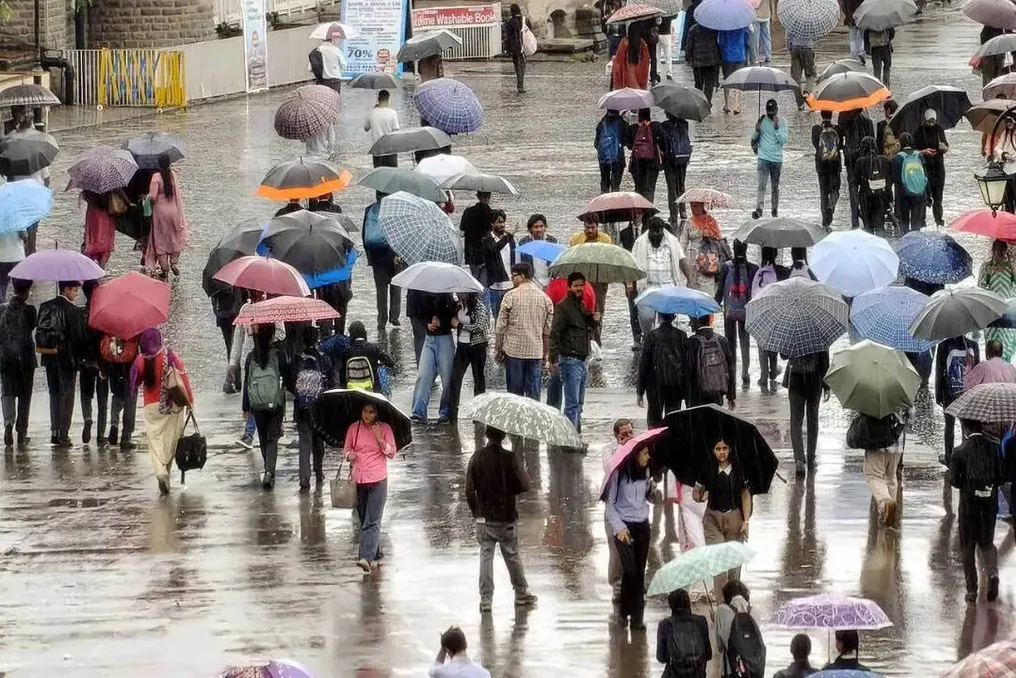
The monsoon in India has weakened again after a week of good rainfall, which reduced the nationwide precipitation deficit from 40% as of the end of June to 14% by July 9. However, the current dry spell increased the overall national deficit to 18% on Sunday, and it may rise further next week.
Weather forecasts and sowing campaign
On Sunday, the India Meteorological Department (IMD) forecasted 'moderate rainfall activity' over the plains of northwestern and west-central India, as well as over the southern peninsula of India for the next six to seven days. This dry period is capable of undermining the progress made in sowing activities last week. Most major crops still have a smaller sown area compared to the same time last year, mainly because the main monsoon region—where agriculture heavily relies on seasonal rains due to limited irrigation—continues to face a significant precipitation deficit.
Regional deficit and El Niño's influence
Despite the forecasts of rain this week, they will not be able to compensate for the monsoon deficit. As of Sunday, 15 states, including Bihar, Jharkhand, Punjab, Gujarat, Chhattisgarh, Kerala, Karnataka, Telangana, and Andhra Pradesh, reported a cumulative monsoon rainfall deficit (from June 1 to July 12) of 20% or more (up to 73%). Regionally, eastern and northeastern India recorded a huge deficit of 37% due to weak rainfall activity in Bihar, Jharkhand, and five northeastern states. Although the meteorological department predicted 'heavy or very heavy' rainfall over northeastern India, Bengal, and Bihar over the next 2-3 days, as well as 'isolated heavy rains' over eastern Uttar Pradesh over the next 4-5 days, this will not be enough to make up for the gap caused by the weak monsoon in a year of strong El Niño.
Nature of the El Niño phenomenon
El Niño is a natural climatic phenomenon characterized by sea surface temperatures above average in the central and eastern equatorial Pacific Ocean. It is invariably associated with a weak monsoon and a hotter summer in India. This climatic event occurs every two to seven years.