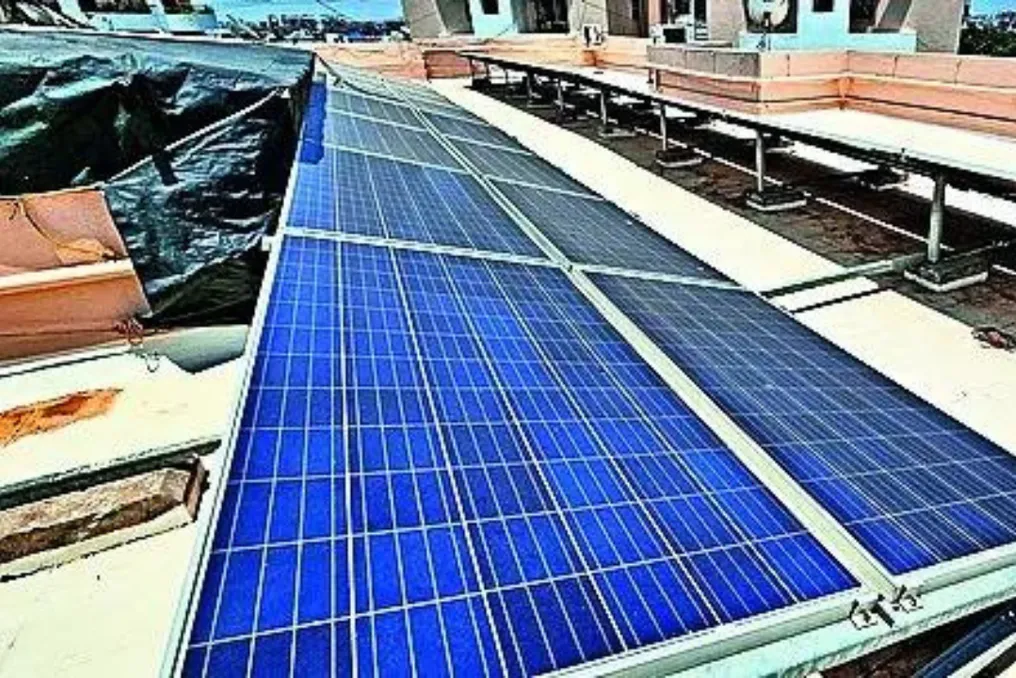
Smaller urban centers in India are actively contributing to the country's energy transition as more households opt for rooftop solar installations to cover daytime electricity needs and reduce monthly electricity bills. Excess energy generated during sunny hours is fed into the grid and consumed at night, which in many cases allows bills to be reduced to zero.
Leaders in Solar Energy Adoption
These areas, including second and third-tier centers such as Jalgaon, Amravati, and Chhatrapati Sambhajinagar in Maharashtra; Junagadh, Mehsana, and Bhavnagar in Gujarat; Thrissur, Kollam, and Alappuzha in Kerala; and Ganganagar in Rajasthan, are among the top 50 districts in the country for rooftop solar system adoption.
It is noteworthy that major metropolises like Delhi, Mumbai, Hyderabad, Bengaluru, Chennai, and Kolkata did not even make it into the top 100 districts. The ambitious government program, Pradhan Mantri Surya Ghar Muft Bijli Yojana, launched by the Ministry of New and Renewable Energy in February 2024, is rapidly developing. This program aims to promote rooftop solar installations and provide up to 300 units of free electricity per month to one crore households, and it will run until March 2027.
Statistics and Program Support
Currently, 36.3 lakh solar panel systems have been installed, benefiting over 44.1 lakh households. Out of the total program funding of ₹75,021 crore, more than ₹25,000 crore has been allocated as subsidies. For solar panel systems up to 3 kW, the Center provides a subsidy of ₹78,000, and several states have announced additional incentives.
According to officials, over 60% of all installations fall into the 3–4 kW category. Leading states in adoption include Gujarat, Maharashtra, Uttar Pradesh, Rajasthan, Kerala, and Assam. Officials noted that states like Uttar Pradesh and Kerala are conducting effective awareness campaigns, which is reflected in the scheme's popularity. One official stated that 'states have formed teams at the disco and district levels to raise awareness about cleaner and cheaper energy sources. Adoption is definitely higher in such states.'
Model Development and Goals
The Ministry reported that the program has gained an 'unprecedented' momentum, completing an average of about three lakh installations monthly. While the highest demand is observed among households with independent houses and sufficient roof space, efforts are now focused on including hostels in the scheme to expand its urban reach. A single rooftop solar panel installation on a residential complex can meet the needs of several households, as well as common facilities.
The government is also promoting the Utility-Scale Aggregation (ULA) model to accelerate renewable energy adoption among low-income and vulnerable populations. The ULA model is being applied in Andhra Pradesh, Odisha, Telangana, Bihar, Kerala, Jammu and Kashmir, Tripura, Rajasthan, Chhattisgarh, Karnataka, Maharashtra, and Delhi. This model is designed for economical consumers and households receiving free or subsidized electricity who cannot install rooftop solar systems due to financial or structural constraints. The Ministry has set a target to cover 30 lakh households under this model.