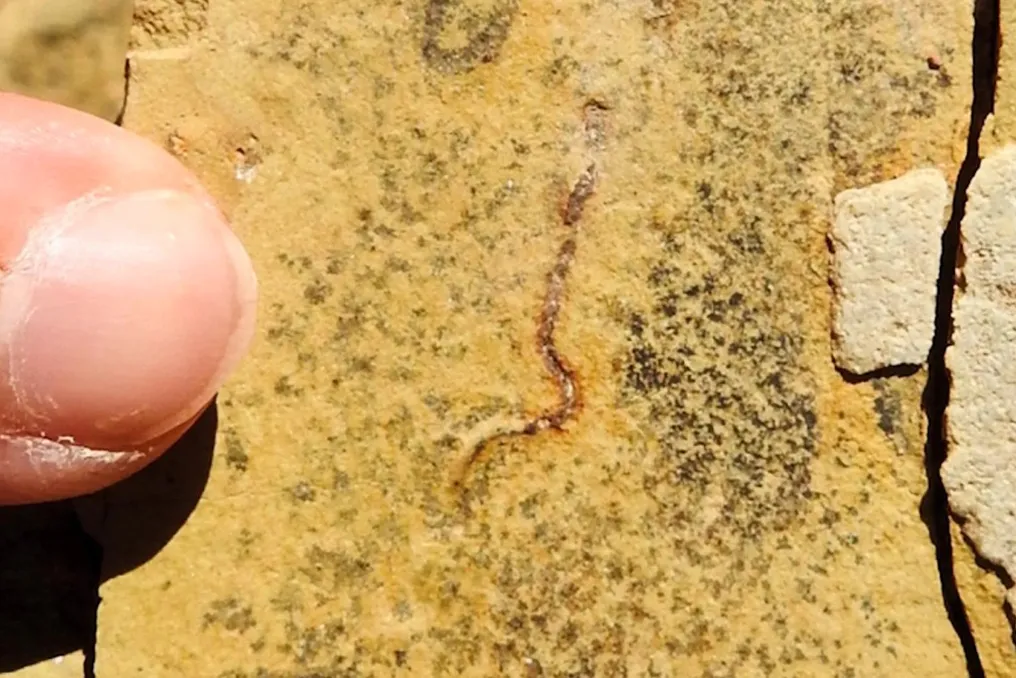
A new study reanalyzes Brazilian fossils and proposes a significant reinterpretation of the evolution of life on Earth. Previously, it was believed that records of activity by small microscopic animals on the seabed occurred about 540 million years ago.
Context of Terrestrial Evolution
The greatest planetary transformations occurred approximately 580 million years ago, over a period of 35 million years, when animals began to appear and global organisms developed more elaborate forms and habits. Simultaneously, chemical changes and an increase in the oxygenation of ocean waters took place, facts that help scientists trace the planet's history.
An important milestone in this process was the beginning of the occupation of the seabed by microscopic organisms resembling worms. These traces are preserved in rocks found worldwide, including locations such as Namibia, China, Spain, Paraguay, Bolivia, and Brazil. In Brazil, the main examples from this period are located in two areas: one related to the Bambuí Group, which covers Minas Gerais and part of Bahia, and another near Corumbá, in Mato Grosso do Sul.
New Analysis of Brazilian Fossils
Researchers led by Bruno Becker-Kerber, from Harvard University in the United States, and with the participation of Unesp researcher Lucas Warren, conducted new analyses of the Brazilian material. They identified that what was previously considered proof of complex organisms actually consisted of clusters of bacteria and macroalgae, beings much simpler that had inhabited these areas for millions of years.
To reach this conclusion, the group used new analytical techniques and technologies, many of which are related to the Sirius particle accelerator. The findings were published in the article 'Proposed Ediacaran meiofaunal burrows from Brazil are pyritized algal/ microbial consortia' in the scientific journal Gondwana Research.
Scientific Implications of the Discovery
This revision may alter the understanding of biological evolution. The colonization of the seas is a watershed between the Precambrian and Cambrian geological periods. According to Warren, understanding the timing of this colonization is crucial for defining this transition.
Paleontologists face the difficulty of lacking preserved genetic material, forcing them to rely primarily on morphology, that is, the analysis of the shape and structure of the fossils. Traditionally, this work was done manually, comparing anatomical features with the aid of microscopes and magnifying glasses.
Revision of Previous Interpretations
By comparing samples of fossils initially described in 2017, which suggested the presence of the first animals on the seabed, the group noticed inconsistencies. The sedimentary rocks of Corumbá exhibited wavy tracks, interpreted at the time as signs of invertebrate trails, a phenomenon called bioturbation. However, the team realized that certain characteristics did not match animals. Notable differences included the preservation of cellular structures, large variations in filament diameter, and the absence of typical burrowing marks.
These evidences led to the conclusion that the fossils were not animal tunnels, but rather the bodies of filamentous organisms themselves. Based on the thickness of the filaments and the absence of complex animal structures, the researchers determined that it was a community of filamentous microorganisms, composed mainly of cyanobacteria and algae. Warren emphasized that the presence of cyanobacteria in the ocean is not new, as they inhabited the ocean 3.5 billion years ago.
Support from Advanced Technology
The advancement of this research was enabled by the use of modern technologies, such as microtomography, which allows 3D reconstruction without destroying the sample; petrographic slides, for microscopic analysis of composition; and scanning electron microscopy, which provides high-resolution images of the surface. Microtomography techniques were performed on the Sirius light beam line, a particle accelerator at CNPEM, in Campinas (SP).
This equipment generates synchrotron light, a beam of extremely precise radiation, allowing internal visualization of the fossils and identification of cell walls, confirming that they were bodies of microorganisms and not tunnels. The analysis also used zoom tomography to increase resolution in specific areas.
Dating and Scientific Conclusion
Another key point was the dating of the sedimentary rocks. Warren informed that the material was dated in a volcanic ash layer, indicating that when the rocks formed 550 million years ago, a volcano deposited datable minerals. This dating pointed to 544 million years, a period when simple microorganisms were already colonizing the seabed, but complex animals were not yet present.
Warren concluded by explaining that the work illustrates the scientific method: hypotheses are tested with evidence, and new technologies allow for the revision of established interpretations, eliminating ambiguities and providing new criteria for future investigations.