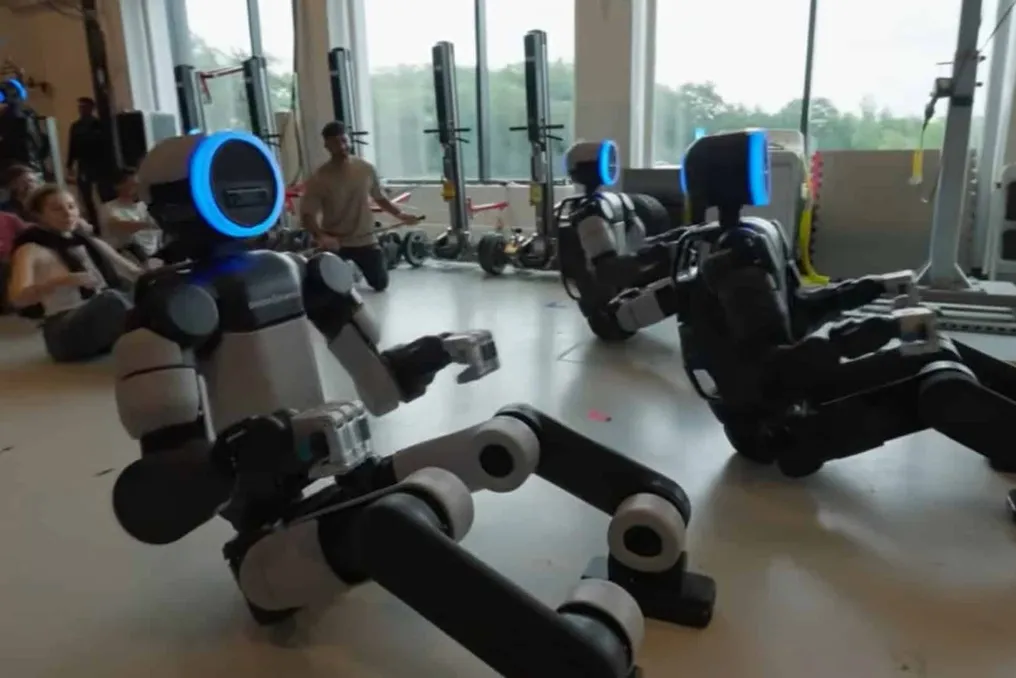
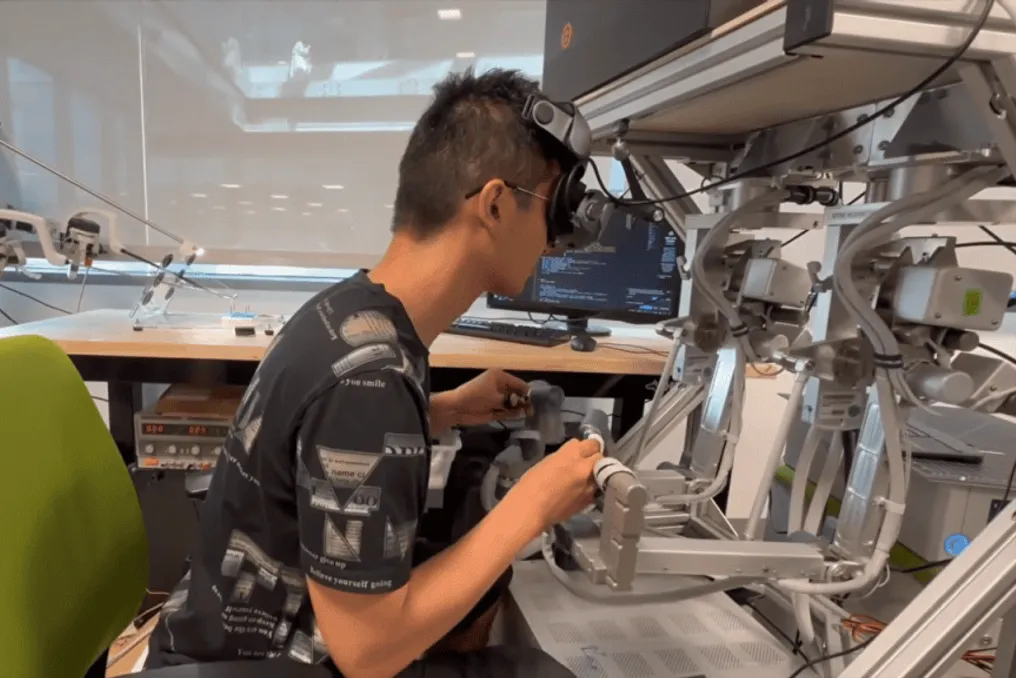
In a groundbreaking medical experiment, humanoid robots have performed the surgical removal of the gallbladder from live animals for the first time. It is important to note that the machines did not operate autonomously nor did they replace human surgeons; all movements were remotely controlled by qualified specialists, representing a model of human-robot collaboration.
Research and Technology Potential
This study, published in the journal Nature, details the performance of two minimally invasive surgeries on live pigs during a preclinical trial. Researchers believe that if this technology proves safe and effective for future human application, it could allow surgeons to conduct robotic procedures remotely in small hospitals and clinics that lack specialized surgical equipment due to its high cost.
Advantages of Robot Accessibility
According to an assistant professor of surgery from the University of California, San Diego School of Medicine, the main advantage of this solution is its simplicity and lower cost. He noted that 'it is a fraction of the cost and takes up a fraction of the operating room space,' which facilitates its implementation everywhere—from rural areas to the battlefield and space.
The experiment utilized the Unitree G1 humanoid robot, manufactured by the Chinese company Unitree. The base version of the equipment, equipped with nearly non-functional arms, costs starting from $13,500 USD (69,100 Brazilian Reals), plus shipping costs of $300 to $1,200 USD (1,500 to 6,100 Brazilian Reals). However, adding components considered necessary, such as more dexterous robotic arms, can raise the price above $67,000 USD (343,100 Brazilian Reals).
Nevertheless, this price is significantly lower than specialized surgical systems like the Da Vinci Surgical System from Intuitive Surgical, which ranges from hundreds of thousands to several million dollars. Furthermore, size is a distinguishing feature: while the Da Vinci system can weigh around 815 kilograms and requires significant operating room space, the Unitree G1 stands approximately 1.5 meters tall and weighs only 27 kilograms, simplifying its use in smaller clinical settings and remote regions.
Despite this, researchers emphasize that the Da Vinci system already has FDA approval, the US Food and Drug Administration regulatory body, as well as authorization from other health authorities, having been tested in various clinical trials for different types of surgery. Humanoid teleoperated robots remain at the experimental stage, even after the success achieved in animal operations.
Adaptations for the Surgeon's Role
To make the experiment possible, the UC San Diego team had to develop special adaptations for the robot, named 'Surgie.' The researchers created physical adapters allowing the humanoid to hold surgical instruments, and also developed software capable of translating the intuitive hand movements of the surgeon into precise commands for the instruments mounted on the robot's wrists.
Control was managed by the surgeon using a computer equipped with stereoscopic displays connected to a headset, allowing visualization of the procedure. A pedal served to connect or disconnect the operator's hand movements relative to the surgical instruments. In the first pig operation, the surgeon was present next to the robot as an assistant. In the second operation, two teleoperated humanoids participated simultaneously in the procedure.
Limitations Requiring Attention
The study also revealed several obstacles currently hindering the clinical implementation of this technology. During the operations, the team had to interrupt procedures for several minutes to recalibrate the robots to improve their accuracy or to physically move their arms and chassis relative to the medical instruments. As stated in UC San Diego Today, the operations took 'much longer than when using existing specialized surgical systems.'
Another limitation relates to the physical structure of the Unitree G1 itself. The robot has an arm span of only 450 millimeters, whereas an adult human has a reach of 1.6 to 1.8 meters. This difference limits the operational range of remote operators. Moreover, the limitations in robot mobility combined with the need for frequent calibration increased the cognitive and operational load on the surgical team.
Researchers also noted that latency—the time lag between a movement executed by the human operator and its execution by the robot—is another critical issue for future remote operations. Current humanoid robot systems exhibit latencies in hundreds of milliseconds, whereas previous studies suggest that surgical systems should ideally operate with a latency of less than 150 milliseconds. Tests also showed that both experienced surgeons and residents performed training tasks faster using the controls of the Da Vinci Research Kit, considered the gold standard in telesurgery, rather than controlling the humanoid robots.
Future Goals: Autonomous Assistants
Despite existing limitations, researchers assert that they are continuing to refine the system by exploring new applications. Michael Ip, a professor of electrical engineering and computer science at UC San Diego, stated that one goal is to develop an 'autonomous surgical assistant' capable of helping doctors with general tasks such as instrument retrieval or even cleaning operating rooms. Ip emphasized that 'teleoperated and autonomous humanoid robots have real potential to expand access to critical procedures that patients otherwise could not access,' which could help address the healthcare crisis not only in the United States but globally. Nevertheless, many leading robotics researchers agree that universal robots capable of working fully autonomously, especially near humans and with guaranteed safety, are still far from full realization.