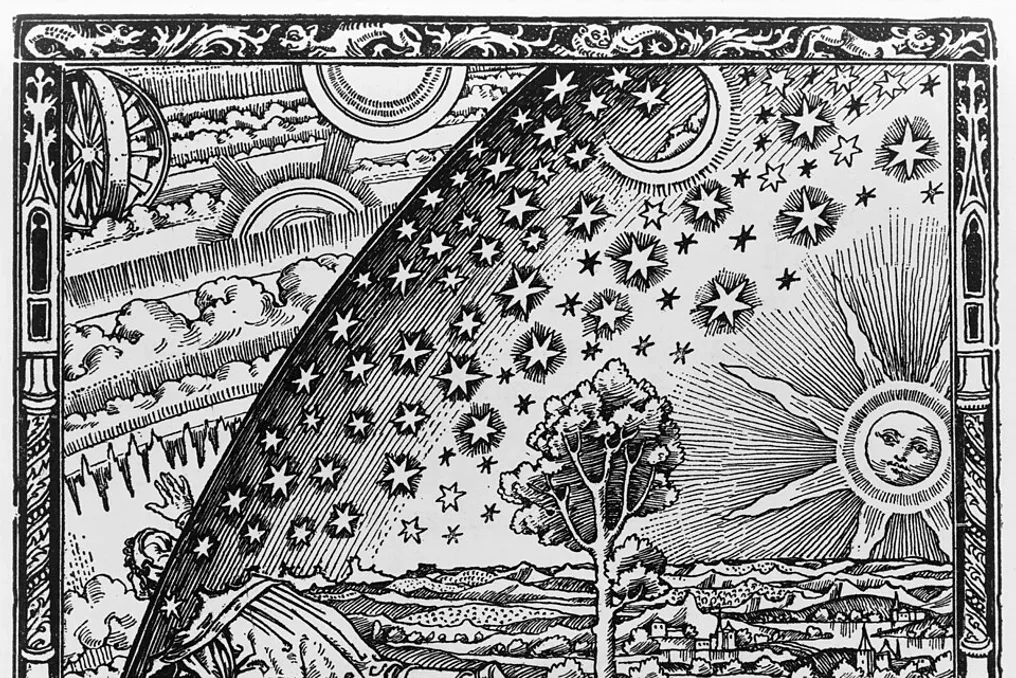
Nights on Earth once looked very different from how they do now. When the sun set below the horizon, and our ancestors gathered around fires, one only needed to look up to see a sky completely studded with stars. This need to understand celestial bodies transformed the night sky into a vast space where mythologies developed.
The Historical Role of Stars
People associated the twinkling points, creating epic narratives involving monsters, heroes, and gods that were passed down through generations. Even before the invention of telescopes, stars helped measure time, plan agriculture, and navigate the world. It was the gaze into the sky that laid the foundation for what we call science today.
The Paradox of Technological Progress
Paradoxically, everything the universe taught us is being used to develop technologies that are gradually depriving us of that very thing that sparked our curiosity—the stars.
The Evolution of Astronomical Instruments
For most of history, the main goal of astronomy was to see further. With the naked eye, planets, the brightest stars, and the Milky Way could be observed. Then came Galileo's lenses, reflector telescopes, large observatories, and finally, space telescopes. Each new technology expanded our view of the universe. However, the main task of modern astronomy is simply to see.
Modern Threats
Artificial lighting has forced observatories to move away from cities. Light reflected in the atmosphere brightens the sky and obscures stars, hindering the observation of the faintest and most distant objects. This is one reason why major global observatories are located in deserts. Nevertheless, the type of light pollution we face now affects the entire planet and threatens to make astronomical practice on the Earth's surface impossible.
The Impact of Megaconstellations
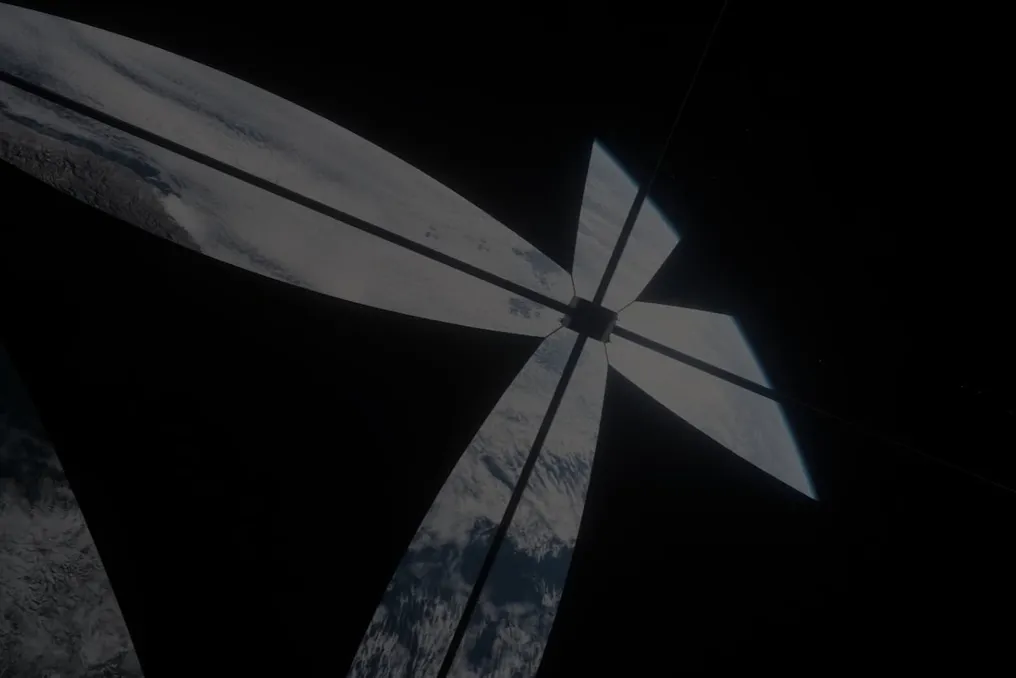
In recent years, thousands of satellites have entered low Earth orbit. A significant portion of them belongs to so-called megaconstellations—networks primarily designed to provide global internet, which expands connectivity, delivers communications to remote areas, and provides real benefit to society. But while we find solutions down here, we are creating problems up there.
Today, over ten thousand active satellites orbit the Earth, and projects in the licensing or planning stages point to a future where hundreds of thousands of them will continuously pass overhead. There are even billionaires eager to put over a million satellites into orbit.
Data Loss in Observatories
Each of these objects reflects sunlight for part of the night. This means a growing number of light points slowly crossing the sky, which many would call UFOs. For an astronomical observatory, this means something much more serious. Images taken by large observatories are beginning to be crossed by bright trails left by satellites during exposure. While most of these trails can be removed using software, there is a limit to this correction. Today, there are instances where some scientific data is simply lost, and this trend is worsening. When the number of satellites becomes too large, it ceases to be an inconvenience and begins to threaten the very efficiency of the observatories.
Researchers warn that some astronomical research may suffer significant data loss if the number of satellites continues to grow at the current rate. Observatories designed to detect extremely faint objects, such as potentially hazardous asteroids, distant galaxies, or short-lived cosmic explosions, are particularly vulnerable. In some modeled scenarios, certain observations may become practically impossible for parts of the night.
Radio Frequency Noise
This is not the only problem. In addition to reflected light, satellites also emit radio signals. Radio astronomy, which studies the universe using extremely weak radio waves emitted by stars, galaxies, and interstellar gas clouds, is facing an increasingly noisy environment. It is akin to trying to hear an audio message in a crowded stadium where Vinícius Júnior scores a goal in the Cup final (which seems almost impossible).
Searching for Solutions and Cultural Heritage
Of course, engineers and companies are looking for solutions. Some satellites have received less reflective coatings, while others have changed their orientation to reduce the glare visible from Earth. These efforts are important and show that the problem is recognized. However, many astronomers warn that these measures may prove insufficient in the face of projected growth in the coming decades.
The damage is not limited to astronomy. The night sky is part of humanity's cultural heritage. All civilizations looked at the same stars. Calendars, mythologies, star charts, poetry, music, and questions that gave rise to philosophy and science were born from them. The sky is unified and has always been common to all, regardless of borders, languages, or beliefs.
Furthermore, this is not just about the risks posed by the constant re-entries of these objects and potential orbital collisions for people on Earth and other space missions.
Deficiencies in Global Regulation
The filling of Earth's orbit is happening at a rate far exceeding our ability to regulate it. There are agreements on collision avoidance and communication frequency coordination, as well as projects to reduce space debris. However, in practice, specific actions are absent or inadequate, and there is no global governance over the impact of this filling on astronomy and the preservation of the night sky.
Balancing Progress and Science
Technological progress does not necessarily have to be the enemy of science. On the contrary, it is precisely this progress that allowed us to reach the Moon, send probes to planets, and build telescopes capable of observing forming galaxies in the early universe. But perhaps this is one of those moments when we need to consider what technologies we truly need and what we are willing to give up for them.
Ultimately, our ancestors discovered the universe by looking at the dark, starry sky. We have created outstanding instruments to see even further. It would be a huge contradiction to allow technology to extinguish our stars—it was the stars that inspired our ancestors and initiated our scientific journey on Earth.