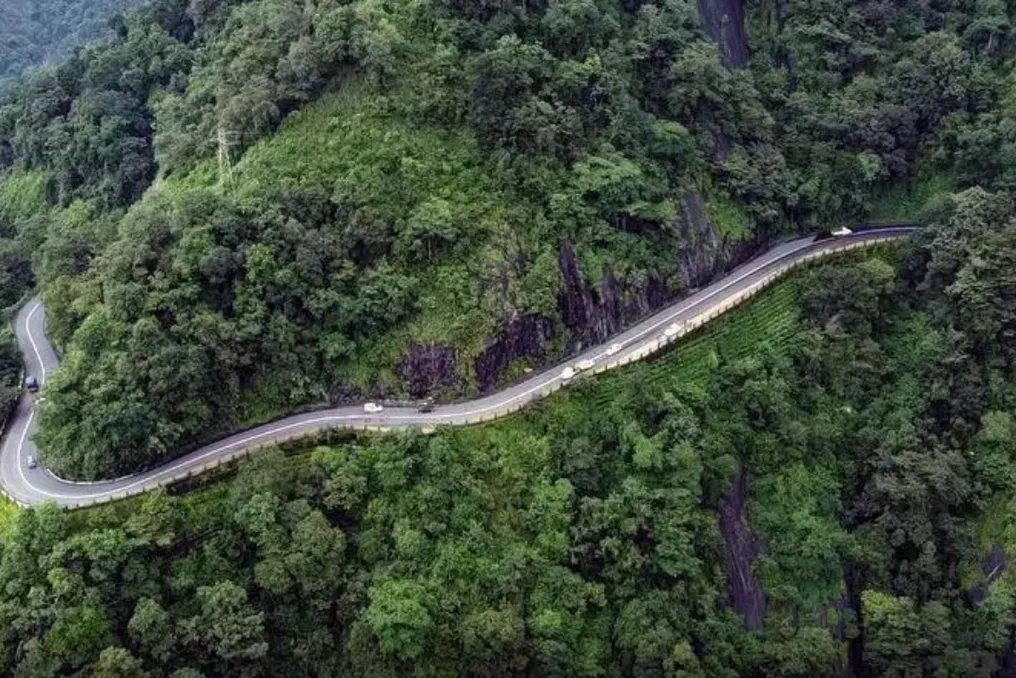
India's forests possess a vast yet often overlooked value, estimated at approximately $2.5 trillion annually. This natural capital includes clean water, breathable air, pollination services, flood protection, carbon sequestration, and medicinal plants.
Untapped National Asset
However, this 'bank vault' of natural assets is not reflected in national accounts; its contents are often provided free of charge, and the state periodically sanctions its destruction for road construction and mineral extraction. A new study published in the journal Environmental and Sustainability Indicators has provided precise financial valuations of India's forests at a comprehensive national level for the first time.
Study Methodology
The research was conducted by M Balasubramanian from the Institute of Social and Economic Change (Isec) along with colleagues from the Indian Council of Forestry Research and Charles Darwin University in Australia. The authors analyzed 45 valuation studies published between 2000 and 2024, standardizing all estimates to 2023 US prices.
Balasubramanian told TOI that they used a meta-regression analysis method to combine the results of various studies and determine the factors influencing the variability of the stated values. Variables included GDP per capita, population density, forest cover, type of ecosystem service being valued, and the assessment method used. The model explained 74% of the variation in the total costs of ecosystem services.
Total and Specific Forest Value
The results showed that India's forests provide ecosystem services valued at an average of $31,001 per hectare per year. Considering approximately 827,000 sq km of forest and tree cover across the country, this amount reaches approximately $2.5 trillion annually. This is equivalent to nearly two-thirds of India's formal economy in 2023, whose total GDP was around $3.7 trillion, with most of this value remaining uncounted.
Differences Between Forest Types
The study details the value by forest type, which should aid in land-use decision-making. Tropical dry deciduous forests, covering vast areas of central and peninsular India, are valued at about $703 billion per year, due to their enormous area of nearly 281,000 sq km. It is worth noting that the value of these forests per hectare increased from $22,400 in 2019 to $25,045 in 2023, despite the reduction in area.
Tropical thorny forests in Rajasthan and the Deccan have a high value per hectare—over $158,000—thanks to indispensable services in preventing soil erosion and desertification. Alpine forests and pastures in the Himalayan region are valued at $111,539 per hectare because they regulate water flow for irrigation in northern India. Mangrove forests, threatened by coastal development, generate $58.5 billion annually in services, including cyclone protection, fish spawning grounds, and coastal erosion prevention.
Significance of Regulatory Services
A key finding was that the largest contribution to the total forest value comes not from timber and other marketable products, but from regulatory services. Meta-regression showed that carbon sequestration, water purification, flood regulation, and climate stabilization have a stronger statistical correlation with the total value of ecosystem services than productive resources.
Balasubramanian noted that cultural services, such as ecotourism and biodiversity conservation, rank second after resource provision services. This is critical because current policy is often oriented in reverse priority, and payments from the Compensatory Afforestation Fund are calculated using formulas that do not account for the value of regulatory and cultural functions.
GDP Paradox and Population Pressure
The model revealed a paradox: higher GDP positively correlates with ecosystem service valuations, but this relationship is not statistically significant. The authors suggest this is more related to increased investment in nature conservation rather than an automatic market mechanism.
However, population density presents a more alarming picture: a 1% increase in population density is associated with an 11.3% decrease in the value of ecosystem services. This occurs due to the expansion of agricultural land, illegal logging, and fragmentation of forest corridors. India's population density of 464 people per sq km places immense structural pressure on the remaining forests.
Need for Economic Inclusion
The main thesis of the article is that until the economic value of ecosystem services is incorporated into national income accounting and project evaluation, India will systematically underestimate decisions leading to the destruction of natural capital. The authors call for the adoption of the System of Environmental-Economic Accounting (SEEA) developed by the UN, which is already being implemented by countries such as the UK, Netherlands, and Australia.
Practical application of this approach means that when planning the diversion of 500 hectares of tropical dry deciduous forest for a new highway, the economic assessment must account for the loss of $12.5 million in annual ecosystem services. Balasubramanian emphasized that existing initiatives, such as CAMPA and Green India Mission, can be strengthened, but they lack the systematic valuation data now provided by this research.