Important events that have occurred both domestically and internationally are announced in the 'Hafta Tafsiloti' broadcast.
Personnel changes in culture
The Minister of Culture relieved all his deputies of their positions.
Important events that have occurred both domestically and internationally are announced in the 'Hafta Tafsiloti' broadcast.
The Minister of Culture relieved all his deputies of their positions.
A meeting was held with the leader of Uzbekistan, Nursultan Nazarbayev.
The national navigation complex will be launched in Uzbekistan.
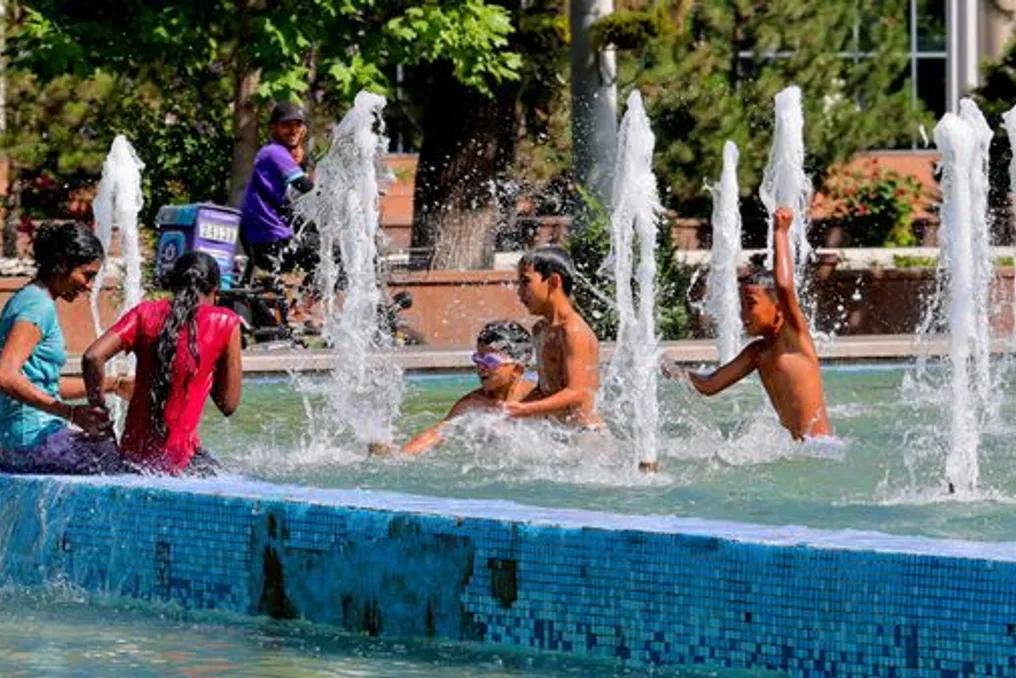
On hot days, city fountains become one of the most beloved and pleasant places for residents. Here, children play in the water, while adults seek coolness in the shade of trees.
The feeling of summer is especially vivid near city fountains. On sunny days, families with children, youth, passersby, and people wishing to enjoy the sun gather here, despite slight protection from it.
The photos reflect simple yet vibrant summer views around a large city fountain. Children play in the water, relax on blankets, young people ride scooters, and parents watch their children. Some passersby walk past the fountain, sheltering from the sun under awnings.
On such days, the fountain ceases to be just a city decoration; it transforms into a lively public space that brings people together. Here, children's laughter, the sound of water, greenery, and the usual rhythm of city life harmonize.
The shots taken in Tashkent demonstrate the sincere mood of a summer city: the lives of people seeking coolness on sunny days, water, sun, and children's joy.
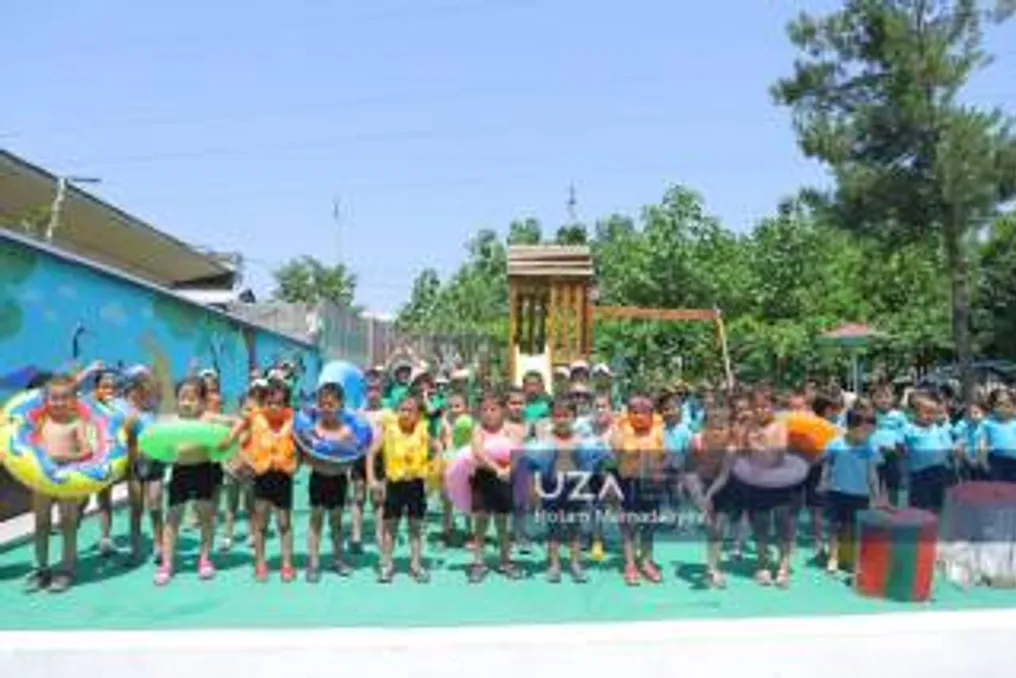
In preschool educational institutions of the Namangan region, activities aimed at strengthening the health of pupils, organizing their free time in a meaningful way, and supporting their physical and intellectual development are being implemented as part of summer health improvement.
More than ten clubs have been launched for 150 pupils at the 73rd state preschool educational institution in Yangi Namangan District. In accordance with the 'Summer Health Improvement' program, sports competitions, creative classes, logic games, and cultural and educational events are organized.
Furthermore, special attention is paid to forming healthy lifestyle skills in children and developing reading culture through projects such as 'Neptune Day', 'Poetry Evening', 'Guest is the King of the Sea', 'Grandfathers' Lessons', 'Honesty Day', and 'Healthy Day Routine'.
The Chankovuz, which originated from the harmony of a simple piece of metal and human breath, has transmitted its mysterious sound across the planet for five thousand years.
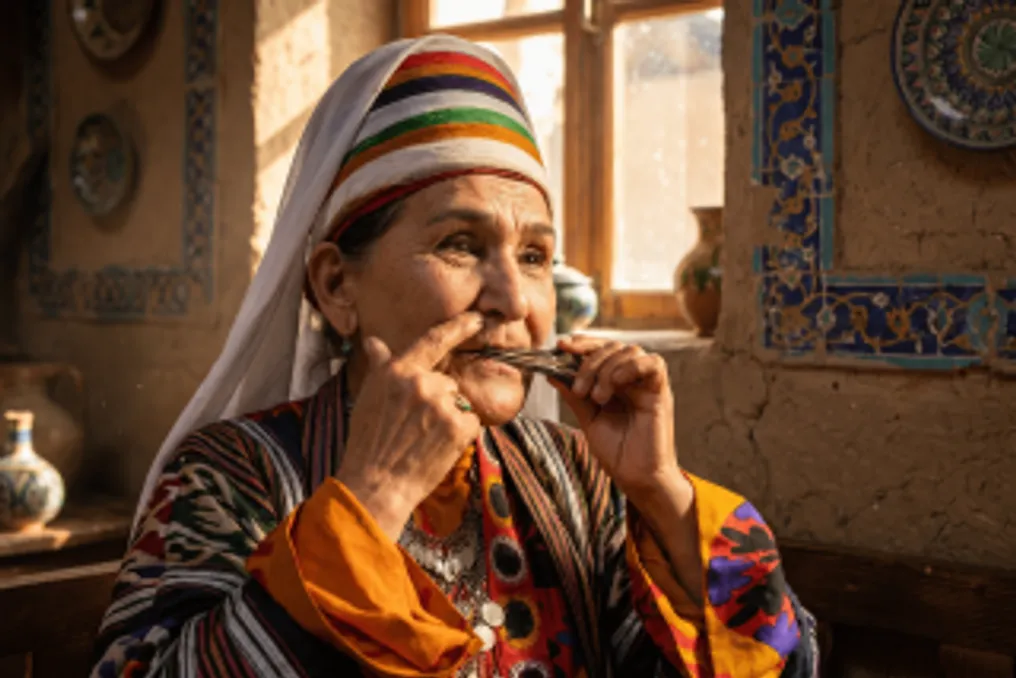
At first glance, the Chankovuz resembles a simple metallic disc with a thin, curved steel tongue fixed in the center. However, the true secret of this instrument lies not in its construction but in the method of performance. The process of creating sound transforms the human body itself into a musical instrument.
When the performer lightly touches the instrument with their teeth and presses it with their lips, the oral cavity functions as a powerful resonator or sound amplifier. The vibration created by rhythmically touching the tongue with the index finger of the right hand is amplified in the mouth cavity, producing a unique, enigmatic, and somewhat unnatural tone.
The real marvel of this musical instrument is that by skillfully controlling the state of the tongue, the size of the oral cavity, and the airflow from the throat, one primary sound can generate an entire complex melodic range of overtones. Thus, the melody is born not in the instrument itself, but in the performer, making the Chankovuz one of the instruments directly connected to the human being.
Musicologists suggest that the earliest examples of Chankovuz-type instruments, made of bamboo or reeds, appeared approximately five thousand years ago in Southeast Asia, particularly in the territories of modern-day Vietnam and the Philippines. These simple instruments gradually spread through seafarers and nomadic tribes across Asia, Oceania, and eventually reached the continents of Europe and Africa via the Silk Road.
Archaeological findings indicate the wide distribution of ancient metallic Chankovuz samples among the peoples of Siberia, especially in the Yakut culture. This musical instrument also played an important role in shamanic rituals, serving as a means of communication with spirits.
The fact that the Chankovuz is known by more than two dozen names in different cultures points to its extensive geographical and cultural influence. For example, in Sicily it is popular under the name 'marranzano', in Norway it is 'munnharpe', in Vietnam it is 'dan moi', in the Philippines it is 'kubing', and in India it is 'morchang'. Despite differences in appearance and names, they share an almost identical principle of sound extraction.
In Central Asia, particularly among Uzbeks, this instrument is known as 'changkubiz', 'chankovuz', or 'chankovuz'. Its history is deeply rooted in folk oral tradition. Scenes from the famous epic 'Alpomish', where Barchin plays the bone Chankovuz, confirm the long presence of this musical instrument in the life of the people. Interestingly, women used it more often in ancient times. The Chankovuz served not so much for large festivals and celebrations, but as a personal companion in a small family circle, expressing inner feelings.
Its low, mysterious, and slightly hoarse sound was used not only to perform small baroque-style pieces but also masterfully imitate the sounds of various animals (such as the mooing of a horse, the singing of birds) and natural noises (such as the howling of the wind, the murmuring of water). This demonstrates the unique art of the Chankovuz, reflecting the ancient worldview of humans closely connected to nature and the desire to understand the surrounding world through musical images.
By the 20th century, many traditional instruments, including the Chankovuz, fell out of attention for a period. However, today it is beginning a new chapter in its history. This musical instrument is well-preserved and passed down from generation to generation in regions such as Karakalpakstan, Syrdarya, Kashkadarya, as well as in the regions of Samarkand and Bukhara.
Interest in the Chankovuz was revived starting in the early 1990s due to the work of folklore and ethnography groups. Today, it holds a special place not only as a solo instrument but also as part of folk orchestras and contemporary music ensembles. Modern composers actively use the unique timbre and capabilities of the Chankovuz in their works, striving to convey the ancient national spirit and Eastern melodies.
The immense musical potential hidden behind its simple construction, the ability to transform human breath and heartbeat into music, gives confidence that this ancient instrument will continue to amaze listeners in the future. The Chankovuz is not just a musical instrument; it is a living history embodying the worldview of ancestors, the attitude towards nature, and universal human musical thought that came from millennia.