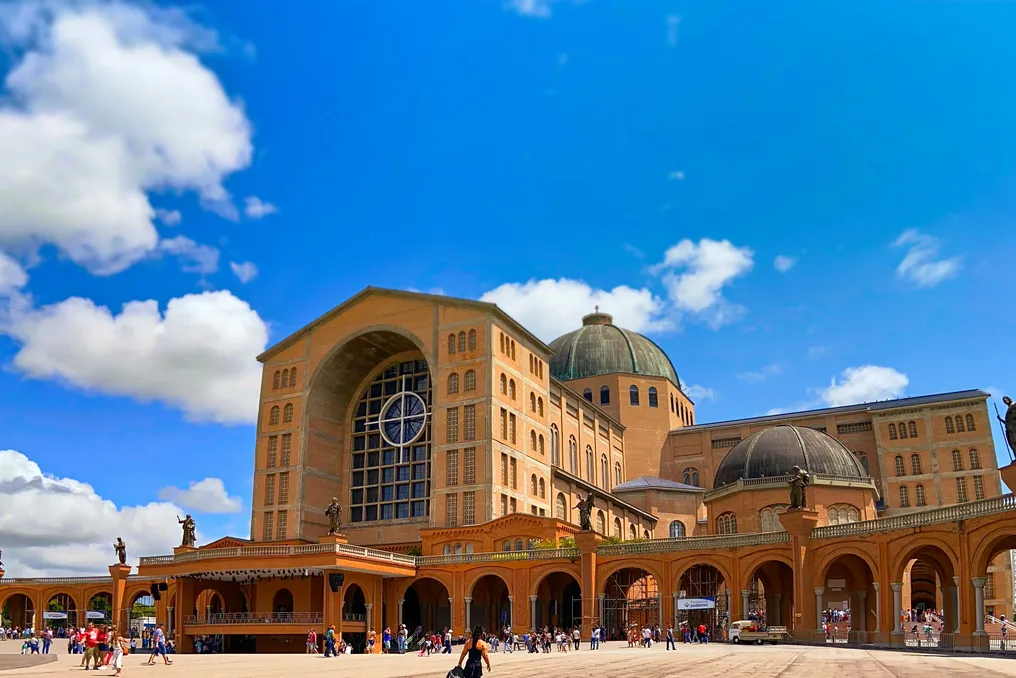
The traditional Caminho da Fé, which has its destination in Aparecida, in the interior of São Paulo, has been officially established as a national tourist route. This recognition came through Law 15.449/2026, sanctioned on July 1st.
The traditional Caminho da Fé, which has its destination in Aparecida, in the interior of São Paulo, has been officially established as a national tourist route. This recognition came through Law 15.449/2026, sanctioned on July 1st.
This pilgrimage route covers more than 70 municipalities located in the states of São Paulo and Minas Gerais, leading to the surroundings of the National Sanctuary of Aparecida. The legislation aims to assist the involved cities by facilitating access to infrastructure investments and promoting the tourism sector.
Furthermore, the legal recognition reinforces an existing structure, which includes specific signage for the path, credentials for pilgrims, partnerships with inns, and support points organized by the Association of Friends of the Caminho da Fé, an entity dedicated to the social and religious support of the walkers.
The demand for Aparecida is notable. During the period from October 1st to 12th, 2025, which includes the festivities of Our Lady of Aparecida, the Federal Highway Police recorded approximately 39 thousand pilgrims traveling along the Via Dutra.
Inaugurated in 2003, this route has been walked by pilgrims for over two decades. The main route starts in Águas da Prata, in the interior of São Paulo. Covering about 400 kilometers through the Serra da Mantiqueira, it passes through Minas Gerais cities such as Andradas and Ouro Fino, before returning to São Paulo via places like São Bento do Sapucaí and Campos do Jordão. The trip duration can vary between ten days on foot or six days by bicycle.
Although the stretch between Águas da Prata and Aparecida is the best known, it represents only one of the 18 branches that make up the Caminho da Fé. There are other routes starting from São Paulo cities such as Franca, São Carlos, and São José do Rio Preto, as well as from Minas Gerais municipalities such as Guaxupé, Caldas, and Campestre. All these roads converge on the central axis towards the Paraíba Valley.
Along the journey, pilgrims enjoy some of the most beautiful landscapes of the Serra da Mantiqueira. The original starting point, Águas da Prata, is famous for having over 90 waterfalls, mineral water springs, and Pico do Gavião, a very visited spot for hang gliding and paragliding.
In the Minas Gerais territory, cities such as Andradas, Ouro Fino, and Inconfidentes showcase the more rural aspect of the Mantiqueira, characterized by agricultural properties and small communities with a calm pace. This segment is considered one of the most picturesque of the route and is rich in gastronomy.
Returning to São Paulo, São Bento do Sapucaí hosts Pedra do Baú. This rock formation has cliffs exceeding 300 meters in height and constitutes a postcard of the mountain range, offering panoramic views of the region. Not far away is Campos do Jordão, classified as the highest city in Brazil. Known for its pleasant climate and half-timbered architecture, the city attracts visitors with its restaurants, breweries, chocolate shops, and various attractions throughout the year, being particularly popular in winter.
The final destination is Aparecida, which functions as the country's main center for religious tourism. In addition to the National Sanctuary, recognized as the world's largest Marian temple, the city offers attractions such as the Passarela da Fé, the Hall of Promises, the Chapel of Candles, and a museum dedicated to the history of devotion to the Brazilian patron saint.