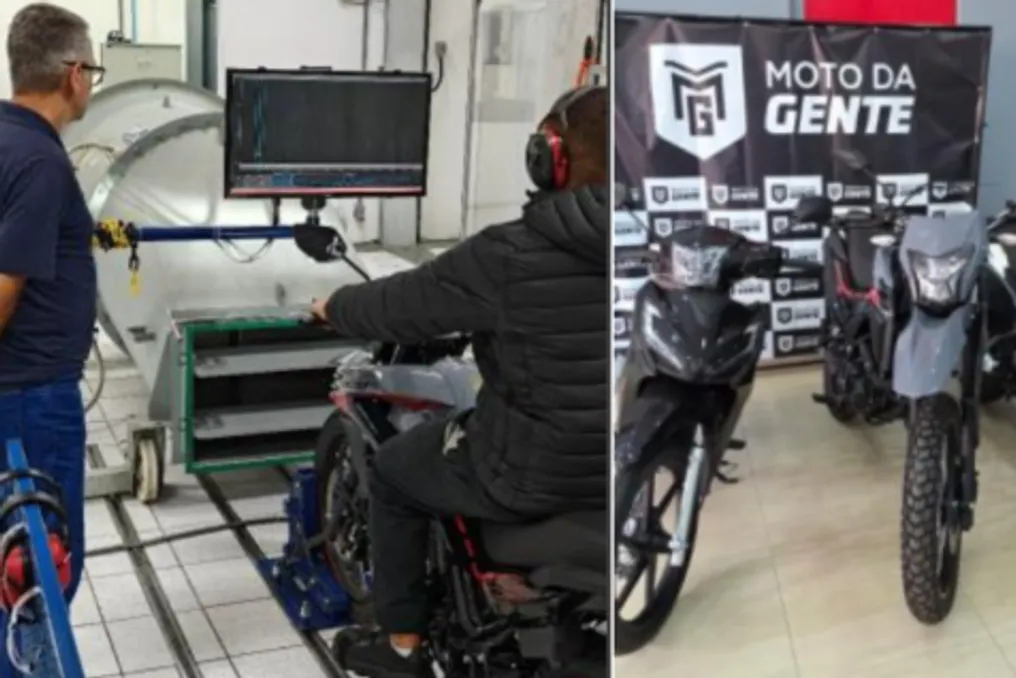
The dispute between Shineray and Abraciclo, the association of two-wheeled vehicle manufacturers, has advanced with new laboratory findings. The entity alleged that the Chinese brand is selling motorcycles that do not comply with emission standards established by legislation.
Popular
New Tests Reinforce Allegations
Shineray claimed that the tests conducted by Abraciclo were partial because they took place in laboratories of associated companies. To contest this claim, new examinations were carried out in an independent Marelli laboratory. These new tests, conducted under more rigorous protocols, yielded data similar to previous ones, indicating that the emitted pollutants are above legal limits in most analyzed parameters.
Progress of the Administrative Process
This new report is a milestone in the administrative process that has been ongoing since January 2026 at the National Consumer Secretariat (Senacon). Previously, Shineray's strategy was to question the validity of Abraciclo's evidence, alleging that the tests were conducted in competitors' laboratories. However, the results from the independent laboratory changed the focus of the debate, shifting from the supposed partiality of the tests to the technical merit of the pointed irregularities.
Models Involved and Pollution Excess
According to documentation presented to Senacon, the Shineray Rio 125 EFI, SHI 175 EFI, and JEF 150S models were tested again. They exceeded legal limits in 63 out of 64 evaluated parameters, with pollutant gas emissions reaching up to 30 times higher than permitted by Brazilian legislation. Abraciclo reaffirmed its position, emphasizing the need for all companies to strictly follow the rules, given that Brazil is a benchmark for vehicle emissions in Latin America.
Start of Investigation and Non-conformities
The controversy began in late 2025 when Abraciclo submitted a representation to Senacon. The initial tests involved seven motorcycles and indicated high levels of carbon monoxide (CO), hydrocarbons (HC), NMHC, and NOx, as well as noise exceeding that predicted by the Promoter. In one case, CO exceeded 87 thousand ppm at 2,000 rpm, about 29 times the limit set by Conama Resolution No. 493/2019. Technicians also noted the absence of mandatory components, such as catalysts and canisters, and discrepancies in information provided to consumers.
Shineray's Defense
In its defense before Senacon, Shineray used two main arguments. Firstly, it argued that all motorcycles possessed a Configuration Use License (LC) issued by Ibama. Secondly, it contested Abraciclo's tests, claiming that the reports from associated laboratories were not impartial proof because there was no official inspection or guarantee regarding the fuel and transport conditions. The company also suggested that the complaint aimed to harm a competitor.
Abraciclo's and Ibama's Response
After the defense, Abraciclo hired Marelli to repeat the tests, meeting Shineray's requirements. The results confirmed the high emission levels, disqualifying the manufacturer's argument about methodological flaws. Additionally, Ibama informed Abraciclo that it had not found records of Shineray submitting Production Emission Value Reports (RVEP), which strengthens the sanctioning administrative process.
Difference Between Homologation and Conformity
A crucial point in the process is the distinction between homologation and production conformity. While homologation ensures that a model meets the laws before sale, the legislation requires continuous controls to ensure that units produced in series maintain the specifications of the approved vehicle. Abraciclo insists that the vehicles on the market exhibit behavior different from what is expected for homologated models.