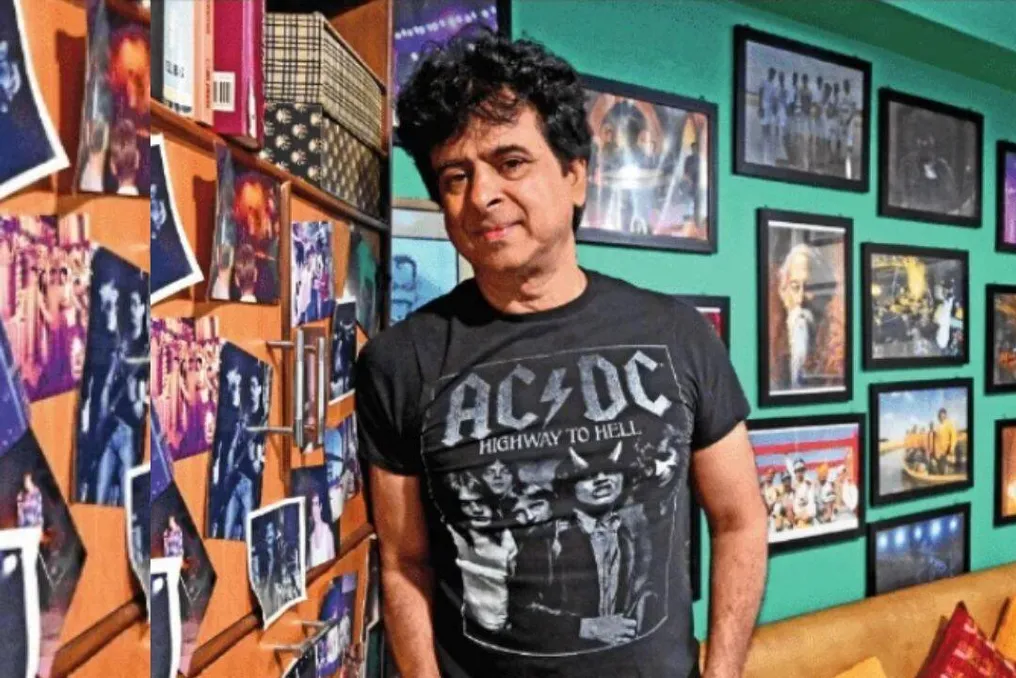
In Palash Sen's studio, located in a basement in Greater Kailash II, there is an eclectic space. Images of the bands Deep Purple and Tagore hang on the wall, and a small bookshelf is decorated with works by Eric Clapton, Jane Austen, and Wilde, next to which a synthesizer imitates a piano. Among these creative decorations, it is noticeable that the sports equipment looks somewhat worn out.
The Doctor's Past and Career Beginnings
This studio, named The Clinic, resembles a memory more than evidence that Sen, the 60-year-old frontman of the rock band Euphoria, once practiced as a doctor. There was a time when he treated patients in a clinic that his father originally opened near the Sheela cinema in Paharganj. He stopped this practice in 2000 after the release of the music video for the song 'Maaeri'. Sen recalls: 'There were crowds gathering outside. It became difficult.'
The Rise of Indie Pop
At that time, indie pop was popular in the city. By the mid-90s, satellite channels such as MTV, Channel V, and Music Asia noticed the limited reach of Western pop music. The younger generation was looking for something more rhythmic than the standard film music they were forced to listen to. Indie pop became a popular alternative. Artists like Daler Mehndi, Alisha Chinai, Lucky Ali, Colonial Cousins, Sunita Rao, Shweta Shetty, and Baby Sehgal captured airtime and public consciousness.
Euphoria's Ascent in Popularity
The singer-composer recalls: 'With Daler, the popularity of the genre skyrocketed. He gave us all hope that we too could succeed.' Euphoria capitalized on this wave. Initially, the band focused on rock and heavy metal covers, but their debut album 'Dhoom' adopted a new indie identity. The self-taught musician states: 'We didn't want to sing other people's songs our whole lives.' The title track 'Dhoom pichak dhoom', featuring vocals by Shubha Mudgal, had a very unique sound. The music video, directed by advertising filmmaker Pradip Sarkar in Benaras, created a stylish aesthetic of the ancient city while retaining its familiar image of fragrant cuisine. Sen, dressed in a black 'AC/DC Highway to Hell' T-shirt and knee-length jeans, notes: 'We wanted to do something different.'
Significance of Hits and Roots
This was followed by the song 'Maaeri', written jointly with Jaydeep Saini ('Chak de! India'). For Euphoria, this hit was a huge step forward. Sen's high vocals in this song, featuring Punjabi folk motifs, became the band's trademark. Many Indians over 40 still remember its clip: a girl with toothpaste on her nose and a boy whose coin was crushed by a train, symbolizing lost love. Sen was born in Lucknow into a family of doctors: his father was a cardiologist from Bengal, and his mother was a gynecologist from Dogra. In his early years, he spent most of his time with elderly relatives in Jammu and Benaras before his parents moved to Delhi. He says: 'I feel nostalgic for those cities.'
Life in Delhi and Band Formation
In Delhi, his mother worked at a railway hospital. Other doctors from the colony often visited them for evening tea without warning. Sen vividly and warmly recalls walking to his school, St Columba's, just two kilometers from home. The singer remembers: 'It was a clean and safe city back then.'
By his own admission, Euphoria was founded in 1988 at the University College of Medical Sciences Delhi (UCMS) primarily to impress girls. He laughs: 'I quickly realized that girls are impressed by me on stage, but not when I am off it.'
At UCMS, he wrote and composed his first piece, 'Heaven on the seventh floor', in honor of his dormitory room. The band was thrilled to receive a substantial 25,000 rupees for a performance at BITS Pilani in 1995. This was also a time when Sen and his comrades had to make a difficult decision: remain a serious band or pursue music part-time. This decision took time. However, sold-out concerts and successful music videos—remember Vidhya Balan in 'Kabhi aana tu meri gali'—provided the answer.
Success and International Performances
Sen explains his success by saying that 'students were our main sponsors. We were the first artists they asked for. Most people still have difficulties with English. We sang in Hindi, Punjabi, and several other languages.' At the peak of their popularity, Euphoria performed at 100 concerts a year. 'Even now we hold about 50,' says Sen. Their 3000 concerts took place in all states except Jammu and Kashmir, as well as in diverse countries such as Turkey, Russia, and Japan. 'We also performed with the Pakistani rock band Junoon at the United Nations General Assembly in New York in 2001. It was a kind of peace concert organized by Shashi Tarur,' recalls Sen.
Modern Changes in the Industry
Today, concerts in his homeland have become more localized. 'Twenty years ago they asked for rock covers. Now we get requests for songs in Kannada, Telugu, Punjabi, Bangla.' Euphoria's upcoming work, 'Dhoomsday', includes collaborations with artists from various languages. The audience has also changed: 'Before, they listened to our songs. Now everyone is busy filming them on their mobile phones,' he notes.
New Chapter and Medical Aid
Euphoria will turn 40 in a couple of years. The band has become a kind of caravan, where many came and went to start new projects. Besides Sen, bassist JJ Bhaduri is the only remaining member from the 'Dhoom' era. Sen simply adapted to the changes. He acted in films (such as Meghna Gulzar's 'Filhal'), served as a judge on reality shows, and directed short films. 'I acted in films and shows in Mumbai, but Delhi is my home, the city that makes me happy,' he says. He still has one unfulfilled dream—to direct a feature film.
Sometimes Sen still practices medicine. In Kolkata, he once performed cardiopulmonary resuscitation on a fan during a concert. On another occasion, he administered an injection backstage to a bandmate, Gaurav Mishra, who suffered an asthma attack. His specialization in orthopedics proved useful when a girl slipped and broke her arm at a concert in Goa. 'I put a splint on her,' he shares.
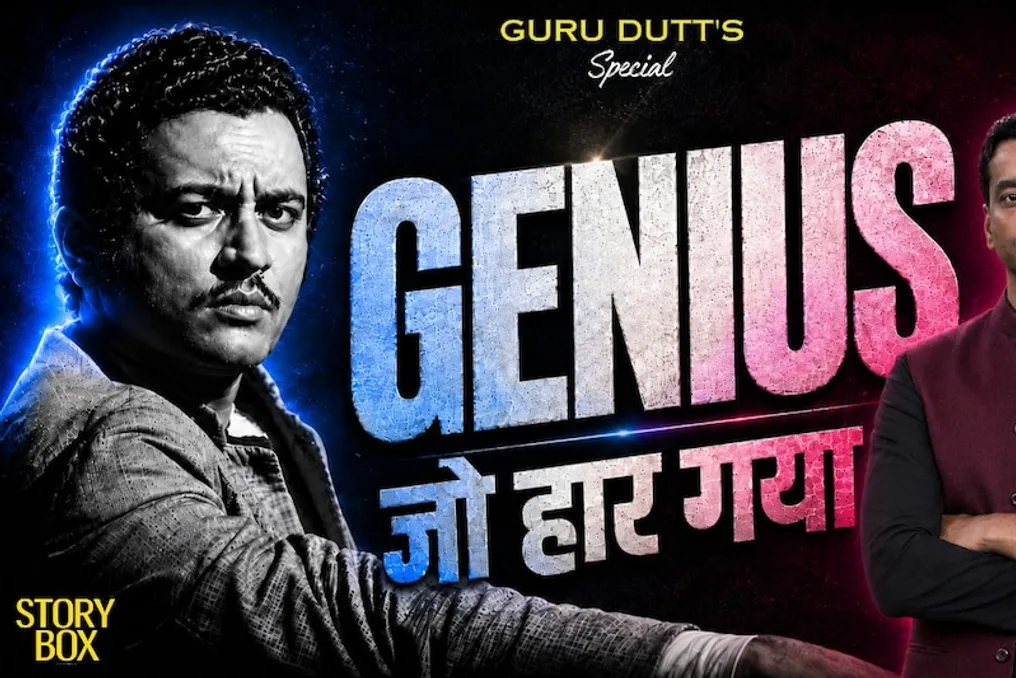
This is the story of a cinematic genius whose films were ahead of their time. He was a successful actor and an outstanding director who suddenly passed away in his room one morning. This man, whose journey began as a telephone operator, later became the most charismatic film director in Indian cinema—Guru Dutt.
The Film 'Kaagaz Ke Phool'
Guru Dutt poured his entire soul into every scene of his film 'Kaagaz Ke Phool'. His cinematography and direction were so innovative that no one in India had seen such a level of work on the world stage before. The film featured new types of shots, magnificent camera movements, and the use of lighting that became an integral part of the scene.
Public Misunderstanding and Legacy
Unfortunately, the film turned out to be a failure, perhaps because the audience could not grasp its depth. This story is presented alongside Jamshid Kamr Siddiqui.