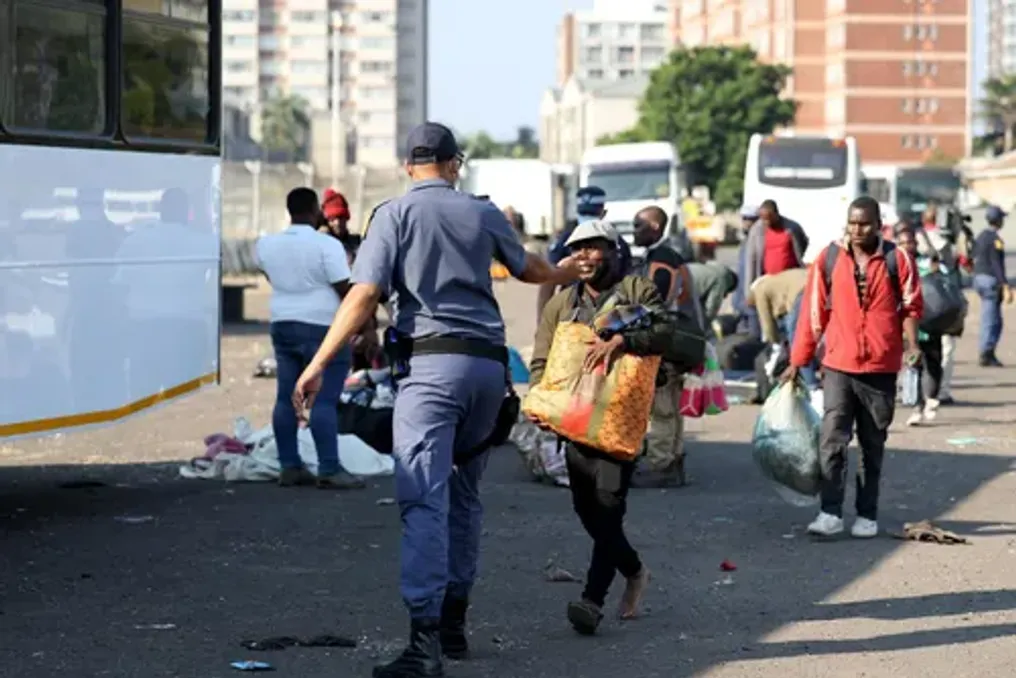
South African authorities reported that 53,449 foreign nationals were processed for deportation and repatriation as part of intensified measures to combat illegal migration.
Migration Management Plan
The Chairperson of the Interdepartmental Committee on Migration, Mmamoloko Kubayi, announced that this figure was reached by the end of the working day on July 11, 2026. These figures were presented during a media briefing on the government's progress in implementing President Cyril Ramaphosa's five-point plan for migration management, which was announced on June 7.
The strategy involves tightening compliance with immigration laws, strengthening South Africa's borders, optimizing the migration system, addressing gaps in current policy, and cooperating with neighboring states.
Reaction to Protests and Warnings
This briefing took place following recent protests against illegal immigration in several provinces, where demonstrators demanded stricter border control and mass deportations. Although Kubayi acknowledged the validity of many South Africans' concerns regarding employment, service provision, and public safety, she emphasized that these issues must be resolved through legal channels.
Kubayi stated that in implementing the plan, they aim to ensure orderly and regular migration that considers public concerns while preserving human rights and the dignity of all people in the country, regardless of their citizenship or migration status.
Warning Against Vigilantism
The Minister issued a stern warning against private citizen groups conducting unauthorized searches of homes and businesses suspected of harboring undocumented individuals. Kubayi noted that media reports, both domestic and international, indicate the existence of such protesting groups.
She stressed that the state's law enforcement agencies bear the exclusive responsibility for immigration control, border management, and deportations. No individual or group is permitted to use force independently or threaten anyone for the purpose of illegal removal from the community. Law enforcement agencies will not hesitate to take action against those who continue to conduct such illegal checks and searches.
Identification of High-Profile Criminal
Furthermore, Kubayi highlighted the recent high-profile arrest of Mkhanisi Ndodana Tshuma, a fugitive sought in the UK on charges of murdering his wife and two children. Tshuma arrived at O.R. Tambo International Airport from Britain on July 5 and was detained in Kensington, Johannesburg, after receiving an alert from Interpol.
Despite British authorities not noting Tshuma's departure, a multi-disciplinary team of South African law enforcement managed to locate him. Kubayi expressed gratitude to the SAPS and Interpol for the arrest, adding that Tshuma would be extradited to the UK after the signing of an official request.
Distinction Between Deportation and Repatriation
To clarify common misunderstandings, Kubayi explained the legal differences between the two main return mechanisms used by the state. Repatriation is a voluntary return to the country of origin, strictly regulated by international law, including the 1951 UN Convention. The government provided assistance in this process after Malawi faced a shortage of funds for repatriation buses starting on June 14.
Deportation is a formal, legal judicial process under Section 34 of the Immigration Act, through which the government removes non-citizens who have violated South African laws.
Return Statistics
Malawian citizens accounted for over 80% of the total number of processed individuals among the 53,449, followed by citizens of Zimbabwe and Mozambique. Repatriations to countries outside SADC (Southern African Development Community) totaled 2,615 people, including 1,159 returned to Nigeria, 939 to Uganda, 431 to Kenya, and 86 to the Republic of Congo.
Parallel to the repatriation assistance program, standard immigration deportations continued. Between April 1 and June 30, 15,398 deportations were conducted, supported by 2,519 joint law enforcement operations. In June, 4,898 deportations were registered from Malawi (1,929), Zimbabwe (1,384), Mozambique (1,200), and Lesotho (342).
Between June 14 and July 8, 2,801 deportations were carried out within the expanded period of heightened control. Kubayi concluded her address by stating that South Africa remains committed to enforcing immigration laws, strengthening border management, protecting communities, combating crime, and upholding the dignity and rights of all people. She urged the public to report criminal activity directly to the police instead of acting as vigilantes and asked communities to stop spreading unverified information online that could provoke violence or social unrest.