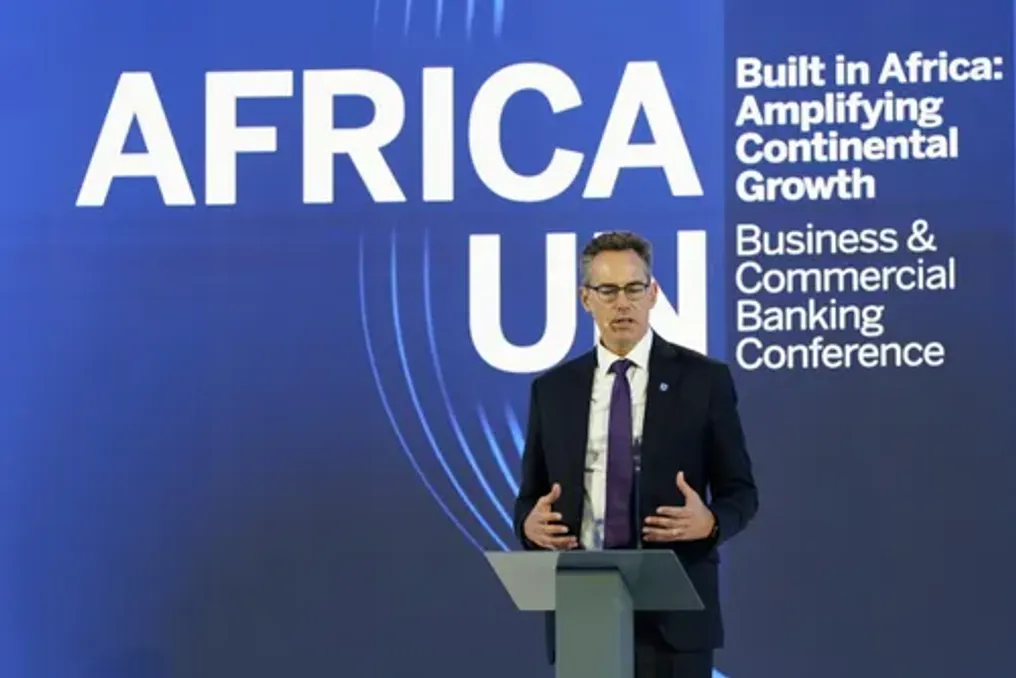
The recent Standard Bank Africa Unlocked conference focused on analyzing the significant potential of Africa for economic growth. The continent's GDP is projected to reach 4% this year, despite several serious obstacles, including high US tariffs, as well as disruptions in energy and logistics sectors.
Conference Theme and Growth
Bill Blakey, Head of Business and Commercial Banking at Standard Bank, noted that this was the third meeting under the name Africa Unlocked. This year's theme is 'Built in Africa: Amplifying Continental Growth.' He emphasized that this reflects development based on African capital, entrepreneurship, and conviction, which develops gradually, often against the general sentiment, and this work accumulates across various sectors, beyond borders, and across generations.
Examples of African Business
Blakey recalled his visit to East Africa earlier this year, where he met with the client Coast Cables. This company, founded in 1978 as a manufacturer of super-enameled copper cables, has grown into a major producer of internal and industrial power cables, supplying products across the region and expanding into solar energy.
Blakey mentioned that he was impressed not only by the business itself but also by the conviction behind it. Despite economic cycles, currency fluctuations, and infrastructure problems, the company continued to grow. At the end of the visit, the owner shared his experience, saying: 'If I had known then what I know now, I would have invested all my capital here, in East Africa.'
Global Context and Intra-African Trade
The global situation remains challenging. Blakey pointed out that US tariffs are at their highest level in over a century, and the conflict in the Middle East continues to disrupt energy flows and sea routes. Furthermore, the multilateral trading system faces unprecedented shocks.
Nevertheless, Africa is expected to grow by approximately four percent this year. Last year, intra-continental trade increased by more than twelve percent, and pension assets exceeded one trillion dollars. However, according to Blakey, the most important fact is that today, business banking clients trade among themselves within the continent more than with any single external partner, surpassing China, the United States, or the European Union.
Structural Changes in Africa
This shift is structural, not cyclical. Currently, forty-seven countries are members of AfCFTA—the world's largest free trade area by number of participants. Added to this is an unprecedented volume of infrastructure projects on the continent and a stronger commercial foundation for ambitions in the energy transition.
Situation in South Africa
David Hodnett, CEO of Standard Bank of South Africa, stated that South Africa is undergoing a period of serious debate about its direction. He acknowledged that there are views painting a picture of the country in difficulty, and frankly admitted that some of these difficulties are real: growth is moderate, investment is insufficient, and necessary structural reforms are progressing, but not as quickly as many would like.
Despite this, South Africa received a credit rating upgrade from S&P Global. The problem of power outages has been resolved, the country has been removed from the FATF Grey List, and the National Unity Government is functioning. The financial sector is deep, complex, and internationally connected, and the legal system is independent, with many key institutions operating at a global level.
Bank's International Operations
Hodnett added that in the South African market, while much is being done at an incredible level, the sector recognizes areas needing improvement. The bank is focusing on these aspects. He stressed that many clients are not limited to South Africa but are developing across the rest of Africa or in other international presences such as the Persian Gulf, or managing treasury operations from offshore jurisdictions.
Hodnett concluded that these markets operate in entirely different regulatory environments, with different currencies, compliance requirements, and banking infrastructure. He also noted that clients from across the continent are investing in South Africa, and the bank makes daily efforts to ensure that when a client crosses a border, Standard Bank accompanies them.