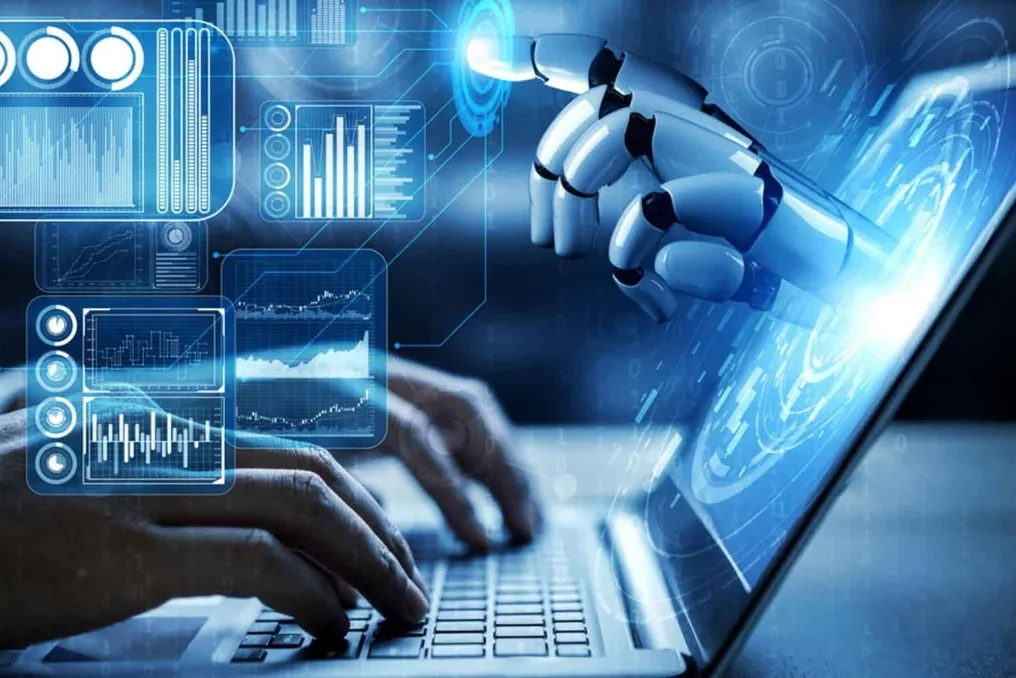
Hyperautomation is configured as the evolution of conventional automation, incorporating advanced technologies such as artificial intelligence (AI), machine learning, RPA, and data analysis. Unlike the simple automation of isolated tasks, this methodology establishes a connection between people, processes, and systems, resulting in operations that are more agile, efficient, and possess greater decision-making autonomy.
Historically, corporate automation focused on reducing costs and increasing productivity through the mechanization of repetitive activities. However, it has now assumed a deeply strategic role in organizations. Thanks to the advancement of AI, data analysis, and systemic integration, automation has transcended singular activities to orchestrate entire business process chains. This scenario gave rise to hyperautomation, a model that unites technologies, people, and processes to strengthen companies' competitive capacity in volatile markets.
Companies are under constant pressure to optimize efficiency without compromising innovation. Factors such as high operational costs, the shortage of specialized labor, the urgency of market responses, and increasing regulatory standards make operational efficiency a decisive factor for competition. For this reason, hyperautomation has moved from being seen merely as a technological trend to consolidating as a strategic priority.
The concept of hyperautomation is not limited to applying a single tool; it requires the union of resources such as AI, RPA, Business Process Management (BPM) platforms, process mining, system integration, and data analysis to automate entire workflows. In practice, this means eliminating bottlenecks, reducing dependence on manual intervention, and enabling faster and more informed operational decisions. The Top Strategic Technology Trends report, issued by Gartner, points out that hyperautomation remains among the main technological focuses due to its potential to raise productivity, scalability, and market adaptability.
Additionally, studies conducted by McKinsey & Company suggest that generative artificial intelligence has the power to significantly boost productivity in various business areas, especially when implemented in conjunction with existing processes, rather than in isolation. Data shows that the transition has already begun, with PwC revealing that 69% of Brazilian CEOs plan to expand the use of AI in their technology platforms, and 56% intend to incorporate this technology directly into workflows and business processes. This signals that AI is moving from being an experiment to becoming part of crucial operations.
Deloitte research indicates that the adoption of generative AI is shifting from the testing phase to large-scale applications. However, the primary obstacle has changed from a technological issue to matters of governance, integration, and process redesign. Thus, the competitive advantage lies not only in owning AI tools but in the ability to connect them effectively to business processes. A common mistake is assuming that hyperautomation only means automating what already exists; automating an inefficient flow only accelerates its problems. Therefore, more mature organizations begin the transformation by reviewing processes, standardizing activities, eliminating redundancies, and integrating information before applying any technology. In this sense, BPM, system integration, and process mining are vital for mapping bottlenecks and directing automation where it truly adds value.
The introduction of generative AI has intensified the possibilities of hyperautomation. Intelligent systems can now go beyond executing repetitive tasks, being capable of interpreting documents, providing summaries, assisting in decision-making, and continuously learning from vast datasets. When these capabilities are coupled with automated flows, there is a notable reduction in execution time and an increase in the quality of decisions, generating not only operational gains but also greater market resilience. Despite technological advances, hyperautomation does not negate the human role; it reallocates professionals from routine tasks to higher value-added functions, such as innovation, analysis, customer relationship management, and strategic decision-making. This transition demands investment in training and the development of an organizational culture focused on continuous improvement, since technology without prepared personnel cannot reach its maximum potential.
The market points to a future where operational efficiency will be determined less by the volume of installed systems and more by the effectiveness of their interconnection. Companies that manage to link AI, automation, data, and processes will be better equipped to react quickly to economic changes, optimize costs, enhance customer experience, and conceive new business models. Hyperautomation represents this new phase of digital transformation: a strategy where technology, processes, and people work cohesively to generate lasting results, building smarter organizations prepared for the current business environment.