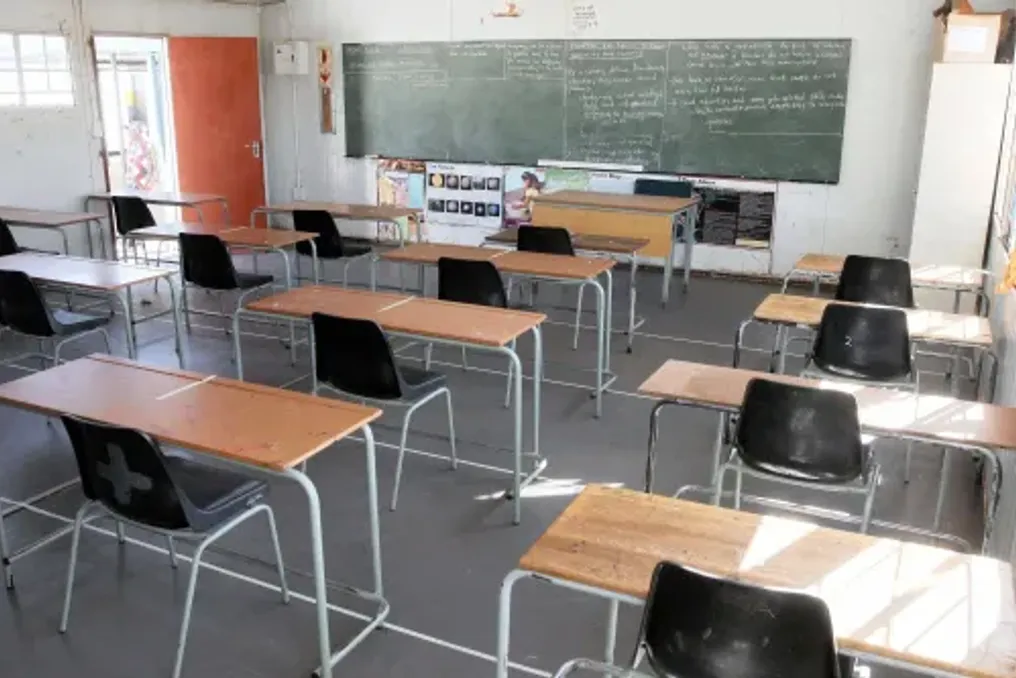
Issues of digital education shape the future of South Africa's youth, making the implementation of reliable online safety measures critically important for every student, regardless of the resources available at the school.
Digital Education and Safety
The potential of digital education offers students, even in the most remote rural areas of South Africa, access to the same learning materials, research tools, and digital skills as students in well-resourced urban schools. This makes the project worthy of serious attention.
According to the Department of Basic Education (DBE), over 545,000 ICT devices were procured for learners and more than 30,000 ICT devices for teachers in the financial years 2022/23 and 2023/24, and 10,588 classrooms were equipped with ICT resources for teaching and learning. Currently, over 535,000 learners and nearly 60,000 teachers are connected to digital resources for content and learning.
However, despite positive steps, digital security must keep pace with this progress. The internet has become an integral part of the learning process for Generation Alpha. Yet, providing children access to digital tools without proper protection creates risks, and digital classrooms are no exception.
International Warnings and Protection Models
UNESCO has warned that while digital technologies and artificial intelligence can expand access to education, they raise serious questions regarding privacy, security, ethics, governance, and equity. Therefore, the discussion about connecting schools is closely linked to security issues.
A phased approach to cybersecurity, based on each school, can be effective when connecting a small number of institutions, but it becomes extremely complex when supporting thousands of schools, many of which have limited on-site technical resources. The comprehensive education guideline acknowledges that adapting school IT infrastructure for digital transformation requires a transformation of security to protect against an ever-growing attack surface.
The Sovereign Campus Concept
The 'Sovereign Campus' model is particularly relevant because instead of expecting each school to manage its own security, filtering, access rules, and threat response in isolation, the education system can be protected through a centrally managed, sovereign security architecture. This approach allows for uniform management of security policies, web filtering, anti-malware protection, access control, data protection, and visibility across thousands of distributed endpoints.
The learner must be protected, whether they are using the school's computer lab, a tablet in class, or a managed device at home, just as a teacher must be able to access approved platforms without unnecessary hurdles, and administrators must see risks without requiring every school to function as a fully staffed IT department.
Scale and National Responsibility
In digital education, the issue rarely boils down to one device, one school, or one application; rather, it is a cumulative risk associated with hundreds of users, devices scattered in various locations, and different learning platforms. Digital education should act as an equalizer of opportunities for youth nationally, and protection against cyber threats inherent in this interconnected paradigm must not become a hidden source of inequality.
The level of learner protection should not depend on the resources of their specific school or the presence of a technical specialist on site on a given day. The DBE noted that ICASA, in support of the SA Connect Policy, took on a social obligation to allocate 16,139 public schools to five licensees, and also allocated 570 libraries for connectivity. The scale of such a project underscores the need for a security model capable of operating at a national level to ensure a consistent baseline level of protection everywhere.
Fundamental Solutions for the Future
The national education system processes sensitive information, including student records, teacher credentials, school administration data, device activity, and behavior in digital learning, all of which require protection. When this data is distributed across devices, cloud services, third-party platforms, and school networks, the question of control over it becomes absolutely critical.
The global benchmark in such environments lies within Sovereign SASE frameworks, which allow organizations to maintain control over sensitive data while complying with regional data regulations. South Africa's own regulations have already paved the way for implementing these world-class protective measures, as well as achieving optimization benefits. These sovereignty-oriented solutions also support secure access for users, applications, and data regardless of location, while maintaining granular control over access and data movement.
The South African education system should not have to choose between connectivity and security; these two aspects must be developed jointly. A secure digital education model must include centralized visibility, age-appropriate content filtering, anti-malware protection, identity and access control, secure network infrastructure, automated threat response, and clear management of student data. Furthermore, it must be simple enough for schools to use, even if they do not have large IT teams on site, which is the case in the vast majority of instances. School connectivity should be viewed as critical national digital infrastructure, similar to how roads, power grids, and water systems are built with safety standards in mind, as they serve the public.