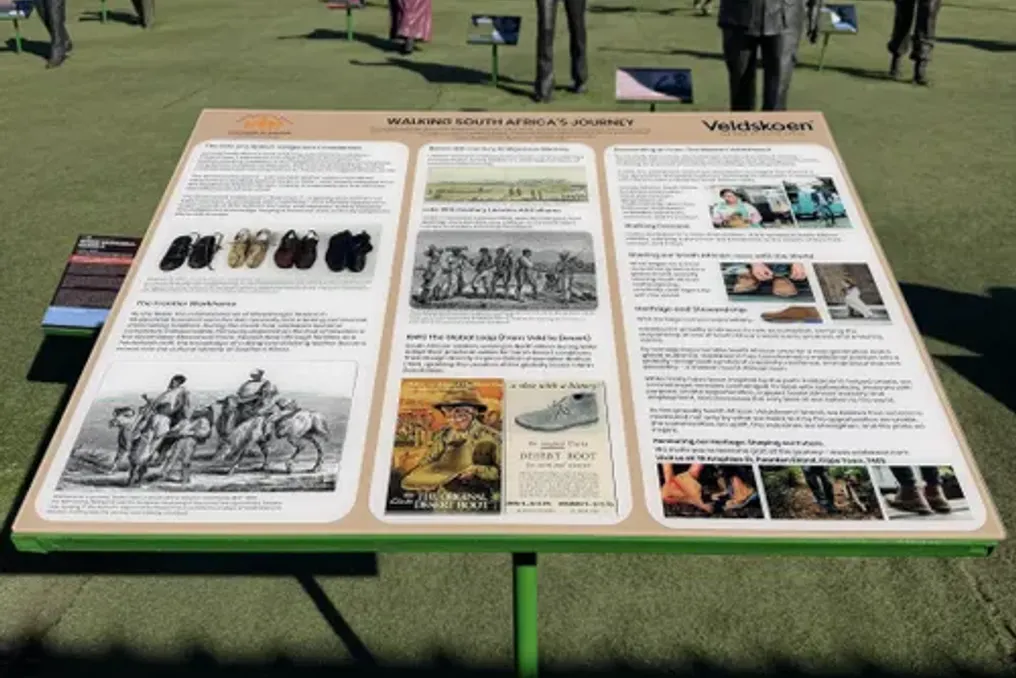
As part of the 'Long Road to Freedom' exhibition in Century City, a commemorative plaque dedicated to the famous Veldskoen footwear has been installed, which now details its origin and history.
Cultural Significance of Veldskoen
This popular footwear, known as vellies or veldskoen, is a mid-length boot made of suede or leather that is comfortable for both indoor and outdoor wear. This unique item of clothing from South Africa has become a cultural symbol and has gained heritage status. It is known through a song popularized by composer David Kramer.
Partnership and Heritage Recognition
The commemorative plaque is the result of a collaboration between the National Heritage Project NPC and a renowned South African footwear manufacturer. This plaque recognizes the footwear's contribution to innovation, entrepreneurship, craftsmanship, and South Africa's cultural heritage.
Exhibition and Its Exhibits
The installation is located in Century City, where the 'Long Road to Freedom' exhibition displays one hundred life-sized bronze sculptures. These sculptures immortalize the memory of leaders, visionaries, and ordinary citizens who contributed to shaping South Africa's path to democracy.
Representatives' Comments
Sarah Haynes, a representative of the 'Long Road to Freedom' exhibition, noted that this partnership reflects a shared commitment to preserving stories that continue to inspire and unite the people of South Africa. She stated that the installation of the Veldskoen plaque serves as recognition of a part of South Africa's cultural identity, celebrating craftsmanship, ingenuity, and resilience, while honoring traditions passed down through generations.
Historical Roots of the Footwear
According to the information presented on the plaque, the roots of this footwear date back centuries and are linked to the leatherworking traditions of the indigenous Khoekhoe people. They developed durable boots from raw hide suitable for South Africa's diverse landscape. Historical records show that the word 'veldschoen' first appeared in Cape Town in 1676, after which the footwear was adopted and adapted by settlers, farmers, and travelers, becoming a permanent symbol of South African culture.
Modern Design Revival
In 2016, the partner company updated the traditional design for a modern audience, combining the recognizable silhouette with contemporary styles while continuing to manufacture the footwear in South Africa. Sarah Haynes emphasized that the new plaque proves that heritage extends beyond monuments and historical figures, including everyday symbols that tell the story of South Africa. She added that recognizing Veldskoen at the 'Long Road to Freedom' exhibition allows for the acknowledgment of South Africa's unique success story, ensuring future generations can appreciate the heritage, ingenuity, and craftsmanship behind one of the country's most enduring cultural symbols.