As the high tourist season begins, it is expected that approximately three million passengers will pass through Dubai airports in the first half of July 2026, according to data from the Dubai Customs Authority.
}]As the high tourist season begins, it is expected that approximately three million passengers will pass through Dubai airports in the first half of July 2026, according to data from the Dubai Customs Authority.
}]It is crucial for UAE travelers to know the rules for importing goods and permissible quantities to comply with UAE customs regulations. The Dubai Customs Authority has stated that arriving passengers can bring gifts worth up to 3,000 dirhams without paying duties, provided the items are personal in nature, limited in quantity, and not intended for commercial activity.
According to the passenger guide issued by this authority, which describes permitted goods for entry into the UAE and conditions for duty exemption, travelers must not engage in trading imported goods to claim the exemption. Duties are levied on any quantities or values exceeding the established limits, as well as on baggage exceeding the allowed norms.
Passengers are allowed to bring the following items into Dubai without paying customs duties:
Personal belongings of the passenger are also permitted and exempt from customs charges. These include video cameras (analog and digital) with corresponding tapes and accessories, cash, currency, and traveler receipts totaling less than 60,000 dirhams, provided the passenger is at least 18 years old.
Additionally permitted in acceptable quantities are radio systems, combination transmitters, CD and DVD players, slide and film projectors with accessories, telescopes, mobile phones, portable televisions, computers, including laptops, strollers, portable musical equipment, sports equipment, portable typewriters, calculators, wheelchairs, and cars.
To qualify for duty exemption, several conditions must be met: baggage and gifts must be personal in nature and not constitute a commercial shipment. The passenger must not be a frequent traveler with regular imports of goods or an crew member of the transport vehicle. Furthermore, passengers bringing in permitted cigarettes or alcohol must be over 18 years old, and these conditions apply to accompanying persons.
The import of all types of narcotics (such as hashish, cocaine, heroin, poppy seeds, hallucinogen pills, etc.) is strictly prohibited. Goods intended for import from boycotted countries, as well as natural ivory and rhinoceros horn, are forbidden. Tools and mechanisms for gambling, three-layer fishing nets, original engravings, printed publications, lithographs, sculptures, and statues of any material are also prohibited.
Furthermore, used, restored, and inlaid tires, radioactive substances, and printed publications, oil paintings, photographs, postcards, books, magazines, stone sculptures, and mannequins that contradict Islamic teachings, decency, or intentionally imply promiscuity or disorder are prohibited. Any other goods prohibited from import under UAE customs laws or other local laws, as well as counterfeit and duplicate currency.
Goods accompanying passengers whose quantity or value exceeds the established limits are subject to customs duties on the excess amount. If customs duties are not paid, the excess goods may be detained, and the passenger will be issued a detention receipt to pay the required duty within 30 days of arrival. The detention period may be extended by another 30 days upon the passenger's request and approval of the Customs Center manager for processing the goods after payment of duties. If the set period expires, the goods are transferred to an auction platform for sale at a public auction conducted by the Dubai Customs Authority.
All passengers arriving in the country are required to declare cash amounts exceeding 60,000 dirhams (approximately 16,350 US dollars), or any other currency equivalent and traveler receipts, by completing the appropriate declaration. Passengers under 18 years of age must not carry amounts exceeding this limit; their funds may be added to the legal guardian's allowed limit if they accompany the child.
Passengers (both residents and non-residents) may bring a supply of medicine for up to three months for personal use. An original prescription, certified and signed by the official UAE embassy in the country of origin, indicating patient details, disease description, etc., must be attached. All medications must be in their original packaging and not expired. Taking psychotropic drugs without prior permission from the Ministry of Health is not permitted, even in small quantities and with a prescription. Confiscation of such medications is punishable by law.
To import pets, such as cats and dogs, prior import permission must be obtained from the Ministry of Climate Change and Environment by filling out an online application.
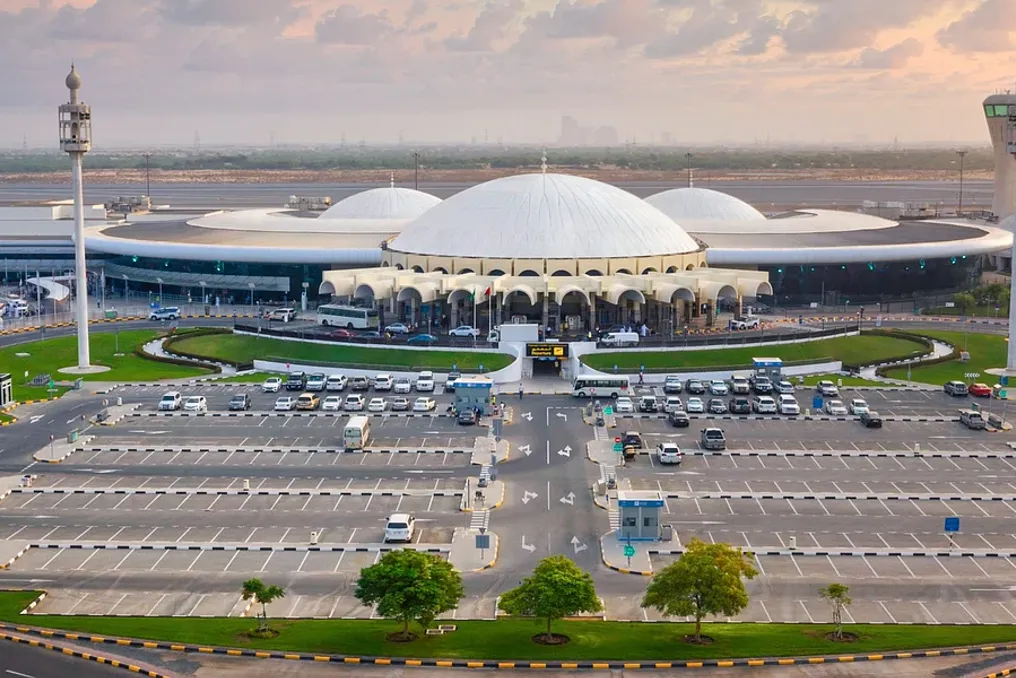
Sharjah Airport is preparing for the start of the peak summer travel season in the UAE, expecting to handle around three million passengers and conduct approximately 19,000 flights during this period.
The airport announced that it has implemented a comprehensive operational plan aimed at ensuring smooth passenger movement during this period and maintaining the highest standards of safety and security. It emphasized that it is fully prepared to cope with the expected increase in passenger traffic thanks to enhanced coordination among all operational teams and support services, including performance monitoring to maintain operational efficiency.
Airport guests were advised to arrive at least three hours before their scheduled departure to avoid crowds and queues at check-in. They were also reminded to verify the validity of all required travel documents and familiarize themselves with baggage handling rules before traveling. Furthermore, the 'Home Check-In' service is available in the emirate, allowing passengers to complete travel procedures from home.
The airline stated that Sharjah Airport continues to enhance its readiness and develop services to meet the growing demand for travel. This confirms its commitment to providing a convenient and efficient travel experience while supporting the sustainable growth of the aviation sector in the Emirate of Sharjah.
The peak summer tourist season, which runs from late June to August, has prompted other airports in the country to prepare for the influx of passengers following the resumption of flights to near-normal capacity due to the regional war. Dubai International Airport expects July 12th to be the busiest day of the season, anticipating 225,000 travelers. In the first half of July, the airport forecasts processing about three million passengers through its terminals.
Zayed International Airport, in turn, demonstrated daily record growth, accepting 93,000 passengers from June 26th to June 30th.
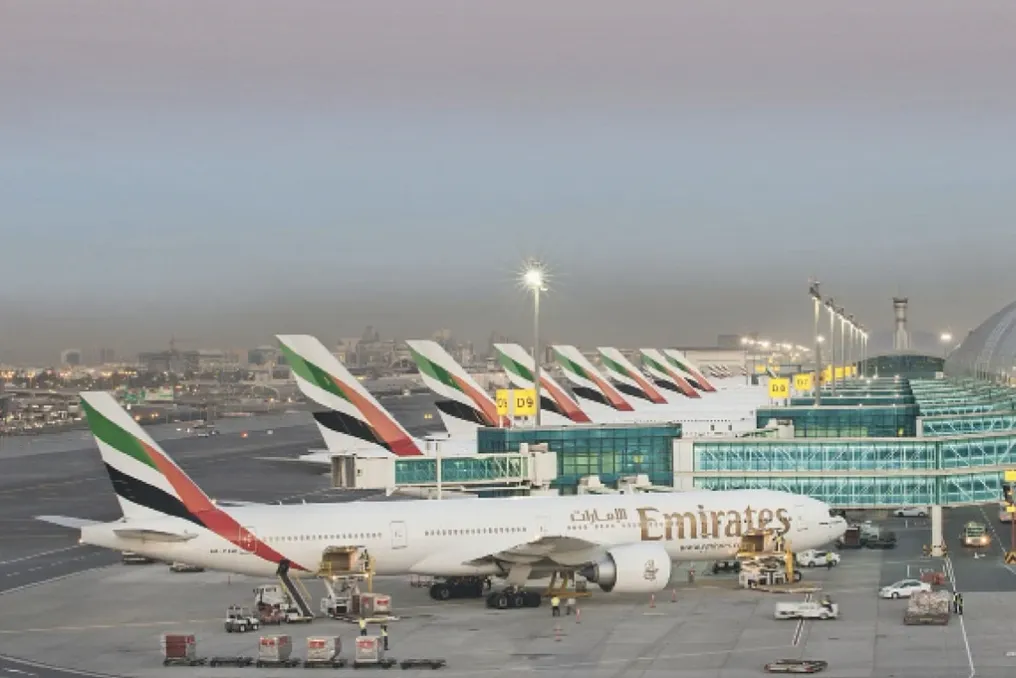
Dubai International Airport (DXB) is preparing for an active start to the summer season, as approximately three million guests are expected to pass through its terminals in the first half of July. The summer influx is anticipated to begin with a sharp increase in departures on July 2nd, as most educational institutions close for summer holidays on July 3rd.
July 12th is forecast to be the busiest day, expecting over 225,000 travelers. Furthermore, daily traffic during the two-week period is expected to consistently exceed the 200,000 mark. Transit traffic is projected to account for about 50 percent of the total passengers, strengthening Dubai's position as one of the world's most connected aviation hubs.
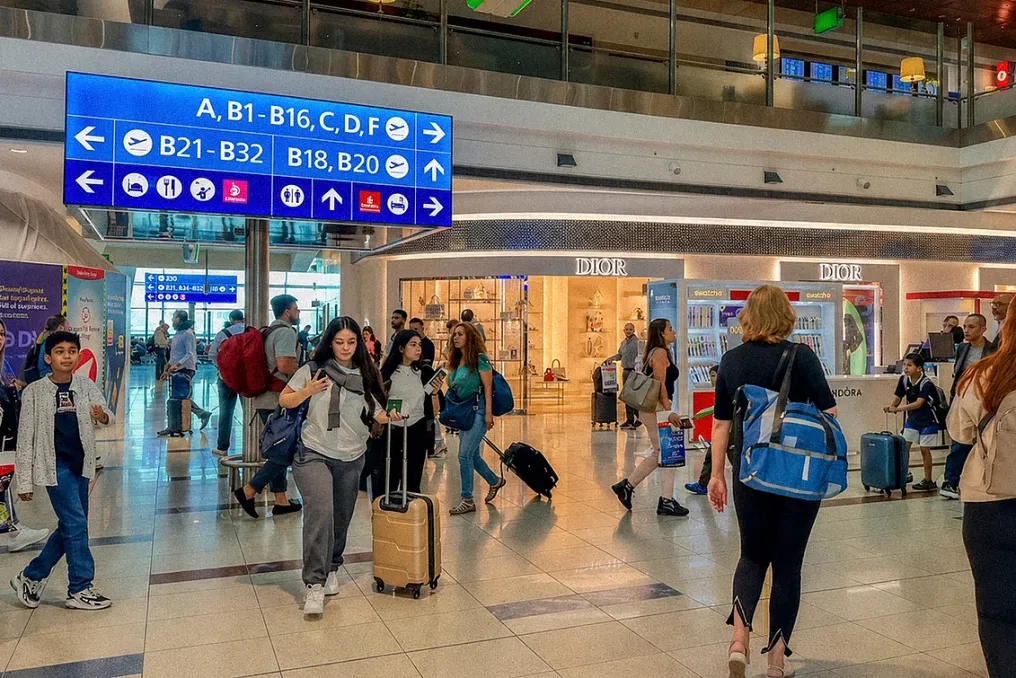
Dubai Airports, in collaboration with its partners at oneDXB, has activated its readiness plan for the summer to ensure smooth, safe, and timely journeys for all travelers. Guests are advised to arrive no earlier than three hours before departure and to use online check-in whenever possible. Emirates passengers can also utilize self-check-in options at the airport, in the city, and onboard.
Families with children over 12 years old can use smart turnstiles for quick passport control. Additional support is provided for people with disabilities, including dedicated accessibility routes, trained staff assisting guests with yellow ribbons, and a designated travel assistance lounge in Terminal 2. Travelers are reminded that spare batteries and power banks must only be carried in carry-on luggage. Last year, additional restrictions were introduced on carrying power banks to ensure passenger safety following a series of international incidents involving the combustion of these devices. It is also advised to monitor current travel rules and necessary documentation for the destination. Flight and gate updates are available via the DXB Express Maps navigation platform, accessible by scanning a QR code.
In Concourse B of Terminal 3, departing and transit passengers can visit the 'I Heart DXB' interactive installation. By uploading selfies, travelers become part of a living mosaic portrait of Dubai in the colors of the UAE flag, next to a wall of handwritten messages. In 2025, DXB welcomed a record 95.2 million guests, marking the busiest year in its history and the highest annual international traffic ever recorded by any airport. Meanwhile, Dubai World Central - Al Maktoum International (DWC) reflects the city's vision for the future of aviation, with expansion plans announced in May 2024 involving a record investment of $35 billion. Over the next decade, DWC is set to handle 150 million passengers annually, subsequently increasing to 260 million passengers and 12 million tons of cargo.
Citizens of the United Arab Emirates (UAE) are showing relief and delight following the permission to visit Lebanon again and the lifting of the travel ban associated with military actions in the Arab country. Many stated that they had been awaiting this opportunity for months, and in some cases, years.
The Ministry of Foreign Affairs (Mofa) announced that UAE citizens can begin traveling to Lebanon starting Monday, June 29, 2026. However, this requires compliance with strict requirements, including mandatory registration through the 'Twajudi' service before departure.
Noura Al Katiri from Al Ain shared her joy, as it allowed her to resume plans that had been postponed due to the regional situation. She noted: 'I was so happy when I heard that UAE citizens can finally travel to Lebanon again.' She had planned to attend a best friend's wedding but had to postpone the trip. Al Katiri emphasized that registering on the Twajudi platform provides a sense of security, as her country monitors her everywhere.
Abdullah Al Mansouri from Abu Dhabi reported that the decision opens the way for a long-awaited meeting with friends. He mentioned that Lebanon has always been on his and his friends' wish list, and they love the country for its adventures, mountains, sea, and, of course, its people. Al Mansouri believes that the requirement to register on Twajudi is a reasonable precaution, providing peace of mind to those far from home.
Saud Faisal from Ras Al Khaimah called the decision a positive step that will encourage more Emiratis to visit one of the region's popular destinations. He described Lebanon as a place known for its stunning nature, pleasant atmosphere, and variety of attractions, including markets, restaurants, beaches, and historical monuments. Faisal also stressed that the need to register on Twajudi reflects the UAE's commitment to protecting its citizens abroad.
In Faisal's opinion, this requirement is beneficial because it allows authorities to contact citizens during emergencies, speeds up assistance, and keeps track of traveler information, which enhances the safety and organization of trips. He predicts that this decision will increase interest in Lebanon, especially given its status as an outstanding tourist destination.
The Ministry of Foreign Affairs strongly emphasized that registration on the Twajudi service is mandatory for all UAE citizens traveling to Lebanon. Citizens will not be allowed to leave UAE airports if they are not registered on this platform. Furthermore, travelers must notify the authorities of their return through the same service upon completion of the trip.
This decision followed restrictions introduced on April 30, when the UAE advised against traveling to Lebanon, Iran, and Iraq amid regional events, urging citizens already in these countries to return to the UAE as a preventive measure.