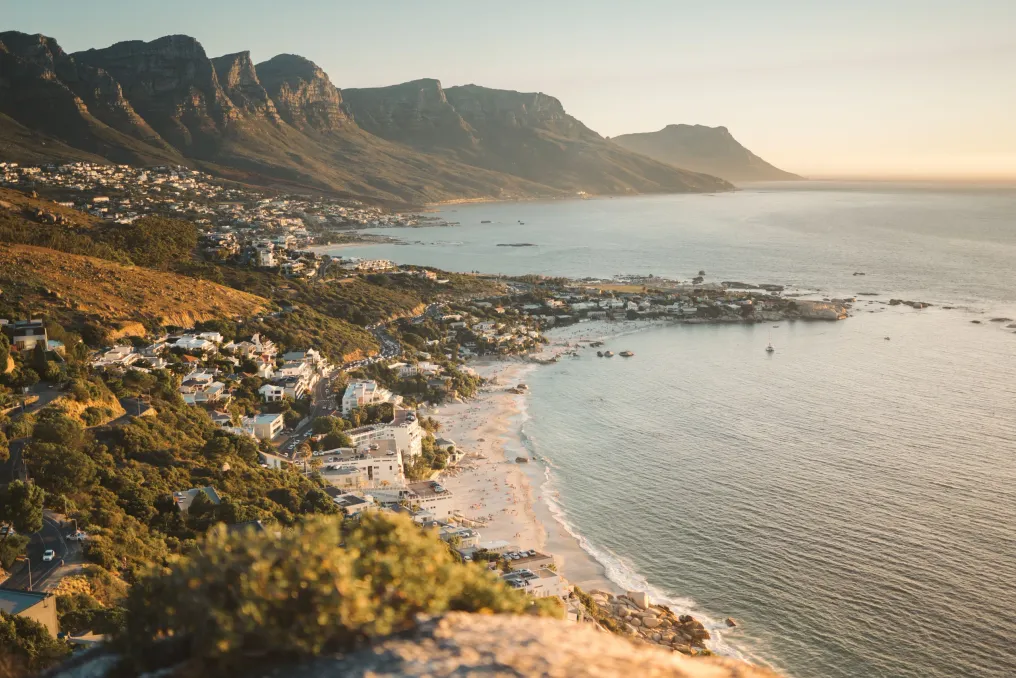
Driving along the Cape Town coast often feels like being in a cinematic film. It might be the smell of salt in the air, the changing light over the Atlantic, or the endless expanse of the ocean beside the road.
Driving along the Cape Town coast often feels like being in a cinematic film. It might be the smell of salt in the air, the changing light over the Atlantic, or the endless expanse of the ocean beside the road.
Although some of the best routes around Cape Town are quite short—taking only 20 to 30 minutes—they offer enough scenery to turn an ordinary day into a mini-vacation. To make the trip even more enjoyable, the author has compiled five iconic coastal routes, accompanied by mood-matching playlists.
1. Serenity at Dawn — From Muizenberg to Kalk Bay
The early morning hours along False Bay have a softer rhythm. Surfers hit the water before the crowds arrive, fishermen prepare their boats in Kalk Bay harbour, and the pastel beach huts in Muizenberg glow in the first rays of light. This route follows the coastline almost entirely, making it one of Cape Town's most relaxing coastal drives.
At this spot, you can stop for coffee at Olympia Café in Kalk Bay, visit independent bookstores and antique shops, and watch the seals near the harbour. The playlist for this route has a calm, contemplative, and slow atmosphere.
2. Volume Up — From Sea Point to Hout Bay via Chapman’s Peak Drive
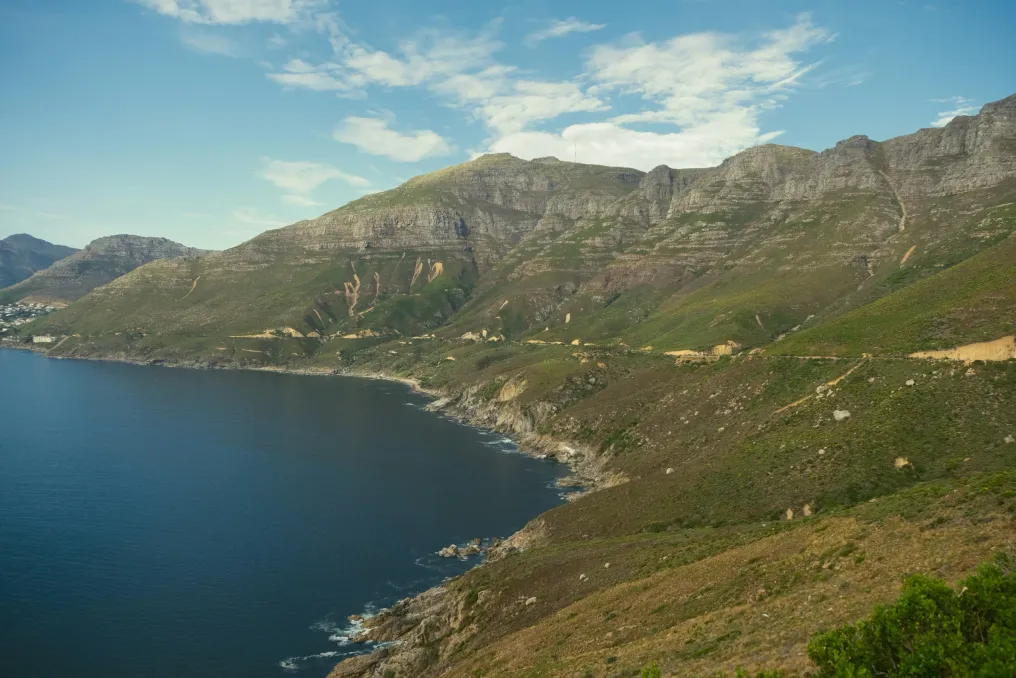
Few roads in South Africa compare to the dramatic curves of Chapman’s Peak Drive. This road, built in 1922 after long engineering challenges, skirts sheer cliffs above the Atlantic and remains one of the country's most photographed roads. The combination of mountains, sea, and countless viewpoints makes it worth visiting multiple times (a toll fee applies).
Along the way, you can visit Chapman’s Peak viewpoints, eat fish sticks and chips in Hout Bay, and enjoy ice cream while watching the boats return to the harbour. The music accompaniment here sets an energetic tone for a drive with the windows down.
3. Golden Hour Classic — From Gordon's Bay to Roei Els
Clarence Drive (R44) consistently ranks among the most scenic roads in South Africa, winding along the Cederberg Biosphere Reserve between Gordon's Bay and Roei Els. The route offers continuous views of the ocean on one side and rugged fynbos-covered mountains on the other, especially beautiful in the late evening when the cliffs turn golden.
Here, you can admire sunset viewpoints, visit Roei Els beach, and watch whales during the season (June to November). The playlist for this section has a nostalgic, timeless, and effortlessly stylish atmosphere.
4. Indie Coffee Stroll — From Bloubergstrand to Melkbosstrand
This stretch of coast, offering an unparalleled view of Table Mountain across Table Bay, is popular among cyclists, kite surfers, and photographers. It is an easy ride that feels far from the city centre, especially outside peak traffic hours.
Here, you can find waterfront cafes, take sunset photos, stroll along the beach, and visit local bakeries. The musical mood of this route is coffee, cameras, and sea air.
5. Ocean Therapy — From Simon's Town to the Gates of Cape Point
Leaving Simon's Town, the road becomes quieter, winding towards the entrance to Cape Point. Keep an eye out for baboons and ostriches, as well as the breathtaking ocean views before entering the national park. The journey feels wonderfully removed from the pace of city life.
Along this path, you can visit the penguin viewpoint in Boulder's Beach, Buffalo Bay, and the Cape Point Nature Reserve, and have a picnic with an Atlantic view. The playlist for this segment is conducive to quiet moments and deep breathing.
To make every coastal drive even better, it is worth considering a few simple recommendations. It is recommended to download the playlist before leaving, as mobile reception can be unstable in some areas. It is also advised to start early in the morning to avoid rush hour traffic, especially on Chapman’s Peak Drive and Clarence Drive. You should bring a jacket, as even sunny days in Cape Town can be windy by the coast. Finally, allow time for spontaneous stops, as some of the best viewpoints are not marked on maps.
The best coastal drives have an amazing ability to slow down time. Between mountain passes, sleepy harbours, and endless ocean views, thirty minutes turn into a memorable experience. Therefore, it is worth putting on a playlist, choosing a direction, and letting the Cape Town coast do what it does best—remind you that some of life's best escapes begin with just an open road and a favourite song.
Winter school holidays do not necessarily have to be spent indoors waiting for sunny weather, notes Miriam Kimvang. The Western Cape offers many exciting places where rainy weather can become part of the adventure rather than a reason to avoid it. If the forecast predicts cloudy weather, these destinations should be included in your holiday plan for rainy days.
Near Langebaan is one of South Africa's most amazing monuments to prehistoric times. The Western Coast Fossil Park houses fossils dating back about five million years, allowing visitors to imagine what this region looked like long before humans appeared.
Guided tours are conducted by families at the excavation site, where remains of ancient bears, saber-toothed cats, short-necked giraffes, and other extinct animals were discovered. Inside the visitor center, these finds come alive through interactive exhibits, demonstrations, and life-sized reconstructions that capture children's imaginations. Even if the rain makes outdoor walks less appealing, the museum itself offers hours of educational entertainment. It is a place where children barely notice they are learning, while adults remain equally fascinated.
If the rain subsides, the walking trails around the reserve provide another opportunity for a stroll before heading home.
Parents looking for an energetic indoor activity can head to Wonderdal, located at the Hazendal Wine Estate near Stellenbosch. This center, designed specifically for children aged five to thirteen, combines digital games, science, movement, and creative play into one immersive experience.
Children complete tasks, solve puzzles, interact with friendly digital characters, and explore themed activity zones under the supervision of trained game guides. Meanwhile, parents can enjoy restaurants, cafes, or wine tastings at the estate, knowing that the children are on their own adventure. Wonderdal skillfully blends education and entertainment, making it an ideal option for a rainy day when little travelers are full of energy.
Rain clouds may obscure the night sky, but inside the Iziko Planetarium and Digital Dome in Cape Town, the universe is always visible. South Africa's most modern digital planetarium offers captivating shows that transport visitors far beyond Earth. One moment you are flying through the Milky Way, and the next you are diving under the ocean or exploring distant planets.
The giant dome screen surrounds viewers with breathtaking views, turning every show into an adventure. Children interested in space, science, or dinosaurs will find age-appropriate presentations throughout the year, and adults are often just as captivated. Nearby museums and gardens also allow one visit to easily turn into a full day if the weather improves.
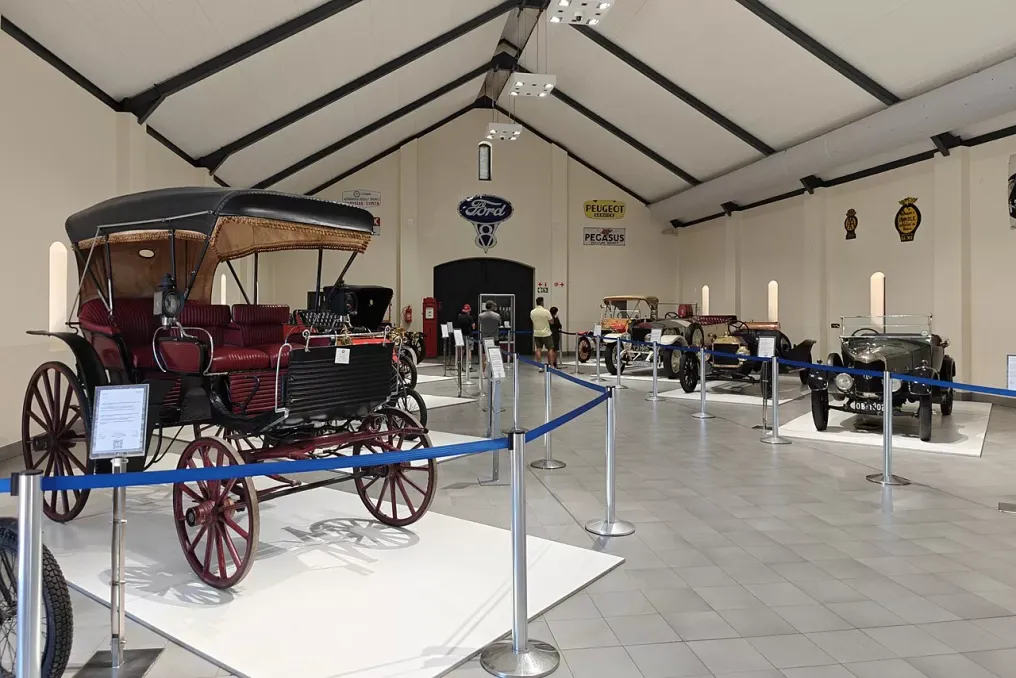
You can take a journey through the history of motoring at the Franschhoek Motor Museum. Classic cars can charm visitors of all ages, whether you are knowledgeable about vintage models or simply appreciate beautiful design. Located on the picturesque L’Ormarins Estate, the Franschhoek Motor Museum houses an impressive collection of over 80 vehicles spanning more than a century of automotive history.
From elegant vintage classics and racing legends to luxury cars and iconic everyday vehicles—each exhibit tells a story of innovation and changing lifestyles. Spacious indoor galleries make this a wonderful place to visit on a rainy day, allowing visitors to browse the exhibits at their own pace, studying the evolution of transport. Parents often reminisce about cars from their childhood, while younger visitors marvel at how much vehicles have changed over time.
Sometimes the simplest activities bring the greatest joy. At Scratch Patch in Simons Town, children and adults can fill containers with polished semi-precious stones from huge mounds of colorful crystals. Quartz, jasper, tiger's eye, rose quartz, and amethyst sparkle under the light, turning gem hunting into an exciting treasure hunt.
Inside, there is also a fascinating mineral exhibition where visitors can learn more about South Africa's geological wealth and how these beautiful stones are formed. Many families spend much longer here than planned while everyone searches for their favorite colors and shapes. The best part is that every visitor leaves with a unique collection to remember the day.
Thus, instead of canceling holiday plans when the rain starts, it is worth grabbing a warm jacket, accepting the season, and discovering another side of the Western Cape that is just as captivating under a cloudy sky.
Cape Town's beaches are very popular, and places like Clifton, Camps Bay, and Muizenberg attract residents and tourists year-round. However, behind these well-known sandy stretches lies a quieter side of the city's coast.
From the West Coast to the Cape of Good Hope, you can find secluded coves, rugged shorelines, and sheltered beaches offering a more relaxed pace of life. In these locations, tidal pools teem with marine life, long walks along the shore replace bustling promenades, and the sound of the surf drowns out the crowds.
If you want to swap crowded beaches for peaceful coastal havens, these eight spots prove that you don't have to travel far to experience another side of Cape Town.
Travel time is approximate and may change depending on traffic, weather, and seasonal congestion. If you are heading to Table Mountain National Park, check SANParks before leaving regarding current conservation fees and gate operating hours.
Oudekraal Beach
Located between Camps Bay and Llandudno, Oudekraal Beach seems surprisingly secluded despite its proximity to the city center. It is protected by massive granite boulders and sits beneath the slopes of Table Mountain, offering a series of intimate coves instead of one large sandy expanse. As part of Table Mountain National Park, Oudekraal is valued for its exceptional natural beauty. The calm, crystal-clear water is ideal for a refreshing swim on warm days, and the rocky shore provides endless opportunities to explore tide pools teeming with marine life. Visitors here are invited to slow down: families gather near barbecue areas under milkwood trees, photographers linger until golden hour when the granite outcrops are bathed in warm light, and snorkelers quietly dive beneath the surface to discover colorful underwater ecosystems. The adjacent marine protected area also contributes to the preservation of fish populations and sensitive coastal environments.
Not far from the famous penguin colony at Boulder's Beach is one of the most underrated swimming spots in False Bay. Windmill Beach does not draw attention with loud claims; instead, it quietly rewards visitors who venture past the crowds. This small cove offers much calmer water than many surrounding beaches, creating excellent conditions for swimming, snorkeling, and exploring the seaweed forests thriving beneath the surface. The sheltered conditions also attract a surprising diversity of marine life. On most days, snorkelers often encounter colorful reef fish swimming among the algae, and African penguins are sometimes seen floating between rocks from the neighboring colony. The landscape above the water is equally captivating: granite formations frame unobstructed views of False Bay, and the slow pace allows hours to be spent moving between the beach, rock pools, and shaded picnic spots.
Within the Cape of Good Hope section of Table Mountain National Park, Buffels Bay feels wonderfully removed from the urban rhythm. Wide lawns open onto a broad sandy beach, and the tidal pools provide safe areas for family play when ocean conditions are less favorable. Buffels Bay offers enough space to settle in, allowing for a full day without feeling overcrowded. The surrounding landscape is also memorable: rugged mountains rise behind the coast, local fynbos shrubs cover the hills, and wildlife—including ostriches, baboons, and antelope—is frequently sighted in the reserve. During the annual whale migration in the open ocean, Southern Right Whales can often be seen, and the Cape Town coast is recognized as one of the world's best places for land-based whale watching between June and November. While the beach is perfect for swimming under good conditions, Buffels Bay is perhaps best appreciated for its sense of spaciousness. It is a place where hours disappear between beach walks, picnics, and simply observing the tides.
It is hard to believe that such an impressive beach remains overshadowed by the iconic Cape of Good Hope landmark just a few kilometers away. Diaz Beach, tucked beneath cliffs at the southwestern tip of the Cape of Good Hope, is one of the region's most dramatic coastal sections. Access requires descending a long wooden staircase, but every step is rewarded with unobstructed views of powerful Atlantic waves crashing onto a vast stretch of pale sand. Named after the Portuguese explorer Bartolomeu Dias, who rounded the cape in 1488, the beach feels wonderfully wild. There are no cafes, umbrellas, or noisy promenades here—only the sound of crashing waves and rare birds soaring overhead. The ocean is undoubtedly beautiful but often unpredictable, with strong currents and powerful surfing. Swimming is generally not recommended, so Diaz Beach is better suited for photography, beach walks, and simply enjoying the pristine beauty of one of Cape Town's wildest landscapes.
If solitude had an address, it would probably be Platboom Beach. Located in the Cape of Good Hope section of Table Mountain National Park, this stretch of coast feels refreshingly untouched. There is no coastal development, no noisy cafes, and often only a few footprints are visible in the sand. Platboom is one of the designated 'remote beaches' of the Cape of Good Hope, offering visitors a glimpse of the coast as it existed for centuries. The surrounding dunes support local vegetation, and the beach itself provides endless opportunities for long walks, birdwatching, and quiet reflection. Since the beach is in a protected area, it also serves as an important refuge for coastal biodiversity. Visitors are advised to stay on marked trails, if possible, and leave the environment as they found it to help preserve fragile ecosystems. Cape Town's coastal dune systems play a vital role in stabilizing beaches and supporting local flora, making responsible visitation particularly important.
Few coastal drives can compare in beauty to Clarence Drive, and Kogel Bay is one of the greatest rewards of this road. Situated between Gordon's Bay and Rouxel's, this stretch of golden sand is framed by the dramatic mountains of the Kogelberg Biosphere Reserve, where steep fynbos-covered slopes tumble into the ocean. Kogel Bay feels boundless. Even in warmer months, there is often enough space to find your own quiet patch of sand. The beach is particularly popular with surfers due to its consistent swell, and photographers flock here for the light at sunrise and golden hour illuminating both the mountains and the sea. Although swimming is possible in calm conditions, visitors should be mindful of changing surf and currents.
Approximately 50 kilometers north of Cape Town, Silwerstroomstrand offers a different view of the city's coast. Bordered by dunes and facing the vast Atlantic Ocean, this resort has long been a favorite among local communities while remaining largely unnoticed by tourists heading further west. The tidal pool provides a gentler option for swimming, and the surrounding picnic areas and barbecue spots make it suitable for relaxing family outings. Outside the resort, a three-kilometer stretch of continuous beach invites leisurely strolls, and the surrounding dune system supports rich avifauna and ecologically important Strandveld vegetation. History is also present here: the wreck of the *Reigersdal*, a Dutch East India Company ship that sank during a severe storm in 1747 after months of sailing from Europe, lies in the open sea.
Some beaches require very little from you. Smitswinkel Bay is not one of them. Accessible only via a footpath descending from a higher road, this secluded cove rewards those willing to make the journey, making it one of the most peaceful coastal spots on the Cape of Good Hope. Sheltered by rugged mountains, the bay feels serenely isolated despite being easily reachable from Cape Town. The beach itself is small and often quiet, and the crystal-clear water and rocky shore make it a favorite spot among experienced snorkelers and divers when marine conditions allow. The effort required to reach Smitswinkel Bay naturally limits the number of visitors, creating a sense of seclusion that is increasingly hard to find on the peninsula's more accessible coast. It is a place that reminds you why slowing down—and sometimes putting in a bit more effort—often leads to the most memorable experiences.
The best beaches in Cape Town will always hold their appeal, but some of the most memorable coastal experiences lie just off the beaten path. These quieter beaches offer a chance to slow down and see another side of Cape Town, from secluded coves and wild shorelines to tranquil sandy expanses. Wherever your next beach day takes you, treat these places with care. Respect the wildlife, stick to marked trails, and leave these places as you found them so that future generations can enjoy them.
South Africa is known for numerous popular tourist destinations that attract visitors year-round. Among these are places like Klarence, Dullstroom, Paternoster, and the Panorama Route. However, beyond these well-known spots, there are smaller towns that offer exceptional landscapes, fascinating history, and unforgettable experiences away from the crowds.
These lesser-known locations are ideal for travelers willing to stray from beaten paths, whether they are birdwatching enthusiasts, mountain trekkers, lovers of historical architecture, or simply those wishing to discover something new. Below are five such South African cities.
The town of Molteno, located in the Eastern Cape, is often overlooked during trips through this region. Nevertheless, a stop here allows one to discover a peaceful Karoo-style town with a rich railway history, stunning mountain views, and access to one of South Africa's most impressive natural features.
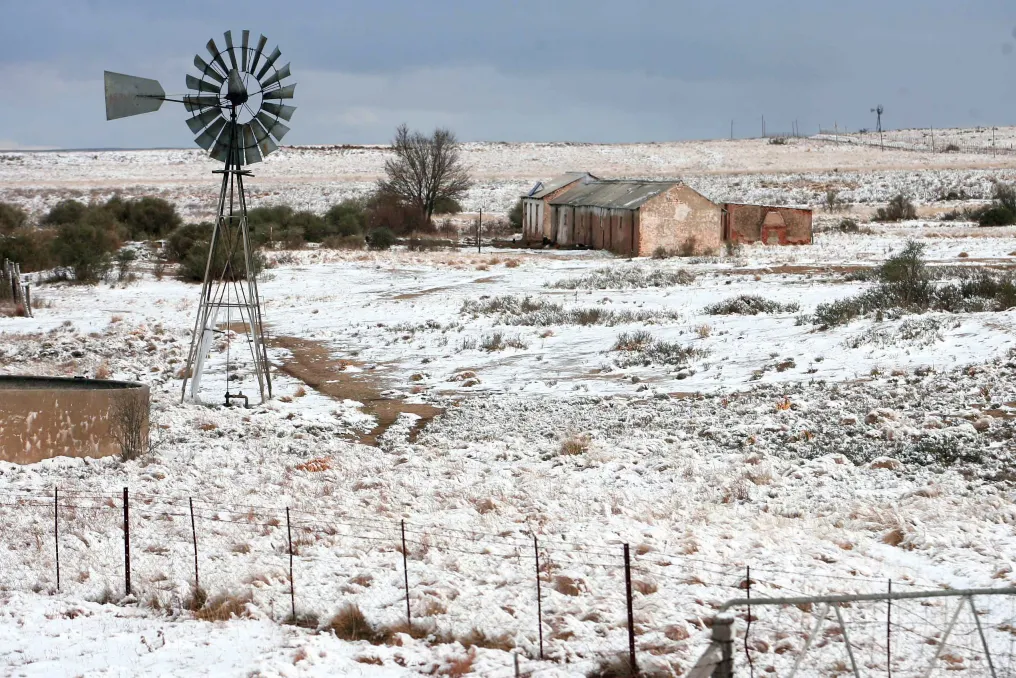
Nearby is Ben Macduie Plateau, the highest point in the Eastern Cape, which offers exciting hiking opportunities for experienced adventurers. In winter, snow regularly transforms the surrounding mountains into an unexpected alpine landscape, making it one of the few places in South Africa where snow is a regular seasonal feature. Furthermore, Molteno is close to the famous David de Villiers Dam, popular among anglers and outdoor enthusiasts. The open plains, fresh mountain air, and quiet roads create an atmosphere far removed from bustling tourist centers.
Chissismir, known as the 'Lake District of South Africa', is one of the country's least appreciated natural corners. This small town is surrounded by over 300 lakes, swamps, and wetlands, forming one of South Africa's most vital southern freshwater ecosystems.
Ornithology enthusiasts flock here for a good reason: flamingos, cranes, pelicans, and numerous species of waterfowl can be observed throughout the year. The wetlands support a remarkable diversity of wildlife. The region is particularly interesting during migration seasons when many species arrive from different continents. Besides birdwatching, visitors can explore picturesque gravel roads, visit historic sandstone buildings, and enjoy tranquil drives across rolling pastures.
Kaapsehoop feels like a town frozen between history and legend. This former gold rush settlement, known for its herd of wild horses, combines fascinating heritage with breathtaking views of Lowveld.
A walk through the village reveals restored Victorian buildings, cozy cafes, art galleries, and quiet streets lined with local trees. The surrounding forests contain scenic walking trails leading to dramatic rock formations and panoramic viewpoints. The wild horses remain the main attraction of the town. Although their exact origin remains unknown, they have become a permanent symbol of Kaapsehoop and are often seen peacefully grazing near the village. In cooler months, fog frequently blankets the escarpment, lending the area an almost mystical atmosphere, which explains why photographers and artists continue to visit.
Nowhere in South Africa is birdwatching associated as strongly with Vakkerstruim. Located near the KwaZulu-Natal border, this small town has gained international recognition among bird lovers due to its exceptional grassland habitats.
The surrounding wetlands are home to several endangered species, including the rare Rad's Lark and Bot's Lark, making Vakkerstruim one of the country's premier birdwatching spots. Even those without binoculars will have something to do. The town's well-preserved historic buildings, hospitable cafes, and rural guesthouses encourage visitors to slow down and adopt the rhythm of small-town life. Walking trails around the wetlands pass through beautiful scenery, while nearby farms and hills offer opportunities for cycling or leisurely drives.
Situated in the Magaliesberg Mountains, Hainersburg showcases a completely different side of Limpopo. Instead of scrubland and baobabs, visitors are greeted by cool forests, mountain streams, and lush gardens reminiscent of parts of the Midlands or even Europe.
The village has transformed into a creative hub, filled with cafes, galleries, craft shops, and local restaurants. It also serves as an excellent base for exploring the Magaliesberg forests and waterfalls. Outdoor enthusiasts can hike on local forest trails, mountain bike on plantations, or visit nearby lakes. In spring, colorful gardens bloom, and autumn brings vibrant foliage rarely seen in many parts of South Africa. Food lovers will also appreciate the growing number of farm stalls and local producers showcasing regional products.
One of the greatest pleasures of traveling through South Africa is discovering places largely untouched by mass tourism. These small towns offer meaningful connections with local communities, unique landscapes, and regional stories that often go unnoticed. Visiting less-known destinations also helps spread tourism benefits beyond traditional hotspots, supporting local businesses, guesthouses, restaurants, and guides, while promoting sustainable tourism across the country.