Small and medium enterprises (SMEs) are the second largest driver of the Indian economy, contributing 30.1% to GDP and 45.73% to exports. However, the adoption rate of artificial intelligence (AI) in this sector remains low. At the BCIC summit on AI in manufacturing, it was noted that the use of AI in organized manufacturing is less than 25%, and even lower among SMEs, lagging behind China, Germany, and the USA.
Understanding the role of AI in business
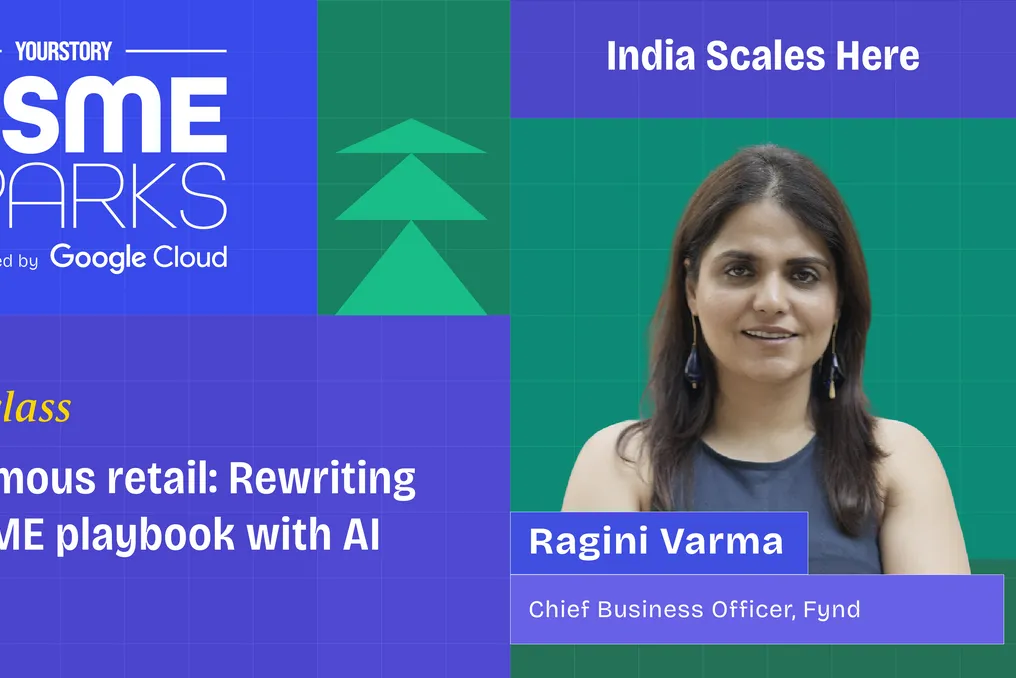
Ragini Varma, Business Development Director at Fynd, speaking at the MSME Sparks 2026 masterclass titled 'Autonomous Retail: Rewriting the SME Scenario with AI,' noted that entrepreneurs' hesitation is linked to a misunderstanding of AI's functions. She emphasized that AI is not just ChatGPT, but a tool that helps perform tasks autonomously, making them faster and higher quality.
Fynd, an AI-powered e-commerce platform, allows brands to manage websites, physical stores, and marketplace listings, such as Amazon, Myntra, and Flipkart, through a unified system that includes built-in AI tools for customer support and creativity.
Challenges faced by SMEs
Every small business owner is familiar with the difficulties of manual management: the need to manually check inventory before reordering, manually comparing prices between the website and the store—often after the customer has already noticed the discrepancy—and repeatedly answering the same questions on WhatsApp. Varma pointed out that errors are easy to make in this complex system—a missed order, an incorrect price, or a lost customer due to long waiting times. This can lead to viral sales remaining unmanageable, as every stage depends on human memory.
Artificial intelligence bridges this gap by tracking inventory, prices, and orders in real time and flagging what needs attention, while the seller retains the right to approve every action. Varma explained that AI does not work as a complete replacement, but rather as a second pair of eyes that never gets tired or distracted; the human makes the decision, and AI ensures the interaction cycle.
How Fynd helps optimize processes
Brand owners often have to juggle the roles of accountant and model. Varma notes that one person's capabilities are limited. This is particularly evident in creative tools: Fynd AI Studio and Fynd Generative Media can transform a single product photo into studio-quality images, model shots, and marketing videos based on a text prompt.
Regarding support, the AI assistant Kaylee answers standard customer queries and identifies urgent complaints based on message tone. Like other Fynd tools, it improves through the analysis of its own business data. Varma recommended customer support as a priority function, calling it 'always king,' because an unhappy customer rarely returns.
The rest of the functionality is aimed at solving coordination issues by providing a single dashboard displaying inventory, orders, and prices across the seller's website, marketplaces, and stores. Fynd AI PIM transforms a single photo into a ready-to-use marketplace listing, automating about 80% of the routine catalog creation work. Furthermore, Varma noted that logistics is an area where SMEs spend the most time trying to reach a manager who can connect them with the right person. Fynd Manage Logistics aims to solve this problem by integrating the seller's brand website and all marketplaces into a single inventory source, allowing B2B and B2C orders to be tracked and fulfilled from one place, not multiple disparate ones.
Consulting and use cases
Fynd also offers an AI consulting department to help SMEs determine where to start. Varma stated that the company's goal is not just to make money, but to help businesses grow. This consulting covers various industries: from industrial B2B stores managing offline and online sales, to accounting firms handling GST filing and bookkeeping, as well as food service establishments managing customer requests.
Use cases include Puma, which uses Fynd Store OS to ensure 'endless aisle' inventory visibility in stores, and JioMart, whose backend operations are supported by Fynd.
Varma's advice to SME owners
In Varma's opinion, the most common mistake is imitation without diagnosis. She criticized the trend in India where 'everyone does what others see doing,' insisting that this must stop. Entrepreneurs often purchase a whole suite of tools when the real problem lies in one narrow point. Varma advised against spending money on an expensive tool if a simple, low-cost program can solve the task, thereby avoiding solving the wrong problem.
Her recommendation was as follows: first address one bottleneck, and then choose a tool appropriate to its cost, instead of undergoing a full modernization immediately. Varma described Fynd itself as a bridge between large conglomerates and small businesses, possessing modularity that allows sellers to start with one problem and add tools as they grow. The advice for SME owners skeptical of AI was simple: do not let AI manage the business for them. You must either dictate terms to the AI or vice versa, and she suggested choosing the latter.