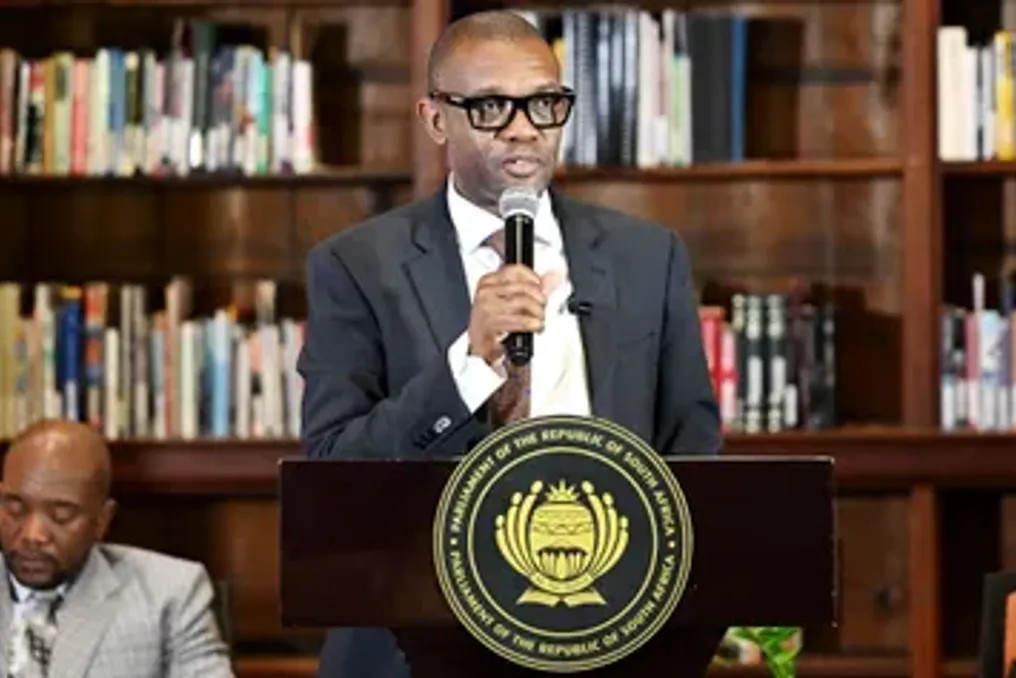
Songezo Zibi, chairperson of the Standing Committee on Public Accounts, stated that the Ministry of Finance is not omnipotent, and the National Treasury cannot constantly monitor the financial accountability of municipalities.
Johannesburg Governance Issues
Zibi noted that the City of Johannesburg is overly complex, and the quality and rigor of political oversight and leadership from its officials require improvement. He participated in a briefing by the Parliamentary oversight committees where the recent appearance of the municipality before Parliament was discussed.
Audit and Financial Status
The latest report by the Auditor-General, Tsakana Maluleke, indicated that municipalities in the Gauteng province, particularly, are facing declining audit outcomes, deteriorating financial health, and service delivery challenges. The City of Johannesburg was highlighted as an entity requiring continuous intervention from both executive and oversight bodies after its audit opinion downgraded from unqualified to qualified.
Mayor Dada Morelo, speaking before the Scopa Committee and the Portfolio Committee on Joint Municipal Affairs and Traditional Affairs (CoGTA), assured that his administration intends to restore the city's financial health. It was revealed that over the past five years, the city has written off R45.16 billion in expenditures that were unauthorized, irregular, fruitless, and wasteful (UIFW).
Three Key Observations by Zibi
Zibi emphasized that work with the City of Johannesburg is being conducted jointly with CoGTA, but it will continue across all municipalities. He stated that they will work with the Auditor-General, other departments, the National Treasury, and CoGTA until the end of the seventh Parliament to ensure a visible level of service delivery to the public.
He outlined three main points observed by the two committees in their work with the City of Johannesburg. Firstly, there is a need to improve the quality and rigor of political oversight and leadership from the Mayoral Committee Members (MMC) and the board governing the large number of agencies in the City of Johannesburg. Since there are about 12–13 agencies plus the core administration, increased control from the MMC, the mayor, and council committees is required, especially the Municipal Public Accounts Committee.
Zibi added that with the effective execution of these functions, it might even become unnecessary for municipalities, including the City of Johannesburg, to appear before Parliament.
Structural Complexity and Contracts
The second observation concerned the excessive complexity of the city. In Zibi's view, there is no other city on the planet that has 13 structures, each with its own management system, board of directors, and leadership, which the Auditor-General must assess separately. This complexity hinders effective political and executive oversight.
The third observation, named by Zibi, related to contract and project management. The Auditor-General raised numerous questions regarding contract management, unpaid supplier invoices, and the unavailability of technical drawings, despite contractors performing the work and continuing to receive payment. These issues extend to agencies such as City Power and Pikitup, some of which are experiencing cash flow problems.
Further Steps and Remarks by Mkhize
Zibi confirmed that they are not satisfied with the current situation but intend to engage with the City of Johannesburg and other metropolises on an ongoing basis with other institutions so that residents receive a decent level of service. Zweli Mkhize added that they have been tasked with clarifying many issues. He mentioned the shift from financial management problems to difficulties arising from credit institutions, which expressed dissatisfaction over huge debts, service delivery problems, high water losses, and arrears owed to municipalities and Eskom.