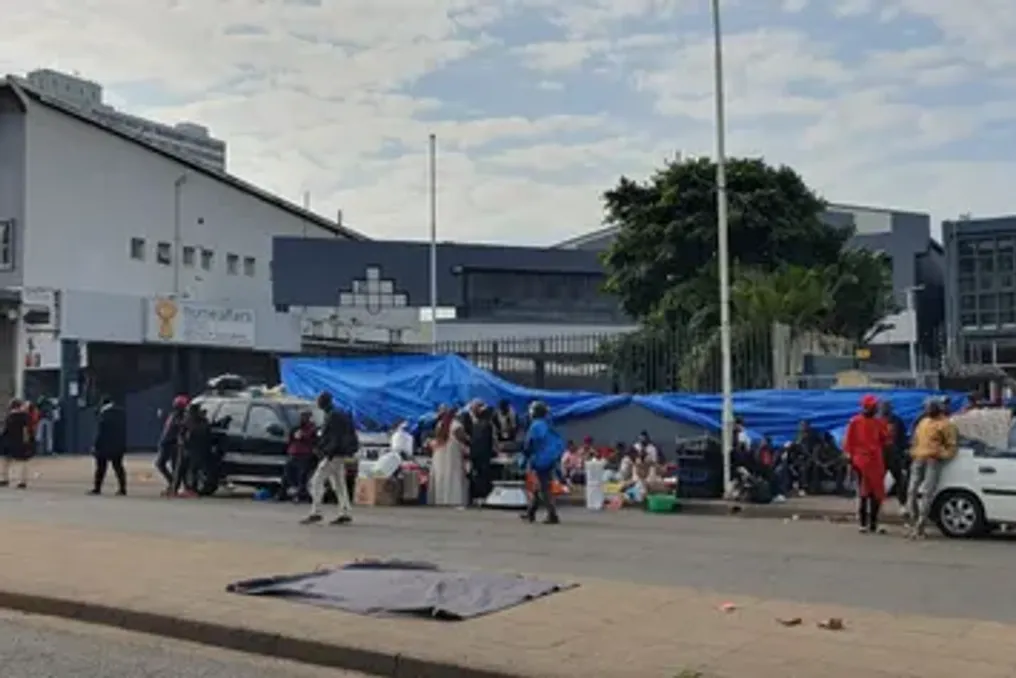
Recent events have led to over 400 legally registered refugees, whose homes were abandoned, being forced to live and sleep on sidewalks in front of the Immigration Department reception center on Che Guevara Street in Durban.
Humanitarian Crisis in the Country
After June 30th, the country faced a number of serious problems. The first is the development of a humanitarian crisis across the territory, affecting tens of thousands of internally displaced persons. Among them are both unregistered foreigners and legal refugees who are gathering in various locations. They were either expelled by militia gangs or left their homes themselves, fearing for their lives and taking only the bare necessities.
Media reports indicate that foreigners, both documented and undocumented, have become targets in various ways: their property has been damaged, belongings stolen, and in some cases, they have been directly attacked, sustaining severe injuries or even dying. This situation has been ongoing for several weeks and intensified after June 30th as people try to find safe shelter.
Living Conditions and State Response
As a result, people are forced to gather in open spaces without a roof over their heads, often having to spend cold nights without access to food, water, and sanitation until civil society and humanitarian aid organizations intervene to provide these basic survival conditions. Although many undocumented foreigners have been repatriated to their home countries through the efforts of the national government and relevant embassies, a significant number of people remain in gathering places awaiting assistance.
It is tragic that these attacks are committed by one group of Africans against another, under the pretext of 'fighting illegal immigration.' While the issue of illegal immigrants is a legitimate concern, it should never be a reason for murder, property robbery, or damage to business. However, this is happening before everyone's eyes, despite groups calling for the deportation of undocumented foreigners who claim not to support violence.
Impunity and Social Tension
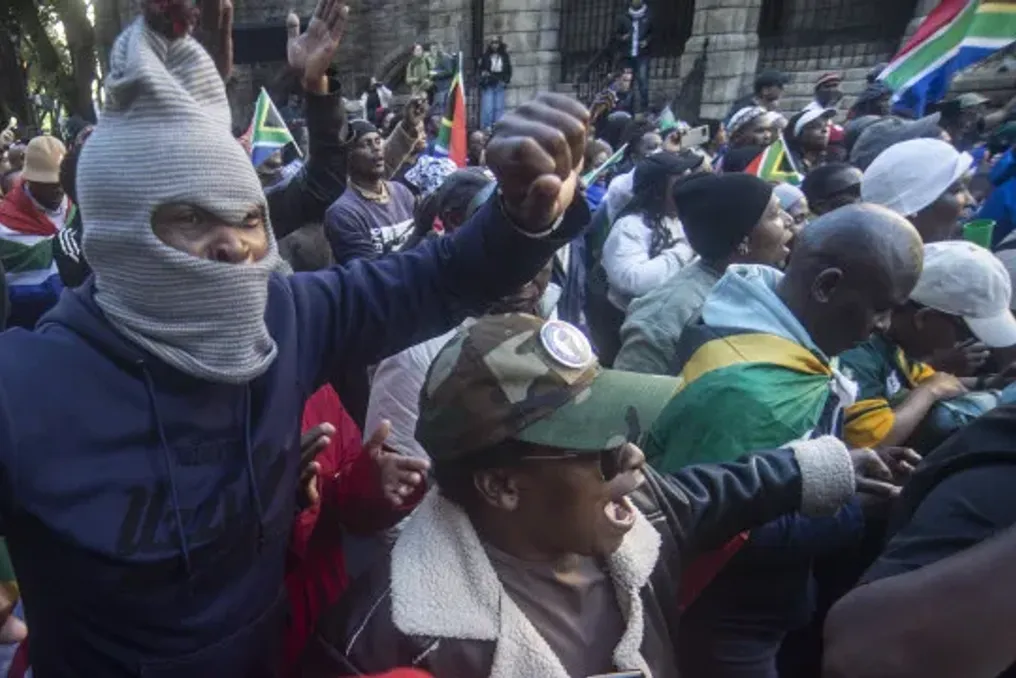
The second reality to face is that these acts of violence and harm occur with impunity, and practically no one is held responsible for either inciting violence or committing these acts. In a country with a history of political violence that cost many lives over decades and which made enormous efforts to achieve reconciliation among citizens and non-citizens, the last few months have been traumatic for the entire nation. Observing the anarchy, as well as growing hatred and xenophobic behavior, which is more accurately described as Afrophobia, manifesting in different sectors of the country, has led to entering a new phase in South Africa's increasingly polarized political landscape.
This raises the question of who is actually governing South Africa: the unity government elected in 2024, or has the country been seized by well-funded non-state actors moving towards national destabilization, creating chaos and pitting groups against each other?
Influence of Political Groups
The rhetoric of groups such as March and March and Dudula, while claiming to act in the interest of South Africa, has actually opened Pandora's box, leading to extremely alarming scenarios. These scenarios put us in deep conflict with international law and global immigration protocols. One such example is the situation where a group of over 400 legally registered refugees, expelled from their homes, was forced to stay on the sidewalk in front of the Immigration Department reception center on Che Guevara Street in Durban for almost two months.
Nowhere in the world is it acceptable for people fleeing war, political violence, and instability in their home countries, seeking refuge and assimilation in the host country, to suffer additional trauma from the citizens and state of that country. They would never have been expelled from their homes, where they lived, worked, and contributed to the local economy, if it were not for the increased calls for the expulsion of foreigners.
Inadequate State Response
The blurring between undocumented foreigners and refugees with legal status in South Africa has become deeply problematic. Even more concerning is the state's response to situations like the plight of refugees on Che Guevara Street. Instead of fulfilling its legal obligation to activate disaster management protocols designed to assist internally displaced persons, the state offered these people either to return and reintegrate into the communities from which they were expelled or to go to the Lindela repatriation center, which essentially means returning to the countries they fled. This is comparable to telling victims of gender-based violence to return and live with their abusers.
Given the humanitarian crisis among both undocumented foreigners and legal refugees, and the state's inability to adequately address the problem, civil organizations have been forced to intervene to meet the needs of people left surviving outdoors in extremely cold conditions.
Prospects and Threats
Although South African civil society has long been capable of handling crises, this particular situation should never have arisen. The question of future actions arises. Even if refugees are helped and reintegrated into society, and all undocumented foreigners are sent home, the status of the country itself remains a subject of debate.
In recent weeks, it has become increasingly clear that the so-called 'movement' to fight illegal immigration, along with other service provision issues, has turned into a tool for creating instability and division in an already politically fragile system plagued by corruption, opportunists, mafia syndicates, and crime. The meticulously planned nature of this movement and the effectiveness with which it makes ordinary South Africans carry out its will are truly extraordinary. Regardless of whether the ultimate goal is to inject chaos into society and distract from other problems, regime change, or simply create conditions for new players to enter the political arena ahead of local elections, it is crucial to closely monitor developments and resist the transformation of our country into a testing ground for malicious plans. As a nation that dismantled apartheid, we now face a new adversary that must be fought.
}, {