
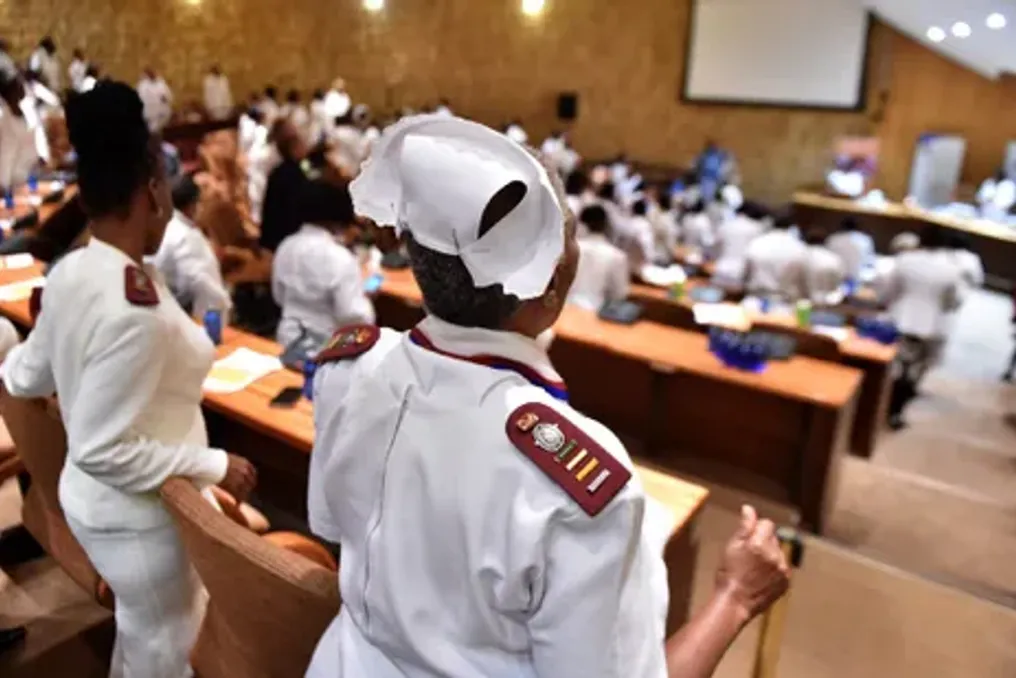
Despite the common perception among South Africans that the public healthcare system is deteriorating, recent data suggests a more complex picture: improvements in medical capacity are evident, although problems remain unresolved.
Contrast Between Perception and Statistics
Many citizens encounter long queues, overcrowded facilities, overworked staff, and uneven service provision, leading them to believe in the continuous decline of the system. However, empirical data paints a different, more multifaceted picture.
Improvements in Medical Indicators
According to the 'Health in South Africa' report by the Inclusive Society Institute, key indicators of medical capacity have indeed increased. The number of people served by public sector doctors decreased from 4,143 in 2002 to 2,795 in 2023. Similarly, the ratio of people per nurse improved from 496 to 446 over the same period. Pharmaceutical capacity also grew significantly: the number of patients per public sector pharmacist dropped from 40,263 in 2000 to 10,436 in 2023. Furthermore, emergency services expanded, increasing from 713 ambulance providers in 2019 to 834 in 2024.
Reasons for the Feeling of Overcrowding
At first glance, these improvements are difficult to reconcile with the experiences of many patients. If the proportion of healthcare workers per capita has risen, why does the system still feel overloaded? Part of the answer lies in the significant population growth of South Africa. Since 1994, the country's population has increased by over 50%, and today every clinic, hospital, ambulance service, and healthcare worker serves a much larger population than at the beginning of the democratic era.
Limitations and Citizen Expectations
It is important to understand that simply matching capacity to population growth is not enough. Although the availability of medical personnel has improved, the country still faces serious limitations. These include immense pressure on public sector doctors, shortages and uneven distribution of nurses, and access issues in several communities. Compared to many upper-middle-income countries, South Africa is still far from solving its healthcare workforce challenges.
This explains the discrepancy between official statistics and public opinion. Patients evaluate the system not based on national averages, but on the quality of care at a specific clinic or hospital. The system may have more doctors than twenty years ago, but it can still force patients to wait for hours, and improved nurse availability may be accompanied by management issues and staff shortages in certain areas.
New Focus for the Political Agenda
The report's findings point precisely to this reality: capacity constraints have eased in various aspects but have not disappeared entirely. Progress has been made, yet the gap between the current situation and reasonable citizen expectations remains significant. This difference is critically important because it changes the direction of political discussions. If the system were collapsing, the priority would only be to stop the decline. But since the system has expanded while remaining under strain, the task becomes more complex: policymakers must continue to build capacity while simultaneously improving management, efficiency, distribution, and patient care quality.
South Africans have every right to demand better healthcare, and they must continue to do so. However, these demands must be based on an honest assessment of the country's current state. The data does not support the narrative of a 'washed out' system; rather, it points to a system that has expanded key elements of its capacity under difficult conditions but lags significantly behind citizen expectations for a country of this level of development. The problem is not that South Africa failed to build a large healthcare system, but that it needs to build a better one.