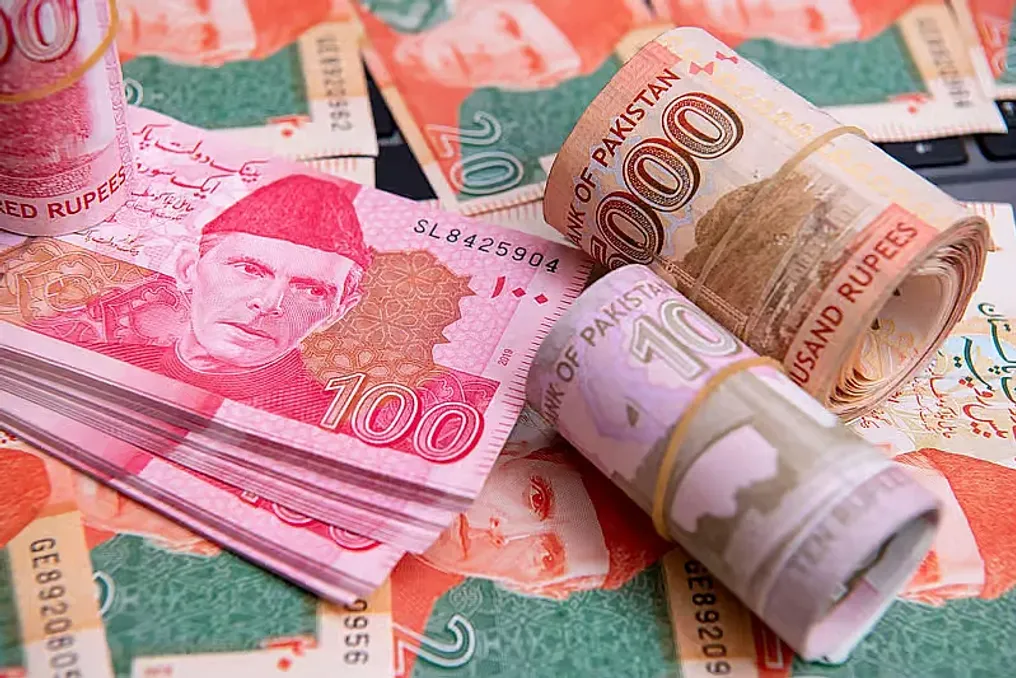
The State Bank of Pakistan's (SBP) decision to cancel two incentive schemes for banks should not disrupt money transfer flows or increase transaction costs for Pakistanis living abroad who send funds from the UAE and other countries.
Change in Incentive System
Effective July 1, the central bank of Pakistan discontinued the Telegraphic Transfer Incentive Scheme (TTCIS) and the Sohni Dharti Remittance Program (SDRP). These programs previously reimbursed banks for processing costs of relevant domestic remittances free of charge. Under TTCIS, SBP compensated banks for telegraphic charges on eligible transfers, ensuring operations were free for both senders and recipients.
Regarding SDRP, it rewarded Pakistanis abroad with points for using official banking channels. Points accumulated before June 30 can be used until June 30, 2027, after which SDRP will be completely closed.
New Conditions for Banks
SBP has instructed banks and exchange companies to continue providing remittance services that meet the criteria free of charge to customers, despite the cessation of government subsidies. This means the cost burden effectively shifts to the financial institutions themselves. Meanwhile, the Pakistan Remittance Initiative program, which is separate and larger, where banks receive a percentage reward from remittance volumes, remains unchanged.
Remittance Volume
According to Khaleej Times on Thursday, remittances from Pakistanis abroad increased by 8.6 percent, reaching a record $41.6 billion during the 2025–26 fiscal year. Saudi Arabia and the UAE led this growth. Pakistani Prime Minister Shehbaz Sharif expressed gratitude to Pakistanis abroad on Thursday for increasing the volume of funds sent.
SBP data showed that Pakistanis in Saudi Arabia transferred over $9.78 billion, followed by the UAE ($8.80 billion), the UK ($6.32 billion), the USA ($3.62 billion), and Italy ($1.54 billion). More than 15 million Pakistanis live abroad and send money home monthly to support their families. A significant number of these people work and reside in six Gulf countries: Saudi Arabia, UAE, Qatar, Oman, Bahrain, and Kuwait.
Expert Opinion on Impact
Ali Al Najjar, CEO of Al Ansari Exchange, when asked whether the SBP's decision would affect exchange bureaus and transfers from the UAE, stated that at this stage, he does not expect a significant impact from the SBP's decision on the operations of Al Ansari Exchange or the broader money transfer market in the UAE. He noted that Pakistan remains one of the largest corridors for remittances for the company, and this policy apparently concerns systemic incentives within the Pakistani banking system, rather than fundamental aspects of cross-border demand or infrastructure.
Al Najjar also suggested that Pakistanis abroad are likely to continue using existing channels to send money. He added that there is currently no expectation that this decision will affect remittance flows into Pakistan, as Pakistanis will continue to send money home to support families and fulfill regular financial obligations, while established channels, including digital platforms, will remain accessible.
Question of Cost Increase
Responding to the key question of whether the cancellation of incentives will lead to higher transfer costs for Pakistanis from the UAE, Al Najjar reported that customers are unlikely to feel any changes. He emphasized that reports indicate that expected remittances to Pakistan are anticipated to remain free for both senders and recipients. He clarified that the responsibility for this arrangement now lies with the receiving institutions in Pakistan, and customers can continue to send money as usual. He concluded that any changes affecting customers will be communicated through appropriate channels.