A domestic robot developed to perform tasks such as folding clothes, making beds, and organizing environments is gaining attention in the technology sector, according to a report by New Atlas. The Isaac 1 model, manufactured by Weave Robotics, aims to integrate automation into daily home routines, although it has not yet achieved full operational independence.
Evolution of the Robotic System
Weave Robotics had recently launched the Isaac 0, which focused primarily on the function of folding garments. The Isaac 1 represents a more ambitious evolution, being capable of navigating the residence and executing various daily activities. The company itself describes this project as the ideal robot for people's homes, emphasizing its purpose for direct domestic use, rather than merely experimental.
Practical Features of Isaac 1
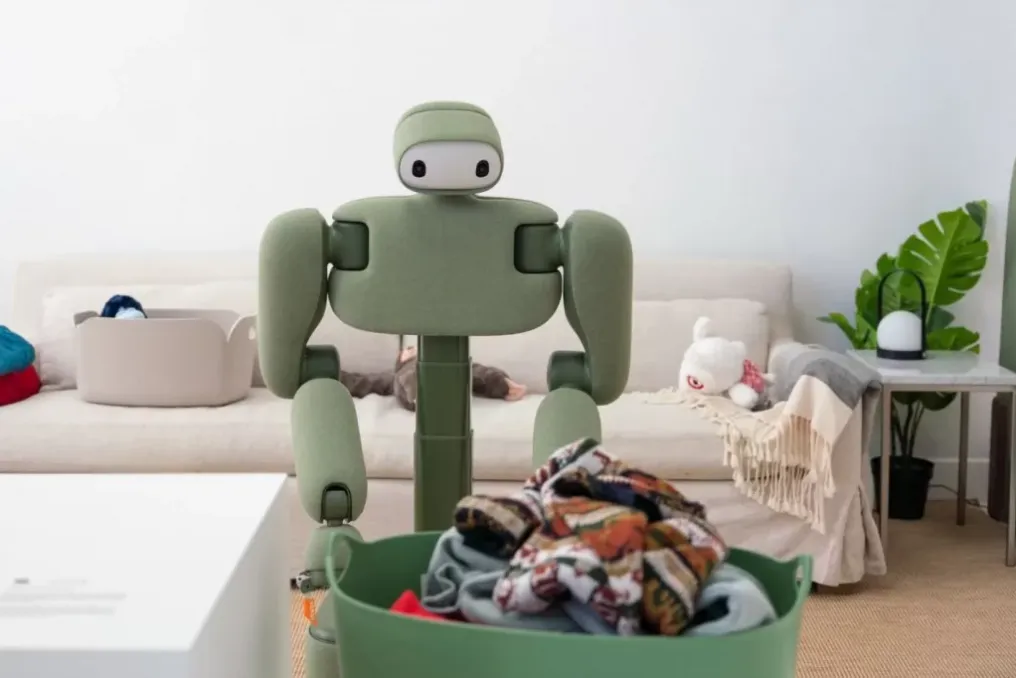
This new prototype features a friendlier design, characterized by a padded structure and discreet eyes. It moves autonomously, able to adjust its height between approximately 90 cm and 1.75 m, and can follow household commands. However, it is not fully autonomous; in certain situations, teleoperation is necessary, during which a human operator monitors the cameras and assists the robot in real time.
Tasks and Hybrid Model
The listed capabilities include folding clothes in the home environment, organizing rooms and areas of the house, assisting with bed making, moving using a motorized base, and adjusting its height according to the task's needs. This hybrid model raises questions about the extent to which automation can replace daily human labor.
Availability and Market Strategy
The Isaac 1 is available on the market for US$ 8,000 (equivalent to about R$ 40,000) or through a monthly subscription of US$ 449 (approximately R$ 2,250 per month). There is also an option to reserve it with a deposit of US$ 250 (about R$ 1,250). The initial launch is scheduled to take place in the United States, specifically starting in California, where the company plans to test the robot under real conditions before expanding distribution.
Future Perspectives
Despite advancements compared to the previous generation, the Isaac 1 operates at an intermediate point, combining partial autonomy with the need for human intervention. Weave Robotics assures that improvements will be implemented through software updates, which should increase its functionalities over time. At present, it is evident that while the robot performs concrete household tasks, it still relies on human supervision to operate completely within a residence.