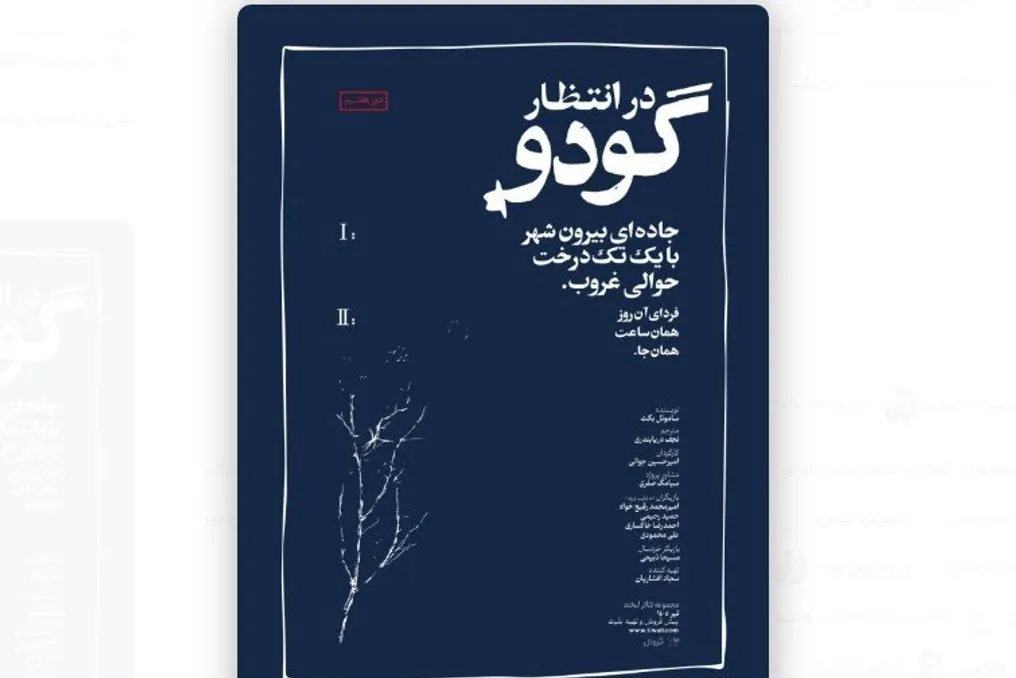
Iranian director Amir Hossein Javani presents a new production of an adaptation of the play 'Waiting for Godot' at the Labkhand Theater in Tehran. This production is based on the work of Irish writer and theater director Samuel Beckett, written in 1953.
The History of 'Waiting for Godot'
After more than five hundred performances across the Islamic Republic of Iran, the play has reappeared in Tehran for a limited time. The production is based on a Persian translation by Najaf Darbandari. Originally, 'Waiting for Godot' was first published in France in 1952 under the title 'En attendant Godot' and became a true breakthrough in drama, marking the first theatrical success of the Theatre of the Absurd.
Plot and Themes of the Work
The play is structured around dialogues between Vladimir and Estragon, who await the arrival of the enigmatic Godot. Godot constantly announces his imminent visit but never appears. The characters also meet Lucky and Pozzo, discussing their misfortunes and life circumstances, considering suicide, yet continuing to wait. Although Vladimir and Estragon are often perceived as vagrants, they represent people who do not understand the purpose of their existence. They make a weak assumption about the existence of meaning in their lives and appeal to Godot for enlightenment. Through hope for meaning and direction, they attain a kind of nobility that allows them to rise above their futile lives.