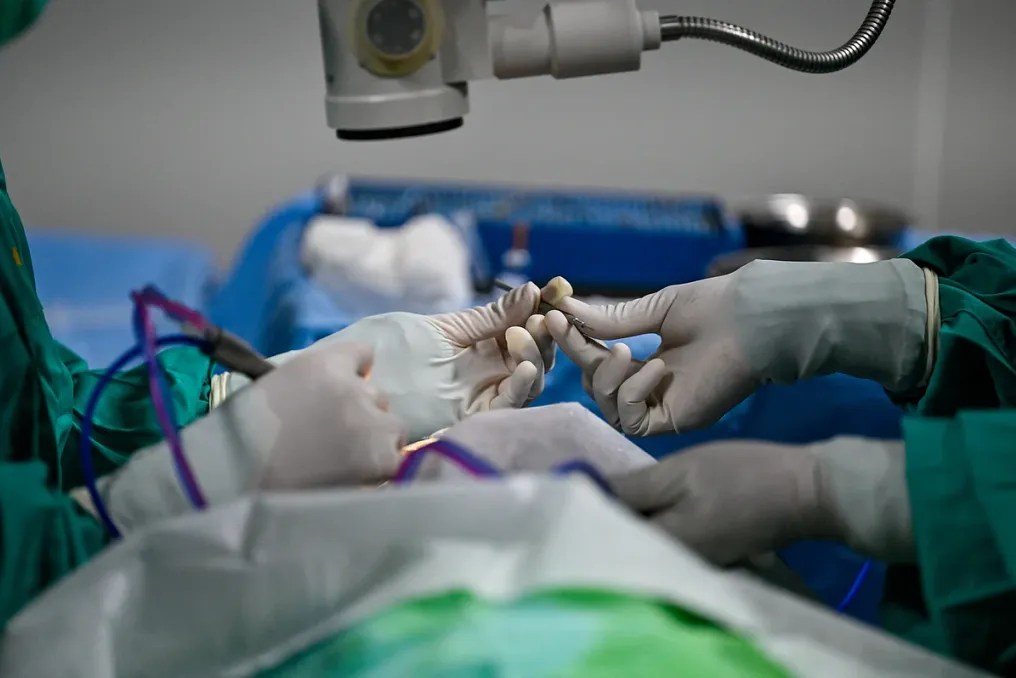

During a flight from Dubai to Tiruvannanthapuram on July 1, Indian expatriate Pooja Rajakumaran, who was planning a short vacation, had to respond to an emergency call from the crew. After takeoff, an announcement was made in the cabin requesting a doctor or nurse.
Response to the Emergency
Without hesitation, Pooja went to the crew. As a nurse, she acted instinctively because, as she noted, 'when someone needs help, you go.' Her attention was drawn to a passenger who was recovering from breast removal surgery and undergoing physiotherapy in Dubai.
The passenger, using a wheelchair, was semi-conscious. Pooja noticed that she had a weak pulse, severe dizziness, and her hands were cold and trembling. Realizing the critical state, she decided not to waste a second.
Medical Assistance During Flight
For most of the flight, Pooja remained by the woman's side, constantly checking her pulse and talking to her to keep her conscious and stabilize her condition. Despite the lack of a hospital bed, monitors, or a team of specialists in the narrow aisle of the plane, she used knowledge gained from working in the Neonatal Intensive Care Unit (NICU) at RAK Hospital.
She manually monitored the pulse, gave the woman water for hydration, and gently massaged her hands to improve circulation and warm her up. Pooja emphasized that maintaining her own calm helped soothe those around her. Later, a senior crew member asked her about the need to inform the captain about a possible diversion.
Diagnosis and Continuation of Flight
After re-examining her, Pooja determined that the passenger's condition was gradually improving: her pulse was leveling out, and her body was warming up. In her opinion, this was caused by severe physical exhaustion and anxiety, not a life-threatening situation. Based on this assessment, the flight continued to its destination. Pooja noted that the crew remained calm, immediately providing water and a blanket, and trusted her judgment, while the passengers behaved cooperatively.
Challenges of Field Medicine
Although Pooja cares for critically ill newborns daily, she believes that treating patients at an altitude of 35,000 feet presents a completely different set of challenges. In the NICU, she has medical staff, oxygen, and medication, whereas on the plane, only her skills, hands, and ability to make decisions remain. Furthermore, the limited space requires help in maintaining calm among the crew and passengers.
Before landing, Pooja checked on the passenger one last time, who was smiling by then. The woman thanked her, saying she felt much better. Pooja considered observing the safe landing a reward. She is convinced that any healthcare worker must be prepared to meet such a challenge, as preparation allows one to handle such moments, and sometimes mere presence can prevent panic.