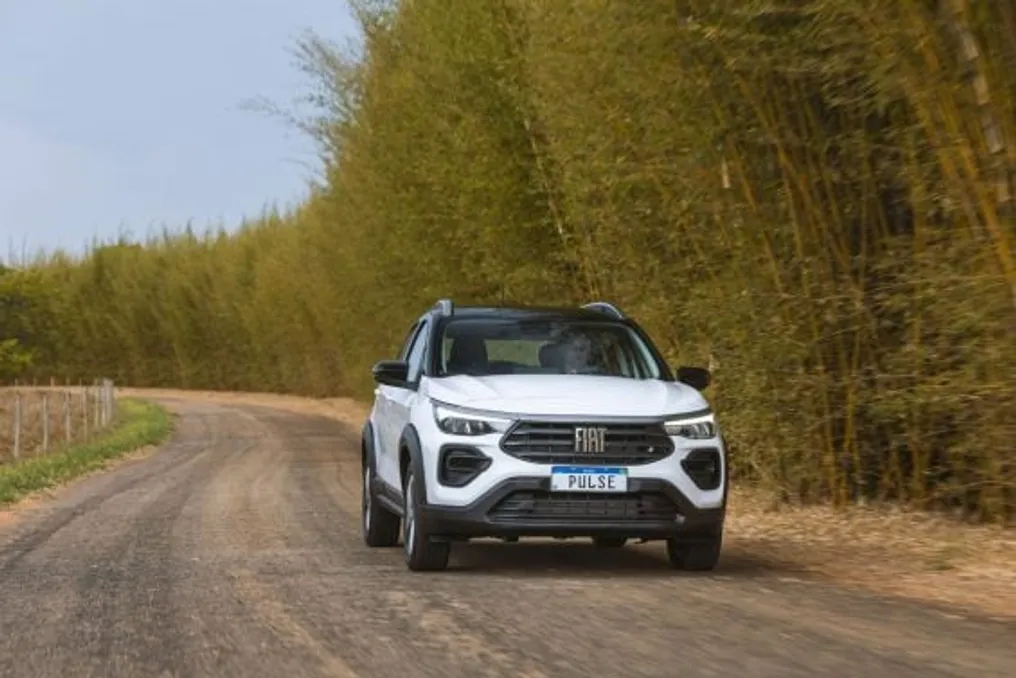
Fiat's entry into the compact SUV market occurred at a strategic time, consolidating itself with models like the Pulse and later the Fastback. The brand began operating in a category that shows constant growth, representing about one-third of all sales.
Popular
Fiat Pulse Positioning
The Fiat Pulse established itself at the base of compact crossovers, offering a proposal focused on cost-benefit. It belongs to the entry-level SUV segment, which has been attracting more and more competitors.
Model History and Development
The Pulse originated from Project 363, marking Fiat's debut in SUVs specifically developed for Brazil. Unlike the Freemont, which was a mid-sized model designed by Dodge, the Pulse is considered the first genuinely Fiat sport utility vehicle manufactured in the country. It uses the MLA platform, derived from the Argo, and is produced at the Stellantis Automotive Plant in Betim, Minas Gerais, featuring structural reinforcements and suspension adjustments.
This vehicle was also responsible for introducing the 1.0 turbo engine, the first turbocharged three-cylinder from Stellantis in South America, an engine later applied to other models such as the Fastback, Strada, Peugeot 208 and 2008, as well as the Citroën C3 and Aircross. Over the years, the Pulse has received special editions and a sporty version. In 2024, it became Fiat's first flex hybrid globally, and the previous year saw a restyling.
Name Choice and Market
The official launch of the Fiat Pulse took place in October 2021, and a notable aspect of this launch was the name selection through a popular vote on the Italian automaker's social media. More than 380,000 people participated in the poll, and the name 'Pulse' received 65% of the votes, surpassing options like 'Domo' and 'Tuo.'
The Pulse helped inaugurate the entry-level SUV category, characterized by being small crossovers derived from hatchbacks and having more accessible prices compared to other compact utilities. Later, rivals such as the Renault Kardian and Volkswagen Tera emerged, and more recently, Chevrolet launched the Sonic. The launch of the Hyundai Bayon and Jeep Avenger is still predicted for 2026.
Engine Performance Analysis
With the naturally aspirated 1.3 Firefly engine, the Fiat Pulse delivers performance aligned with its entry-level proposal. This engine generates 107 hp with ethanol and 98 hp with gasoline, providing good agility in urban environments and moderate consumption. The unit performs well during accelerations and maintains predictability, even when using the seven-speed virtual CVT transmission, which provides comfort and agility in performance.
On highways, overtaking requires attention, as the torque of 13.7 kgfm (ethanol) and 13.2 kgfm (gasoline) manifests greater force only above 4,000 rpm. The performance and consumption data (factory/Inmetro) are: 0 to 100 km/h: 11.7 s (e) / 12.2 s (g); City: 9.1 km/l (e) / 12.6 km/l (g); Highway: 10.1 km/l (e) / 14.7 km/l (g).
Turbo and Hybrid Versions
Using the 1.0 turbo engine from the GSE line, the Fiat Pulse stands out among the most powerful entry-level compact SUVs. It offers 130 hp with ethanol and 125 hp with gasoline, with a torque of 20.4 kgfm available from 1,700 rpm, resulting in quick responses and good disposition during acceleration. This version is praised for its efficiency and more dynamic behavior during overtakes, making it an interesting alternative for those seeking more liveliness with controlled consumption.
In 2024, the Pulse and Fastback were Fiat's first flex electrified models, receiving a mild hybrid system. This system uses a 12V battery to assist the 1.0 turbo engine in specific moments, such as starting, acceleration, and overtaking, resulting in a slight gain in fuel economy. The hybrid model data is: 0 to 100 km/h: 9.4 s (e) / 9.7 s (g); City: 9.3 km/l (e) / 13.4 km/l (g); Highway: 10.2 km/l (e) / 14.4 km/l (g).
Abarth Sport Version
In 2022, Fiat launched the Pulse Abarth, marking the debut of the Brazilian sports division model. This version received specific modifications, including a 1 cm lower suspension, 12% stiffer springs and shock absorbers, 7% more direct steering, and a 13% firmer body, in addition to sized brakes.
The engine used is the 1.3 GSE turbo, generating 185 hp with ethanol and 180 hp with gasoline, with a torque of 27.5 kgfm at 1,750 rpm. The result is a compact SUV with performance comparable to a sports hatchback, standing out for its steering precision and feeling of grip on the road, with immediate responses upon pressing the accelerator. Its indicators are: 0 to 100 km/h: 7.6 s (e) / 8.0 s (g); City: 6.8 km/l (e) / 10.0 km/l (g); Highway: 8.8 km/l (e) / 12.3 km/l (g).
Interior Space and Finish
Although Stellantis claims the Pulse uses the MLA platform, it is directly derived from the Argo. The ergonomic qualities and balanced behavior of the Argo were maintained in the compact SUV. The Pulse provides a comfortable driving position and reasonable space for legs and knees; however, the steering wheel could have better grip and be smaller. The rear seat is better suited to accommodate two adults and one child, and its shorter seat may cause discomfort on long trips.
The trunk has a capacity of 320 liters, matching its competitors. Regarding the finish, there is a predominance of plastics, showing improvements over the Argo, but fitting flaws and acoustic insulation issues persist that could be improved at high speeds.
Used Car Recommendation
For those looking for a used model, the 2023 Fiat Pulse Drive 1.3 CVT is recommended. According to KBB Brazil, the reseller price for this model ranges between R$ 91,570 and R$ 96,430.
The main standard features of the 2023 Fiat Pulse Drive CVT include four airbags, stability and traction control, hill start assist, reverse sensor, 8.4-inch multimedia center with wireless connectivity for Android Auto and Apple CarPlay, automatic air conditioning, cruise control, electric trio light, LED headlights, and alloy wheels. Optional packages available at the time included a rearview camera, keyless entry, remote start, electrochromic mirror with native GPS, and onboard Wi-Fi.
Maintenance and Points of Attention
The maintenance costs for the entry-level SUV are compatible with the category. Estimated values for 1.3 engine and CVT box components include: set of four front brake pads between R$ 200 and R$ 300; set of four spark plugs between R$ 110 and R$ 280; fuel pump between R$ 420 and R$ 550; oil change kit (5 liters 0w30 + filter) between R$ 290 and R$ 430; rear shock absorber (pair) between R$ 350 and R$ 500; rear bumper between R$ 540 and R$ 950; and right headlight (LEDs) between R$ 1,600 and R$ 2,800.
In forums and owner reports, the most frequent complaints point to oil pump failures in vehicles with less than 20 thousand kilometers driven, locking or irregular behavior of the CVT transmission, misalignment of trim pieces, paint problems, and cabin infiltration due to inadequate window sealing.
Vehicle Recall
The Fiat Pulse has also had registered recalls: replacement of the rear parking sensor in 2022 units, replacement of the fuel duct in cars manufactured in 2022, and replacement of the high-pressure pump in vehicles produced between 2022 and 2023.