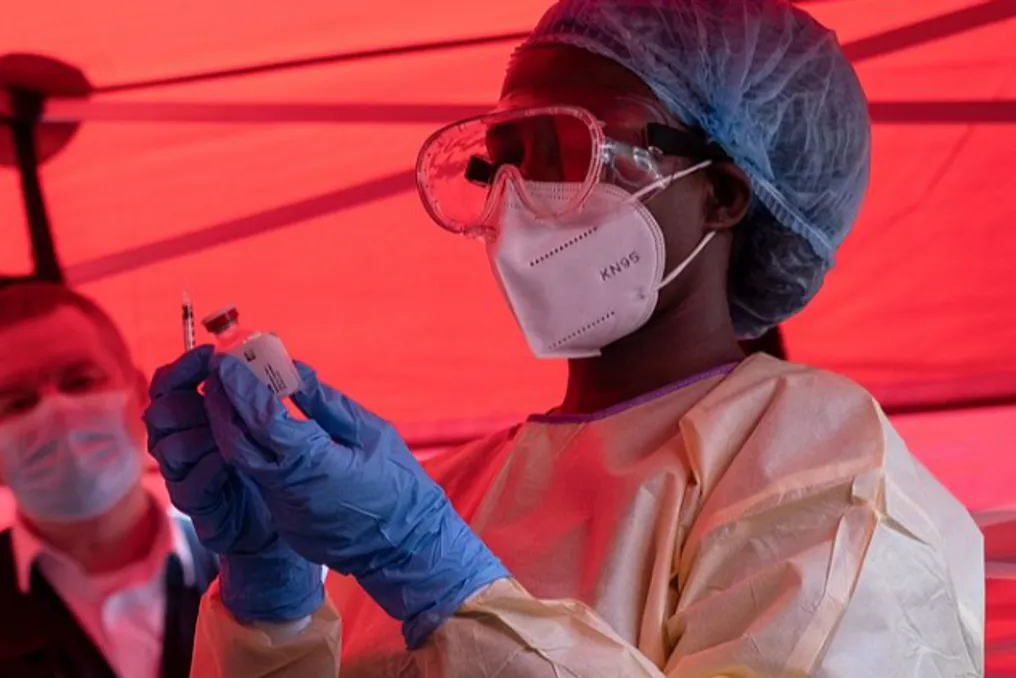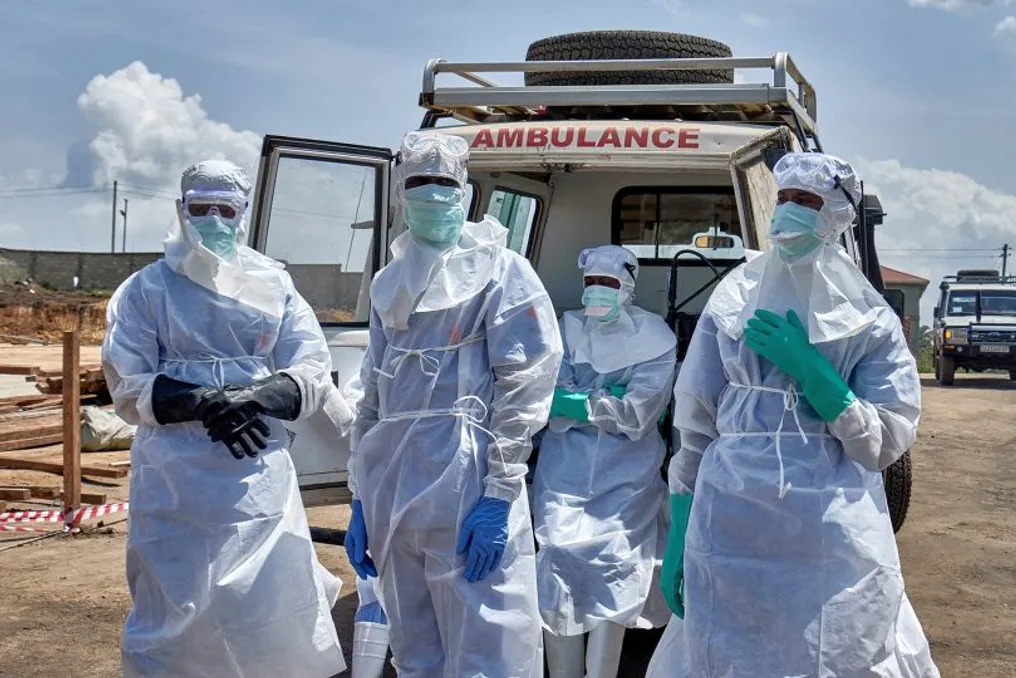
The Centers for Disease Control and Prevention (CDC) reported on Friday that a US citizen working for a humanitarian organization in the Democratic Republic of Congo (DRC) tested positive for the Bundibugyo strain of the Ebola virus.
The Centers for Disease Control and Prevention (CDC) reported on Friday that a US citizen working for a humanitarian organization in the Democratic Republic of Congo (DRC) tested positive for the Bundibugyo strain of the Ebola virus.
The CDC stated that it is collaborating with the organization employing the patient, other federal agencies, and partners in the DRC to prevent further spread of the infection and identify individuals at high risk of contact. No additional details about the patient were disclosed.
According to government data released late Friday, the total number of confirmed Ebola cases in the DRC has reached 1,830, including 648 deaths. Meanwhile, according to the latest data published on the CDC website on Saturday, no Ebola cases have been registered in the United States, and the overall risk to the American public and travelers remains low.
The outbreak is confined to remote areas of the DRC and neighboring Uganda, and the risk of its spread in the US is assessed as 'very low.'
In May, the international charity Serge reported that an American Christian missionary doctor, Dr. Peter Stafford, tested positive after showing symptoms consistent with the virus. His wife, Dr. Rebecca Stafford, and another physician who treated patients in the DRC at the beginning of the outbreak, along with the Staffords' four children under the age of seven, were monitored for signs of the virus.
The family, who had lived in the DRC since 2021, was evacuated to Berlin, Germany, where Stafford was placed in quarantine and treated in a hospital. After recovering, he told CNN in an exclusive interview: 'It was a difficult time. I had a high fever, weakness, sometimes it was too hard to walk on my own.'
Rebecca Stafford shared her experiences, recalling how she watched global efforts to help her husband, realizing that their Congolese friends would not receive the same level of medical care. Despite the difficulties, she noted that their children 'feel very well.' She also recounted how their eldest son understood the situation, telling the children: 'Hey guys, your dad has Ebola,' and how she had to explain to them that they could not touch him or enter his room.
Last month, the first case of Ebola outside of Africa was recorded during the second-largest outbreak in the history of the DRC. The French Ministry of Health reported that a patient, also a humanitarian worker, tested positive in France after returning home from a mission in the DRC. This was the first registered case in France.
The World Health Organization (WHO) has launched the first clinical trial of experimental treatments targeting the Bundibugyo strain of Ebola in the Democratic Republic of Congo (DRC). This marks a significant step in efforts to contain the recent outbreak of the disease in the country.
Since there are no approved vaccines or treatments for the Bundibugyo strain, researchers have begun assessing two experimental therapies. The goal is to determine if they can improve survival chances among infected patients. WHO Director-General Tedros Adhanom Ghebreyesus reported that the first participant was enrolled in the study this week. The trial will evaluate the effectiveness of the monoclonal antibody MBP134 and the antiviral drug remdesivir, both individually and in combination.
Concurrently, the WHO has granted emergency use authorization for the first molecular diagnostic test specifically designed to detect the Bundibugyo strain of Ebola virus. Healthcare workers note that the new test can significantly speed up diagnosis, allowing for faster isolation and treatment of patients.
Despite scientific advancements, officials warn that the outbreak continues to spread, and instability remains a major obstacle to an effective response. Health authorities have expanded laboratory capacities, increased contact tracing, and established additional treatment centers in affected areas.
However, ongoing violence has repeatedly disrupted medical operations and endangered healthcare workers. Tedros noted that despite the progress, serious issues persist, including mistrust and violence. He cited an attack on an Ebola treatment center in the Ituri province this week, which resulted in two deaths and the burning of the center, forcing patients to flee.
Regional leaders have also called for greater security to support public health measures. During a meeting in Kinshasa, South African President Cyril Ramaphosa expressed optimism about developing a vaccine against the Bundibugyo strain by the end of the year. Nevertheless, he stressed that a medical breakthrough alone is insufficient to stop the outbreak.
Ramaphosa stated that a ceasefire is necessary in the region where Ebola is spreading and fighting continues. This is required to ensure safe passage for humanitarian aid, healthcare workers, and medicine to those affected. Furthermore, Ramaphosa announced a donation of $13.5 million to support the DRC's efforts to combat Ebola, as African governments and international partners intensify efforts to contain one of the region's most complex public health crises.