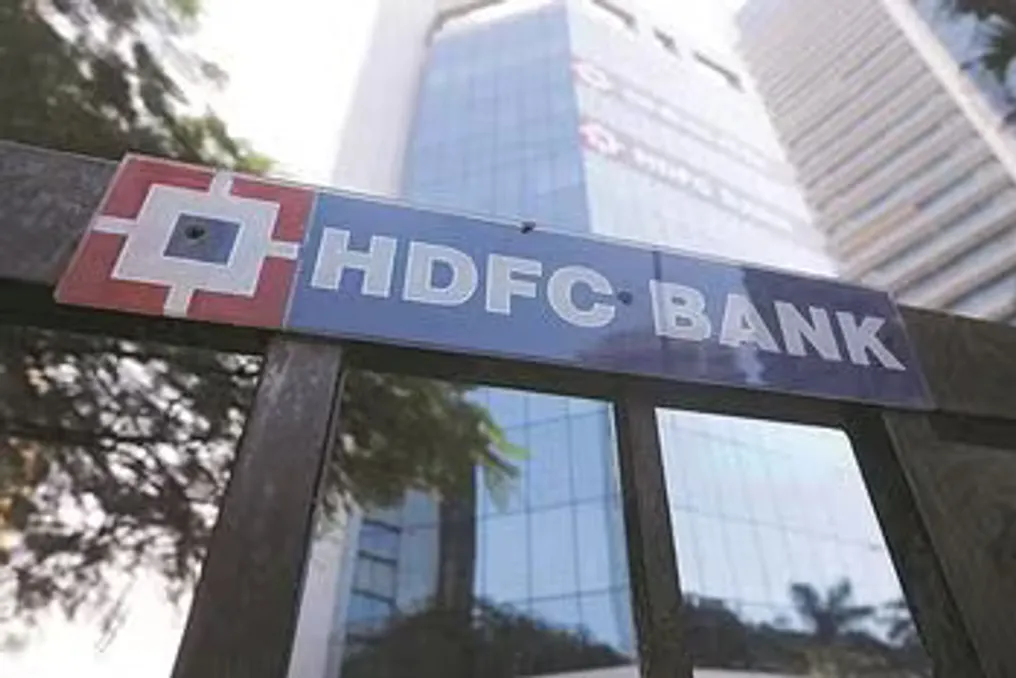
In its annual report for the fiscal year 2026, HDFC Bank, India's largest private lender, presented a strong defense of its corporate governance standards. This defense came after the resignation of former Chairman Atanu Chakrabortty raised questions regarding the bank's board oversight.
Management Statements on Standards
Keki Mistry, interim part-time chairman of HDFC Bank, addressed shareholders, assuring them that the bank firmly adheres to strong corporate governance principles and values. He noted that together with the board of directors, they strive to ensure compliance with these principles.
Chakrabortty left his post as part-time chairman and independent director of the bank on March 18, 2026, which led to speculation about the state of governance standards at the bank. Following this, Mistry was appointed as the interim part-time chairman.
CEO's Position
Sashidhar Jagdishan, Managing Director and Chief Executive Officer (MD & CEO) of HDFC Bank, also addressed shareholders, stating the bank's unwavering commitment to the highest corporate governance standards. He reported that the organization has continued to refine internal structures and update key control processes as part of its growth.
According to Jagdishan, the statement made in Chakrabortty's resignation letter led to questions about the bank's governance standards. To strengthen robust governance standards, the board of directors commissioned external law firms to review Chakrabortty's statement.
External Review Process
Jagdishan clarified that since the bank's American Depositary Receipts (ADRs) are listed on the New York Stock Exchange (NYSE), the board deemed it prudent to engage both domestic and international law firms to conduct this review. The board also formed a special committee composed exclusively of independent directors to oversee the legal examination and ensure timely information exchange between the bank and the law firms.
The review examined board meeting minutes, materials, communications, and conducted interviews with all independent directors and several senior executives, including the MD & CEO and heads of specific control and assurance functions. The review covered the two years preceding Chakrabortty's resignation.
Audit Results and New Appointments
Jagdishan announced that on June 26, the bank released the findings of the external law firms. The essence of these findings was that Mr. Chakrabortty's statement in his resignation letter and its implications were not substantiated by the reviewed documents and witness testimonies. Mistry emphasized that the bank remains fully dedicated to maintaining the highest standards of transparency, accountability, and oversight, and any issues requiring attention will be thoroughly reviewed according to established processes.
After the law firms gave the bank a 'clean bill,' the board appointed Rajiv Kumar as part-time chairman and independent director of the bank, subject to approval from the Reserve Bank of India (RBI) and the bank's shareholders.
Business Development and Technology
Jagdishan warmly welcomed Rajiv Kumar to the board and thanked Keki Mistry for his significant contribution as the interim part-time chairman. He specifically noted that three years after merging with HDFC Ltd., the mortgage business has grown stronger and ranks among the top two players in the country. The bank was able to open savings accounts for over 95 percent of new housing loan customers at the time of disbursement, and the cross-selling rate remains healthy.
Jagdishan also stressed that technology plays a central role in HDFC Bank's operations, embedding intelligence into systems, workflows, and decision-making, rather than viewing it as an isolated opportunity. The bank has strengthened its core architecture, resilience, and execution capabilities to improve customer service, reliability, and security.
A key tool is the internal platform Neev, designed for developing and implementing Artificial Intelligence (AI) capabilities. This platform provides a unified foundation for deploying AI across the bank, ensuring consistency and adherence to corporate standards. AI-based decisions are used to accelerate and standardize employee responses to customers, while AI applications in retail assets enhance credit decision-making and productivity. In trade operations, AI assistance in classification allows for faster and more accurate transaction processing.
The bank has also modernized its digital infrastructure, providing simple, intuitive, and secure customer interfaces through the internal platforms NetBanking and Mobile Banking. Furthermore, the bank has expanded its digital offerings with platforms such as SmartWealth, PayZapp, and the Pixel credit card, and opened a new technology and digital center in Guwahati to strengthen operational resilience and build talent reserves.
Personnel Changes and Future
Regarding personnel, Jagdishan stated that HDFC Bank is reallocating employees from back-office functions, where efficiency has been achieved through technology, to customer-facing roles as part of its transformation into a technology-driven, customer-centric bank.