Electrified vehicles have been available on the market for fifteen years and represent an advantageous alternative for those who travel long distances, although various myths about them still persist.
booleanElectrified vehicles have been available on the market for fifteen years and represent an advantageous alternative for those who travel long distances, although various myths about them still persist.
booleanHybrid cars have been part of the Brazilian reality for over a decade and are frequently found in the used car market. The first example of this type in the country was the Mercedes-Benz S400, launched in 2010, while the first widely circulated model was the Toyota Prius, in 2013. Over time, it has become possible to assess how these cars age and whether maintenance becomes complex with the passing of years. This article aims to clarify the main doubts about used hybrid cars.
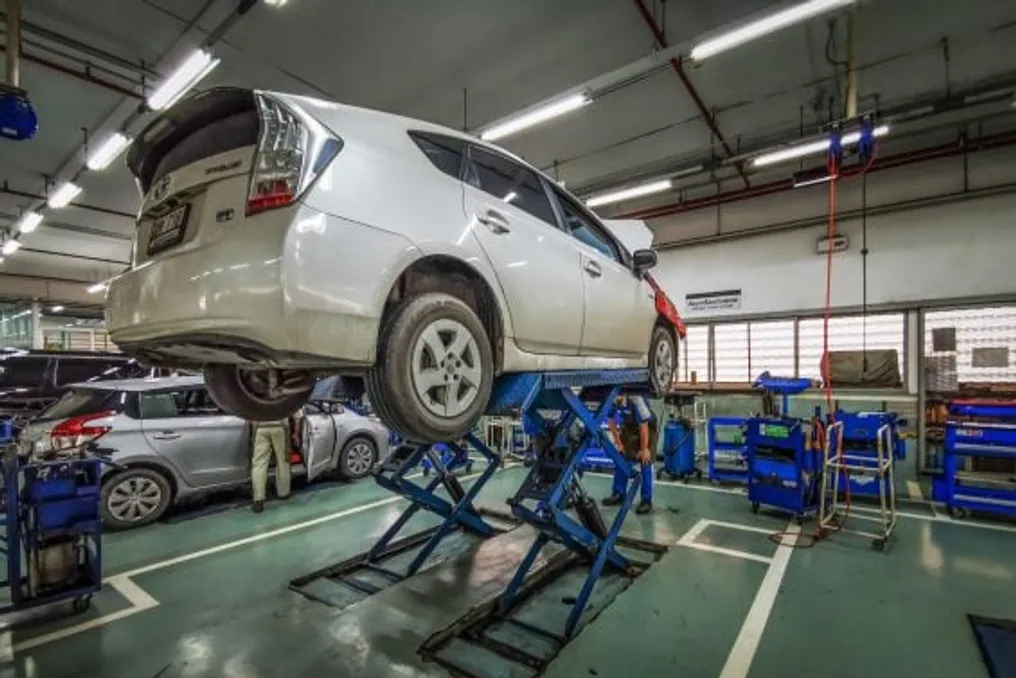
There is a belief that hybrid car maintenance is more expensive due to the presence of two propulsion systems. However, in practice, this statement does not hold up, since the maintenance plan is quite similar to that of a purely combustion-powered vehicle.
Taking the Toyota Corolla Hybrid as an example, the only distinct procedure in its maintenance plan is the replacement of the battery air filter, which must be done every 30 thousand kilometers or three years. Additionally, every 40 thousand kilometers or four years, it is necessary to check the level of the battery coolant and transmission fluid, replacing them if necessary. The rest of the maintenance schedule follows the standard of the purely combustion version. In the case of the Corolla and the Corolla Cross, the hybrid engine does not use direct injection, eliminating the recommendation to use a gasoline tank after driving ten thousand kilometers using only ethanol.
In the case of the GWM Haval H6 plug-in hybrid, which has more powerful electric motors and a larger battery, the periodic review is also simplified. Extra services include changing the DHT gearbox oil and replacing the electric motor coolant, both scheduled to occur every five years or 60 thousand kilometers. In Honda and Ford hybrid models, the maintenance plan does not change compared to an equivalent combustion model. The Japanese brand, specifically, establishes a longer interval for transmission oil changes, suggesting every 150 thousand kilometers or six years.
Mechanic Ludovico Ballesteros, owner of Pitucha Centro Automotivo, was consulted. Based on his experience, he points out that vehicles with the highest number of reported failures tend to be the best-selling ones, for statistical reasons. He emphasizes that, so far, he does not identify a specific model that presents significantly more problems than others. The most considerable risk lies in cars that have not received adequate servicing or have undergone improper maintenance.
A hybrid car demands less effort from the combustion engine because it operates with the support of the electrical system and can remain off for long periods. Does this imply that oil and other parts can be delayed in replacement? For Ludovico Ballesteros, the maintenance plan must be strictly followed, also considering the factor of time. Although the engine suffers less wear from being stopped at times, the oil needs to be changed within the deadline, as time affects its durability.
Another crucial aspect for engine longevity is keeping it operating within the ideal temperature range. The specialist explains that the vehicle's electronic management ensures that the powertrain operates this way, even when the hybrid systems are inactive.
A frequent argument used to criticize used electric and hybrid cars is the high cost of the battery pack. Although the complete replacement of this component is indeed expensive, it is not a common event. Currently, the industry adopts a standard of offering eight years of warranty for this part, a period that exceeds the warranty offered for the rest of the vehicle. The mechanic also stated that he has not yet received hybrid cars in his workshop with battery problems.
He added that, in most cases that reach his workplace, the failure is not in the high-voltage battery, but rather in other components of the vehicle itself. In full hybrids, the battery is smaller and less stressed compared to a fully electric vehicle or a plug-in hybrid, as it is never discharged, being constantly recharged by the engine or the regeneration process.
Purchasing a used hybrid car can be compared to buying a combustion model. What determines whether the choice is correct or not is the general state of conservation and whether the maintenance has been performed correctly. The suggestion is to prioritize models that are more popular in the market, as this ensures more accessible maintenance. Because they are more economical, hybrids are sought after by taxi drivers and ride-share drivers.
During inspection, it is important to check for signs of severe wear on the rear seat and door trims, as these may indicate professional use. Finding a good used hybrid can result in significant savings on fuel costs.