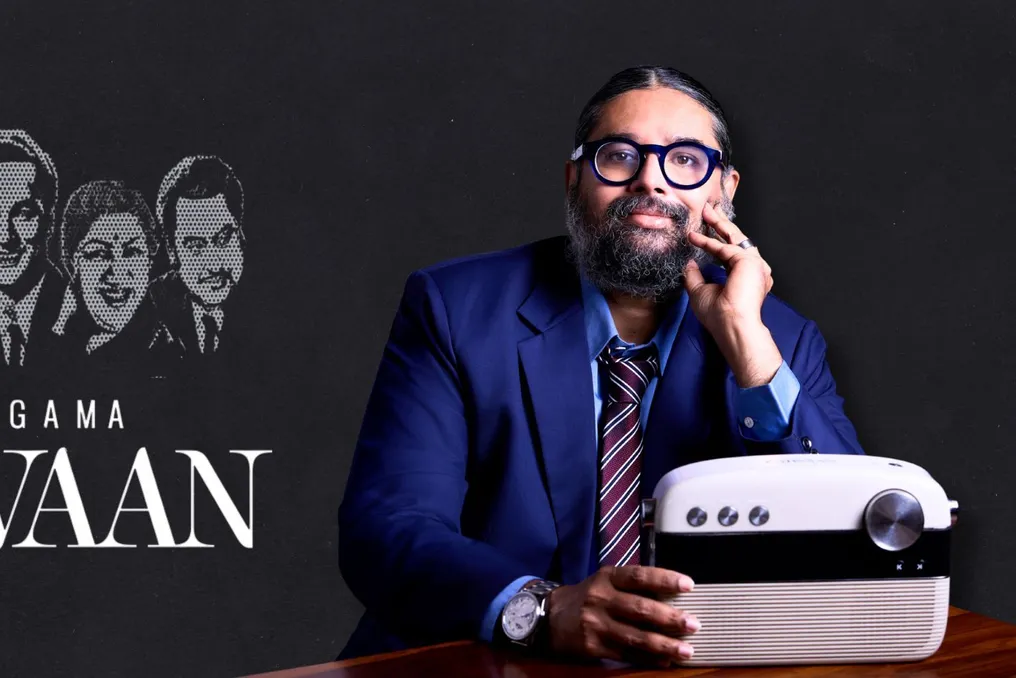
In 2017, while much of the Indian music industry was focused on attracting young users to streaming apps, one product took a completely different path. Saregama Carvaan, a retro-style digital player preloaded with 5000 tracks, was created for listeners left behind by the digital transition.
Popular
Product Concept and Comfort
Avinash Mudaliar, co-founder and CEO of HT Labs, and inventor of Saregama Carvaan, explains that the idea did not stem from a lack of music but from a lack of comfort. He recalls: 'The problem wasn't the availability of music. There was more music in India than ever before. The real problem was access without anxiety.'
For a significant portion of the country's population, especially listeners over 40 and 50, listening to a song had become a complicated procedure requiring an app, login, search bar, data connection, and subscription. Mudaliar notes: 'The industry was solving the problem of abundance. We solved the problem of comfort.'
Development and Features of Carvaan
Carvaan was developed by Saregama India, the country's oldest music company, and Mudaliar created it while working on products within this company. Previously, he co-founded the streaming app Gaana, and today he leads the OTT aggregator OTTplay at HT Labs. This career trajectory—from streaming to a physical device and back to digital discovery—shapes his view of the Indian consumer.
He stood against the trend, betting on hardware in the age of streaming. Mudaliar asserts: 'In digital media, everything feels rented. Carvaan felt like ownership.' A physical object can be gifted, displayed, and played by anyone, which perfectly suited a product often bought by children for parents or expats for family homes in India.
Content Creation and Emotional Value
Curating the content proved to be a complex task. Mudaliar explains that the Saregama library contained over 160,000 songs in 23+ languages, from which an ideal collection needed to be created for Carvaan. The final 5000 songs were handpicked and grouped by artist, composer, and mood, and the Geetmala compilation by Amin Sayani was included to deepen the sense of memory.
When asked what the buyer was actually paying for, Mudaliar redefines the entire product, stating: 'The consumer wasn't buying a speaker. They were buying a journey through time.' In his view, nostalgia is not an extra feature but the identity itself, reminding people who they were, whom they loved, and where they lived.
Therefore, he insisted that the device should feel familiar even before the first use. 'The best technology disappears. In Carvaan, the technology had to be invisible, but the memory visible.' As a result, the product was perceived not as a gadget but as a companion, which, according to him, is the point where a product transitions from function to attachment.
The Future of Music and AI in India
Mudaliar believes that artificial intelligence is currently at the same stage that streaming was ten years ago. He observes that modern AI-based products possess the power and abundance of streaming back then, but often seem intimidating. In his opinion, it won't be the products with the best model that win, but those that 'package intelligence into simple, reliable, repeatable use cases.'
This leads him to a frequently repeated thesis: 'India doesn't need AI demonstrations. India needs AI-powered Carvaans,' meaning transforming technology into everyday utility for the hesitant user. If he were starting today, he would create 'a trusted AI decision-making mechanism for Indian consumers in one highly targeted category,' instead of building a broad horizontal product. For the founder who managed to turn a music player into a generational piece of furniture, the next step is obvious: take something powerful and make it invisible again.