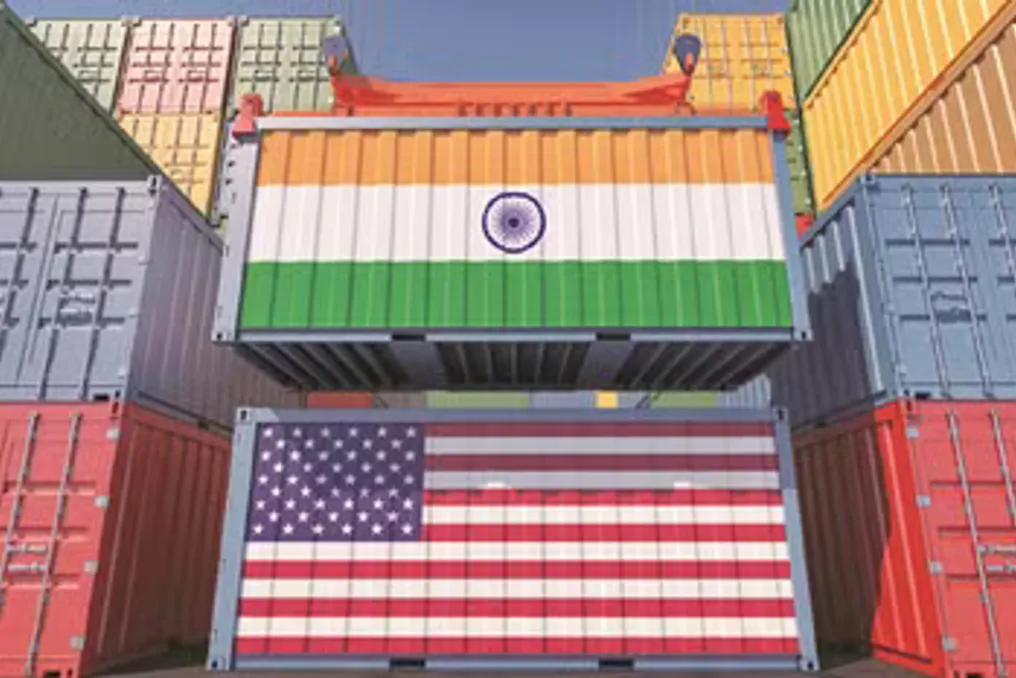
India strongly urged the USTR to reconsider the proposed tariff, asserting that trade disputes should be resolved through bilateral negotiations rather than unilateral measures, and questioning the legal basis of the investigation concerning forced labor concerns.
India's Stance on Trade Disputes
India stated that trade issues with the US must be settled through bilateral talks, not unilateral actions. During public hearings, Deputy Secretary of the Department of Commerce, Bridget Mohan Mishra, expressed serious concern regarding the USTR's findings, referencing inconsistencies in the Section 301 investigation related to forced labor issues.
Mishra emphasized that India views eradicating forced labor as a constitutional obligation, as well as a requirement of international law and principles. He noted that the USTR failed to meet the relevant legal standards under Section 301(d) of the Trade Act, adding that the mere absence of an import ban on goods produced by forced labor, without evidence of other established requirements, cannot be considered unjustified under Section 301.
Flaws in the USTR Report
According to the written transcript of the hearings held on July 8 and published on the USTR website, the USTR's determination does not provide justification for imposing tariffs nationwide and improperly groups 46 economies (including India) into a single category. The USTR's Section 301 report addresses the inability to implement and effectively enforce a ban on the import of goods produced by forced labor.
India contends that the methodology used has significant shortcomings because the determination is based on case studies of only a few economies and relies on general trade trends. Mishra stated that the report uses broad data and presumes that imports flagged in connection with forced labor are exported to the US without providing any industry-specific or country-specific evidence and factual links to forced labor.
Regarding India, he said there is insufficient and lacking evidence that the absence of a forced labor import ban creates an unfair competitive advantage to the detriment of American industry. In conclusion, it was stated that the USTR should review the imposition of the tariff in light of the identified discrepancies in the Federal Register notice, and that any trade issues should be resolved within bilateral trade and economic negotiations between India and the US, rather than through unilateral measures such as this investigation.
Industry Group Reactions
Shreyan Gupta, First Secretary of the Indian Embassy in Washington, D.C., speaking on behalf of the Agricultural and Processed Food Products Export Development Authority (APEDA), objected to the USTR's remarks concerning the import of rice allegedly produced by forced labor into India, and the supposed impact on distorting competitive conditions for US-produced rice exports and domestic markets. Gupta noted that the import of rice into India is very small and meets the targeted demand for specific niche varieties of rice. He also reported that the total value of rice imported into India is less than three percent compared to the value of rice exported from India to the US.
Gupta added that regulatory checks prevent the export of imported rice produced by forced labor from India. Rice exports from India to the US are permitted only from rice mills and processing plants registered with the Ministry of Agriculture. He requested that Indian rice be exempted from the proposed duty if the proceedings continue, stating that the current investigation against India could be withdrawn without prejudice.
The Ficci Chamber of Commerce also submitted a request for a thorough review of the proposed additional tariff. The Chamber noted that the additional tariff would increase costs not only for Indian exporters but also for American producers, importers, retailers, and ultimately, American consumers. It insists that the proposed additional tariffs be reviewed considering India's legal and regulatory safeguards, the extensive compliance mechanisms adopted by Indian industry, and the potential consequences for legitimate trade and sustainable supply chains in the US and India.
CII also stated that the proposed additional tariff of 12.5 percent is not supported by the evidence presented and is unlikely to advance the stated policy objective. The Chamber pointed out that the USTR report does not establish that India's political structure burdens US trade.
Overview of USTR Investigations
The USTR initiated two separate Section 301 investigations on March 11 and 12, 2026, covering 60 economies regarding forced labor and excess production capacity. On June 3, the USTR published its findings on the forced labor investigation and proposed additional tariffs on imports from these economies. The proposal includes a 10% tariff on imports from Canada, Ecuador, the European Union, Indonesia, Mexico, and Pakistan, as well as a 12.5% tariff on imports from 54 other economies, including India and China. It is important to note that this proposal is not yet finalized, and the USTR will consider these comments and testimonies before making a final decision on the proposed tariffs.