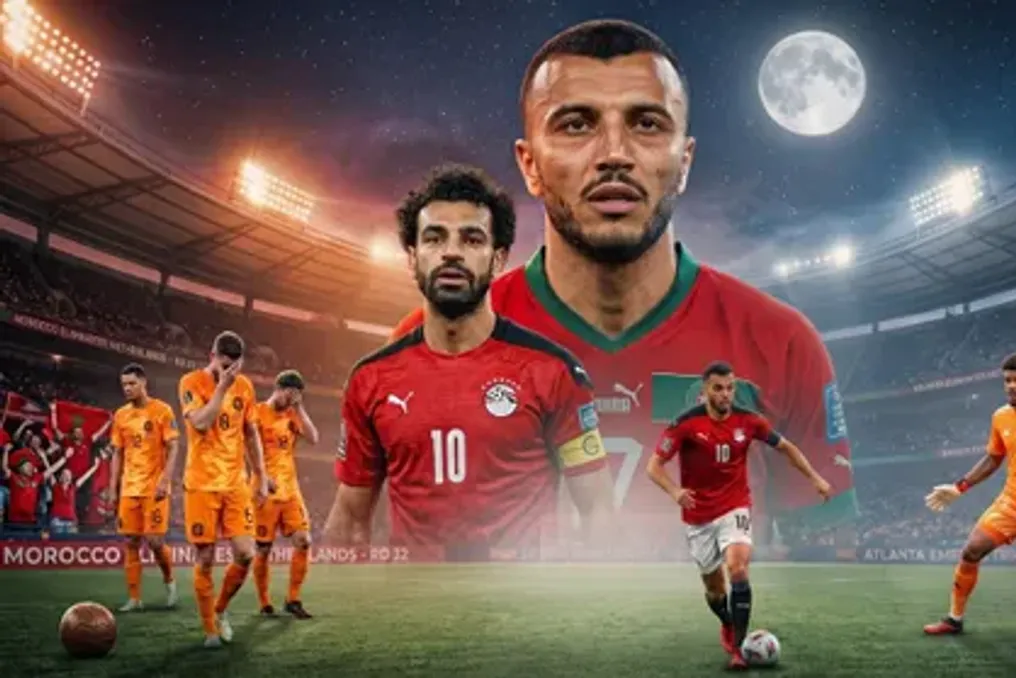
Despite Africa's participation in the FIFA 2026 World Cup ending with Morocco's defeat to France in the quarter-finals, the continent's impressive performances, including Egypt's near victory over Argentina and nine teams reaching the playoffs, demonstrate that African football continues to close the gap with the world level.
The result of the Morocco vs. France match
Morocco appeared clearly inferior to France in the quarter-final, which took place at Boston Stadium on Thursday. The final score of 2-0 was likely too lenient towards the latest representatives of African football.
Morocco had previously reached the semi-finals of the 2022 World Cup, so there were high expectations that they could repeat or even surpass this achievement four years later. However, their game against France was significantly below their real potential; the team looked indecisive, lacked creativity, and generally seemed subdued by the atmosphere of the event.
The potential of African teams, using Egypt as an example
The situation with Morocco sharply contrasted with how the teams behaved before the quarter-finals. The author believes that Egypt's loss to Argentina in the round of 16 better reflects the capabilities of African teams. Despite the defeat, their 3-2 loss to the defending champions occurred just minutes after they became one of the biggest surprises in World Cup history.
The 'Pharaohs' were leading 2-0 in the 67th minute before Argentina staged a stunning comeback, securing a dramatic 3-2 victory. This was a bitter end to a campaign that briefly seemed destined to dethrone the reigning champions, which could have been a victory for the ages. In the future, few outside of Africa will remember how close Argentina came to being eliminated from the tournament due to the confrontation with African opponents.
The example of England and DR Congo
Last week, England was also in danger of elimination in the Round of 32 when DR Congo held a 1-0 lead in the last 15 minutes of the match in Atlanta. The situation changed thanks to two goals from Harry Kane in 11 minutes, securing England's place in the Round of 16. This was another brave performance by an African team, but after the match, the recognition of DR Congo's efforts was noticeably insufficient.
The author notes that the media often describes any defeat of traditional football powers as a shock, regardless of the opponent, but the language becomes more dismissive when the opponent is an African nation. A BBC report on the match stated in the first paragraph: 'England was 15 minutes away from one of the most humiliating defeats in its World Cup history until late heroic acts by Harry Kane helped them overcome DR Congo to meet Mexico in the Round of 16.' The same report suggested that England's defeat would be a 'national disgrace.'
The progress of African teams
The progress of African teams in this World Cup is undeniable. Nine out of ten African countries advanced to the playoffs. Before the 2026 tournament, this number was only three. The Bafana Bafana team became one of those who reached the playoffs for the first time in their history, which in itself is a significant achievement.
Although this year's tournament was held in an expanded format with 48 teams instead of 32, it still serves as an important indicator of how underestimated African football is on the world stage. Only two of these nine teams ultimately reached the quarter-finals, but one must not forget that Egypt brought the second-ranked team in the world, Argentina, to the brink before the historic comeback deprived them of victory.
Morocco's unsatisfactory exit could suddenly end Africa's journey in the World Cup, but this should not overshadow the tournament in which the continent came so close to deserved recognition.