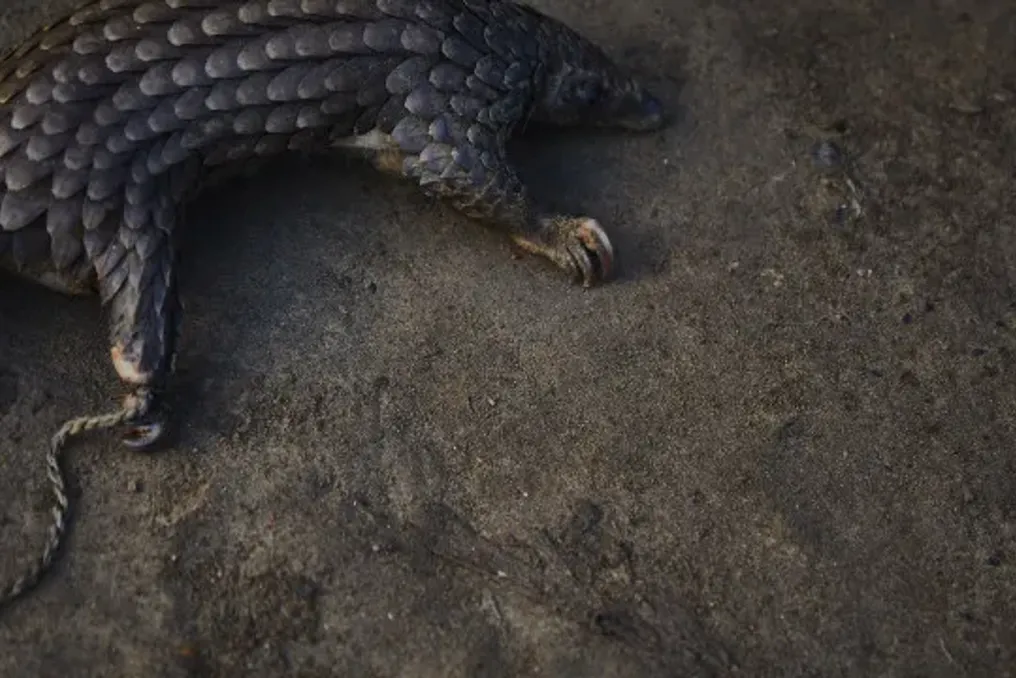
A nature conservation project is being implemented by the Cuerama Foundation. This foundation is named after the village of Kuanza Sul, where it is located, approximately 350 kilometers from Luanda. The foundation focuses on developing the local community through education, vocational training, social entrepreneurship, and healthcare.
Awareness of Pangolin Threats
According to the institution's Director of Impact, Sara Carvalho, the foundation's attention to the pangolin arose during ecological education sessions with the village children. The local population consumes the meat of this animal, but it is sadly known as the world's most actively traded species.
The animal's scales and claws are sold in Asian markets for medicinal purposes or used in rituals and witchcraft practices. Faced with these threats, the foundation initiated the 'Forest Guardians' project to raise awareness among village hunters and encourage them to stop hunting this animal.
Mechanisms for Involvement in Protection
Sara Carvalho told Lusa that former hunters have turned into defenders of the species to preserve the population, educate the community, and prevent illegal hunting. When asked how to convince a hunter who benefits financially from selling the animal to become a protector, she explained that the foundation holds meetings with traditional authorities known as 'sobas,' who have supported pangolin conservation and now act as messengers of this idea in the village.
Furthermore, they discuss with hunters the importance of biodiversity conservation, emphasizing that the pangolin is a 'natural resource' that 'deserves protection, care, and life.' Currently, 13 guardians are involved in the project, including women who are not former hunters, who joined voluntarily, inspired by the work of the guardians.
Project Results and Future Plans
Since 2024, over 50 pangolins have been rescued, found in traps and in thickets. The guardians also conduct educational work in other areas around Cuerama. Work on identifying smuggling routes is still in its initial stages, but the foundation is mapping pangolin sighting zones and trade locations, cooperating with local administrations to take preventive measures.
Two species of pangolins coexist in Angola—the Temminck's ground pangolin and the white-bellied pangolin. Both are classified as vulnerable on Angola's Red List of Species, and Cuerama is recognized as an important area for their protection.
International Cooperation and Protection
As part of this project, the Cuerama Foundation collaborates with the National Institute of Biodiversity and Protected Areas (INBAC) and the Pangolin Conservation Research Fund (PCRF). PCRF provides 'technical and pedagogical tools' for community awareness, adapted to the realities of the hunters and the village.
Last month, INBAC and the Cuerama Foundation signed a memorandum of understanding to implement the 'Pangolin Guardians' project, thereby strengthening the basis for cooperation to protect and conserve the species in Angola.
In addition to training community guardians, the project includes restoring degraded areas, educating youth about biodiversity, monitoring pangolin habitats, and raising community awareness about combating illegal wildlife trade.
Pangolins are quiet nocturnal mammals that feed on ants and termites; they can consume over 70 million insects per year, helping to control pests and improve soil fertility, which is critically important for agriculture and ecosystems in Angola. The word 'pangolin' comes from the Malay 'pengguling,' meaning 'one who rolls up,' in honor of the ball shape the animal takes when feeling threatened.
According to a report by the Convention on International Trade in Endangered Species of Wild Fauna and Flora (CITES), published in August 2025, eight known pangolin species remain at high risk of extinction due to overexploitation and habitat loss. Between 2016 and 2024, over half a million animals linked to trade were confiscated in 75 countries across 178 trade routes, with scales accounting for 99% of seized parts, according to the same document, which notes that records only capture a small fraction of total trade.
Local authorities in Angola have also reported confiscations of pangolin scales in recent years. A particular operation in 2018 saw one ton of this material confiscated, and in 2019, a group linked to poaching and ivory and scale trafficking was arrested.
The Cuerama Foundation is a rural social responsibility and development project. It originated after the resumption of operations of a farm of the same name, built in 1968, in 2012.