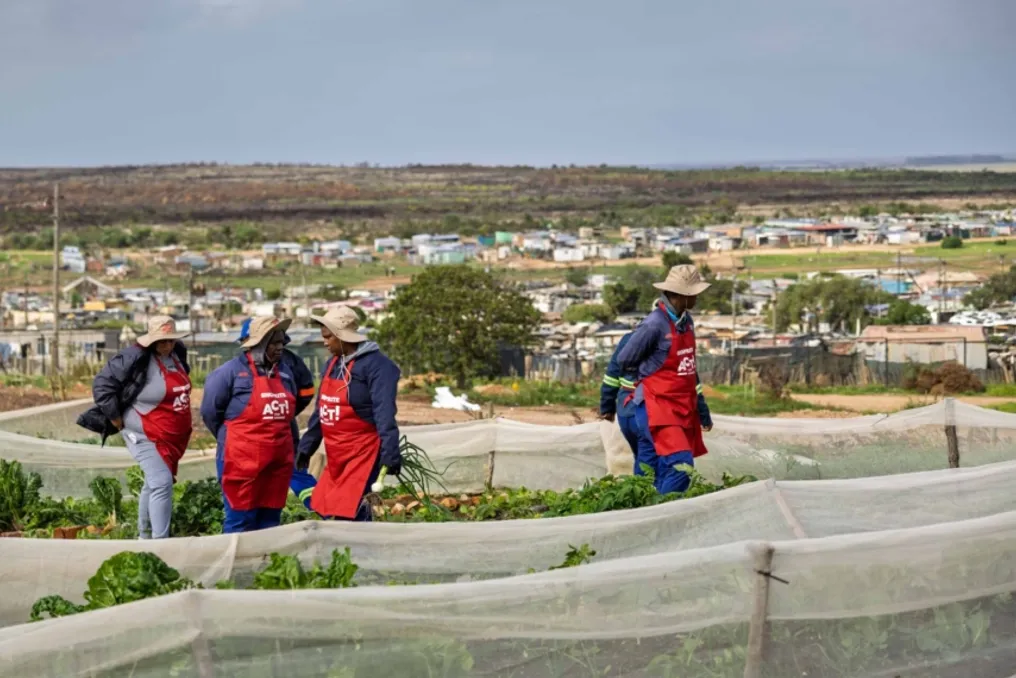
The Shoprite Group has reached a significant milestone in its long-term community garden program, transforming household food waste into fresh vegetables in the Western Cape. The retail chain now boasts 300 sites, among which the garden in the Zero Organic Waste to Landfill project near Bredasdorp is considered iconic.
Project Principle
This initiative is the result of a partnership between the Cape Agulhas Municipality and the South African Zero Waste Association (Zwasa). The project, which began in 2021 with the aim of diverting biodegradable waste from landfills and turning it into nutrient-rich compost, has evolved into a thriving food production system over time.
By 2024, the project has gone beyond simple composting and functions as a circular system that integrates organic waste, healthy soil, and food production into one continuous cycle. Waste from approximately 800 local households is collected, sorted, and composted on-site, after which the compost is returned to the soil for growing vegetables just a few meters away, and the fresh produce is sold to local residents.
Social and Educational Value
Due to the garden's location near a large informal settlement, fresh organic vegetables travel a very short distance from the ground to the table, making nutritious food more accessible to the local community. The garden is maintained weekly by a team of eight people under the guidance of Zwasa farm manager, Anine Swart. Currently, about 700 square meters are actively cultivated on the five-hectare site.
In addition to growing vegetables, the project serves as a learning center. Monthly workshops provide community members with practical agricultural skills. Further steps are planned, including the creation of a nursery for growing seedlings and redesigning beds for better protection of crops and soil against erosion and increasing extreme weather conditions.
Long-term Food Support
For over ten years, the Shoprite Group has supported community gardens across South Africa, helping to strengthen food security, create local opportunities, and improve access to fresh produce. The retailer's support includes not only funding but also agricultural training, mentorship, irrigation systems, farming tools, and water collection infrastructure. These measures aim to increase production while reducing the burden on municipal water supplies.
Sanjiv Ragubir, Director of Sustainability at the Shoprite Group, noted that reaching the 300 community garden mark signifies an important stage in the retailer's commitment to supporting communities. He emphasized that the support for each garden site is tailored to its specific conditions and the needs of the local population. In Bredasdorp, local collaboration and regenerative thinking help transform what was considered waste into a valuable resource, thereby strengthening food security in a practical and long-term manner.
For the Cape Agulhas Municipality, this project demonstrates how unused land can be transformed into productive spaces while simultaneously addressing waste management challenges. Municipal Manager Wessel Rabbets stated that this project is a tangible and inspiring example of how partnerships can turn difficulties into benefits for both people and the environment.
The Bredasdorp project serves as a practical illustration of how interaction between the private sector, local government, and civil society organizations can reduce food waste, restore soil, enhance food security, and create jobs for local residents. The Shoprite Group stated that it will continue to invest in programs that strengthen communities through sustainable food production and locally managed solutions, now having 300 community gardens across South Africa.