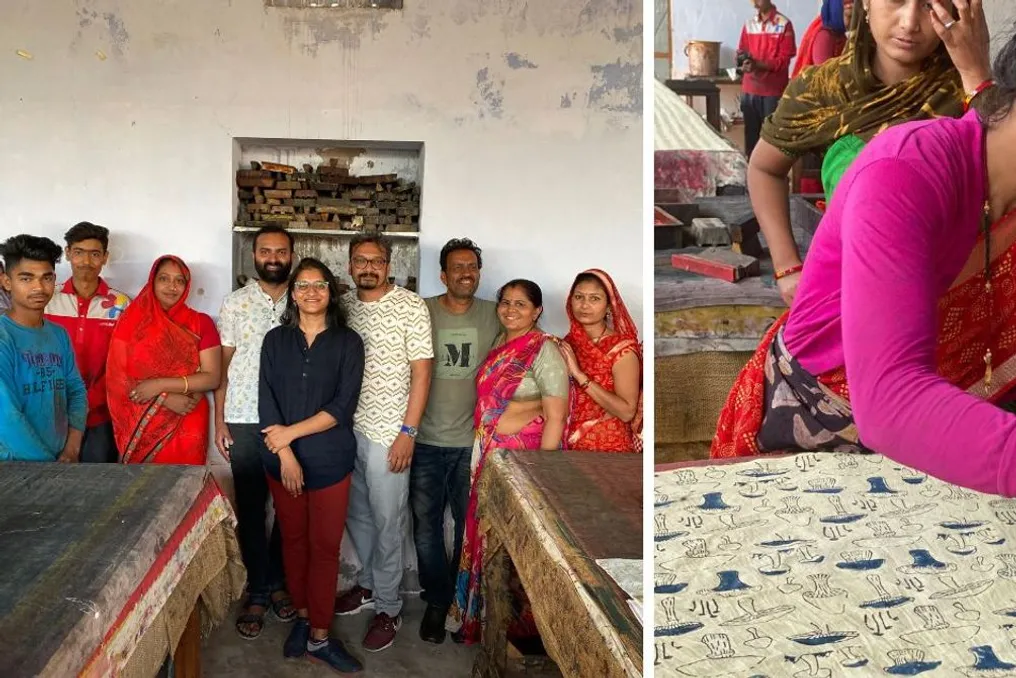
After completing her interior design studies, Shipa Patel visited her village in Gujarat looking for a creative outlet. She told The Better India that she has always loved everything handmade and has a 'raw feeling' about it. In the village of Desa, near her hometown, she discovered artisans engaged in block printing and was captivated by the process. It felt like love at first sight to her, as she fell in love with the texture of the wooden blocks and the technique itself.
Creation of the Chhapa Brand
Initially, she started making hand-printed clothing for herself as a hobby, fully immersing herself in the process. In 2013, she decided to launch the sustainable clothing brand Chhapa—which means 'imprint' or 'stamp' in Gujarati—with the aim of popularizing and reviving block printing.
Scale and Financial Performance
Today, the brand has an online store with worldwide delivery, including countries such as Singapore, the USA, and the UAE, as well as a retail store in Ahmedabad. The company's annual revenue approaches 1.5 crore rupees, with 25 percent of earnings going to approximately 25 artisans they employ.
Principles of Sustainable Development
Co-founder Hardik Patel, Shipa's husband, who handles business development and IT, emphasizes that sustainability is at the core of the company's operations. Chhapa uses eco-friendly fabrics such as cotton and khadi, and sources materials directly from weavers. Only natural or nitrogen-free dyes are used for printing, which are safe for the artisans' skin.
Although the company cannot eliminate waste entirely, it strives to minimize it by using recycled raw materials. For instance, leftover fabric is used to make accessories such as tablet covers, bags, camera straps, and much more.
Uniqueness of Design and Working Process
Chhapa's unique selling proposition lies in its original designs. Instead of following traditional patterns, they develop their own motifs—elephants, sunglasses, planets, birds, rickshaws, and others—which are then carved onto wooden blocks for hand printing. Thus, they combine traditional methodology with unusual and fun drawings to attract a younger audience.
The four-person team—Shipa, Hardik, Bimal, and Shitael—jointly selects the theme for the collection. Shipa, who oversees design and creative aspects, creates the mood board and color scheme. Next comes collaboration with the artisans to finalize colors and designs, after which the collection is ready for production.
Support for Artisans
Geta Tondriya, one of the artisans working with Chhapa since 2016, notes the uniqueness of their color palettes and designs. Hardik emphasizes that the driving force is providing work to the artisans, as they faced difficulties finding orders. This is why they decided to start experimenting within the startup framework.
Block printing is a 300-year-old technique that is slowly disappearing due to the rise of fast fashion and changing consumer demands. This method requires high precision and concentration: the carved wooden block is dipped in dye and then manually pressed onto the material.
Hardik mentions that artisans were abandoning this craft due to a lack of orders. Chhapa's mission is to popularize this art again and bring it back into public consciousness. He adds that now not only do artisans practice this art, but they are also passing it on to the next generation.
Geta shares that previously, young people were unwilling to engage in block printing, preferring the public or private sector. However, now, after taking courses, they have started learning this technique, and young people are actively participating in the work, especially during the festive season.
Tradition and Transparency
Geta manages the entire process, from preparing natural dyes from flour and coordinating with other artisans, to applying and fixing the designs on the garments. After printing, the items are soaked in hot water for a couple of hours to set the pattern. She also points out that block printing has existed in Bagru (Jaipur, Rajasthan) for generations and is a family business. Thanks to Chhapa, the flow of orders has become constant and increased.
Furthermore, Chhapa supports the artisans by providing free medical check-ups and quality footwear for work. Through its website and social media, the company also tells consumers the stories and struggles of the artisans. Hardik believes that without explaining the story behind the product, it holds no value, so it is necessary to constantly inform about the process, challenges, and behind-the-scenes work. This openness helps them stand out against fast fashion and large brands, as he says, 'when you educate them about the work put into the product, they become loyal customers.'