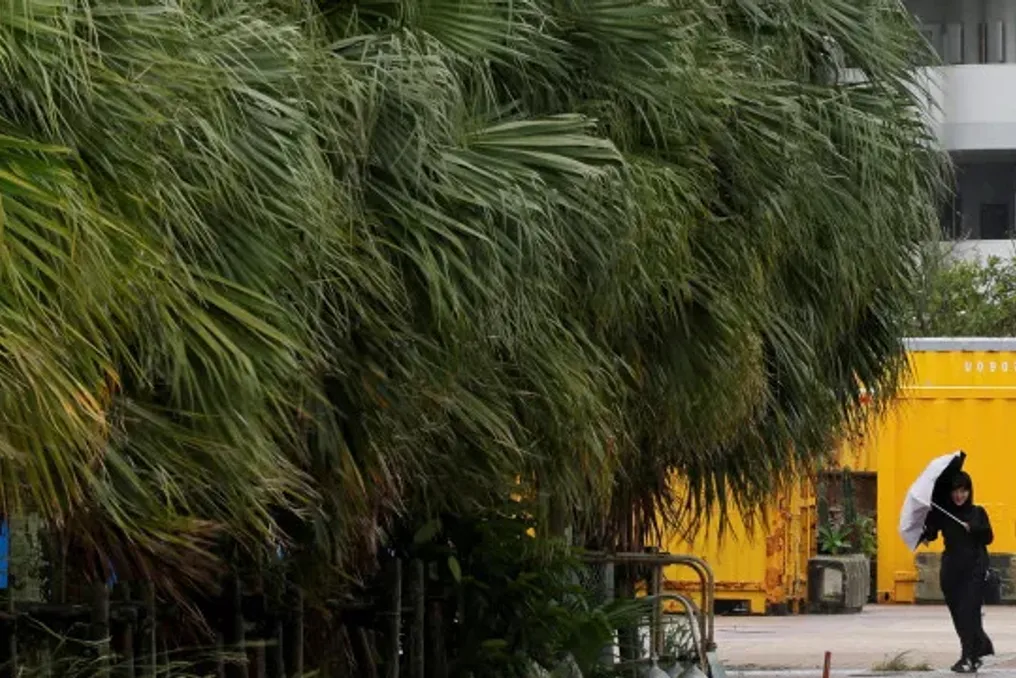
China's National Meteorological Center raised the alert to orange due to Typhoon Bavi, which regained strong typhoon classification at midnight. At 05:00 local time (corresponding to 21:00 CST on Friday), the storm was located approximately 560 kilometers southeast of the border between Zhejiang and Fujian provinces, after passing near Taiwan.
Initial Impacts and Forecasted Trajectory
Bavi's passage resulted in intense rainfall, causing at least 13 injuries and forcing the preventive evacuation of nearly 9,000 people. At that time, the storm had maximum winds of level 14, equivalent to 42 meters per second, moving northwest at a speed between 30 and 35 kilometers per hour.
Official projections indicate that Bavi will make landfall early Sunday morning in the coastal area between Taizhou, Zhejiang, and Fuding, Fujian. Before entering Chinese territory, it is expected to maintain strong or typhoon category before changing direction to the north and gradually weakening.
Alerts and Risks in Affected Regions
Chinese authorities anticipate winds of intensity 9 to 11, with gusts of 12 to 13, in various areas, including parts of the East China Sea, the Taiwan Strait, Hangzhou Bay, the Zhoushan archipelago, and the coasts of Zhejiang and northeastern Fujian. The Meteorological Center also issued warnings about torrential or extremely torrential rainfall in eastern Zhejiang and northeastern Fujian, with potential accumulations ranging from 250 to 800 millimeters in some locations.
Additionally, the Ministry of Natural Resources and the Meteorological Administration issued a red geological risk alert for regions in eastern Zhejiang, leading authorities to request the evacuation of individuals in vulnerable locations such as slopes, ravines, cliffs, and riverbeds.
Disruptions and Evacuations
In Zhejiang, Hangzhou Airport had predicted the cancellation of 198 flights that morning, while the city of Shanghai announced the cancellation of 387 flights at the main airports, Pudong and Hongqiao. In the coastal community of Xiaguan, over 11,000 residents were preemptively relocated before Bavi's expected arrival.
Context of Recent Disasters
Bavi's arrival follows a week of extreme weather events in China. This sequence included rains linked to Typhoon Maysak, which resulted in at least 39 deaths in Guangxi; a landslide in Gansu, with 21 fatalities; and storms and tornadoes in Hubei, which caused eleven deaths.
Situation in Taiwan
In Taiwan, the Central Weather Bureau reported that Bavi's area of influence reached the far northeast of the island around 01:00 local time on Saturday (17:00 CST on Friday) and forecasts that the island will exit this area of influence between Saturday night and Sunday morning.
By the end of Friday, the Central Disaster Response Center had recorded 13 injuries, mainly resulting from motorcycle falls caused by wind or injuries during typhoon preparations. Furthermore, 8,972 people were preemptively relocated to safe locations across the island, with nearly 5,000 of them in Hualien County (east).
Later, at 07:00 local time (23:00 CST on Friday), the typhoon's center was located about 330 kilometers east of Taipei, with maximum sustained winds of 144 kilometers per hour and gusts reaching up to 180 kilometers per hour. Taiwanese authorities maintained alerts for torrential or extremely torrential rainfall in mountainous areas and the north, where accumulations exceeding 200 millimeters had already been recorded in places like Yilan (northeast), Hsinchu (northwest), and Taoyuan (north).