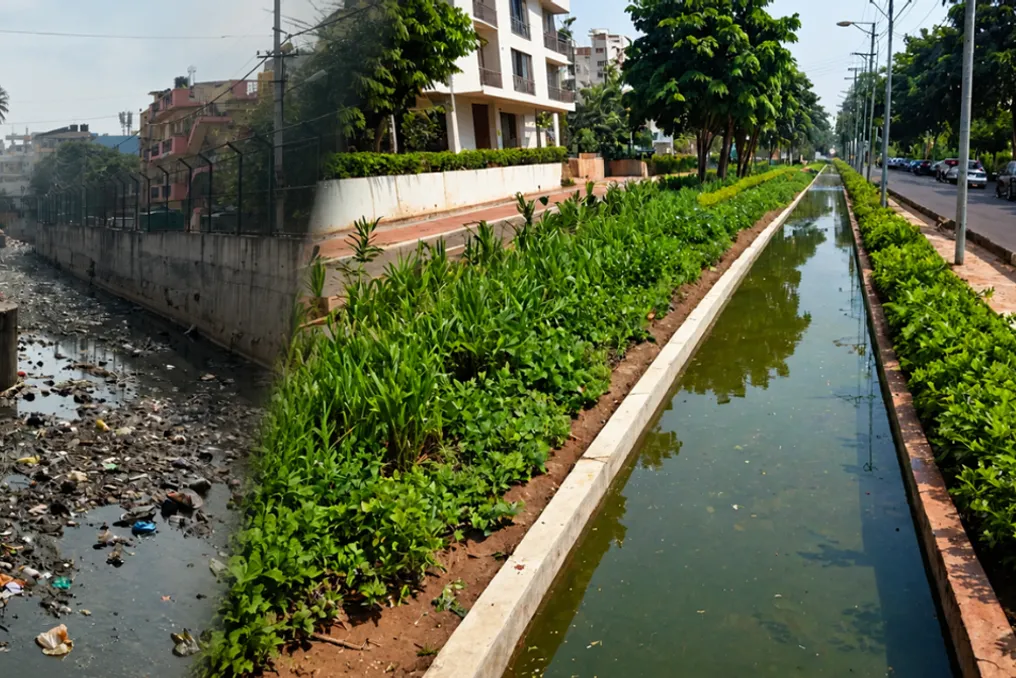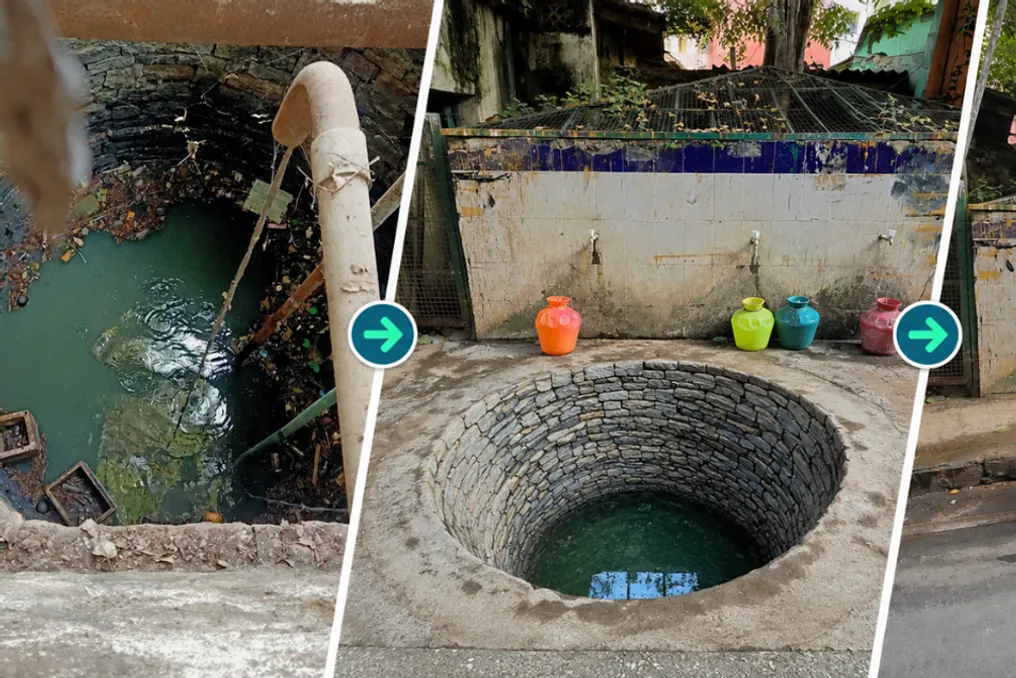

In the Sampanghiram Nagar area of Bengaluru, near a small temple alley, there is a round stone well covered by a metal grate. Several years ago, most passersby ignored it, and some tried to avoid it. The surface was covered with plastic waste, and the bottom contained concrete debris and silt. Tree branches hung over the opening, dropping leaves and trash into the water. The stone walls were cracked in places, and weeds grew through the gaps, which widened due to years of neglect.
The Well Became a Lifeline
For many residents, the well long ceased to be perceived as a water resource and turned into a dump. However, today this same well attracts people daily. Residents come with metal pots and plastic buckets to fill an upper reservoir connected to public taps. Families use this water for daily needs throughout the day, and small local eateries use it for cleaning. On days when municipal water supply is unstable, the well becomes a reliable source.
Significance for a Growing City
Even in hot months, the well continued to hold water. For a city where many families now plan their day based on tanker schedules, dry borewell operations, and unpredictable water supply, this change is significant. The return of a forgotten well to a useful state may seem like a minor local story, but in Bengaluru, it points to a broader potential: old water systems can help a growing city cope with the current water crisis.
Wider Movement Across Bengaluru
The well in Sampanghiram Nagar is an example of broader efforts across Bengaluru. Resident welfare associations, civic groups, and environmental organizations are restoring traditional wells that have gradually disappeared from collective memory amid the spread of borewells and piped water systems.
How Water Went Underground
Over decades, the history of Bengaluru's water supply slowly moved underground. As the city grew, borewells began to displace open wells in homes, schools, residential complexes, and public areas. What was once visible to everyone—a well in the yard, near a temple, or in a neighborhood—gradually disappeared behind pipes, pumps, and motors.
Difference Between Systems
Deep drilling provided access to groundwater far beneath the surface, which seemed convenient. But this changed people's understanding of water. With an open well, the water level is visible: after a good rain, people see it rise, and in dry months, they see it fall. The well reminds the neighborhood that groundwater depends on rain, soil, and replenishment. A borewell does the opposite: it hides the water level deep underground. For years, you can continue pumping water without seeing how much is left, and the warning comes late, often only when the motor starts drawing air instead of water, by which time the crisis has reached people's homes.
Well Restoration
Open wells work with a shallower layer of groundwater. When rainwater seeps into the soil and filters down, it helps replenish this layer over time. Therefore, a functioning open well can show the neighborhood what is happening beneath its feet. When such wells are cleaned, repaired, protected from sewage runoff, and connected to rainwater harvesting systems, they become useful again. They can serve as local sources during shortages and help replenish groundwater in the area.
Restoration Process in 2022
The restoration of the well in Sampanghiram Nagar, completed in 2022, began with a complex cleaning operation. This work was carried out by SayTrees Environmental Trust, an environmental non-profit organization based in Bengaluru and founded in 2007 by Kapil Sharma and Leet Captain Deokant Payasi. The project was implemented with support from CSR corporate funding and is maintained through a partnership between SayTrees, local residents, and civic authorities to ensure the well's cleanliness and functionality.
Cleaning and Repair Details
The community well is seven feet wide and forty feet deep. By the time the restoration work began, it had accumulated years of garbage, construction debris, silt, and organic waste. First, the water had to be completely pumped out using motors before workers could reach the bottom. Early stage photos demonstrate the degree of disrepair: trash was pressed against the stone walls, weeds grew through cracks, and dark, contaminated water mixed with floating debris stood inside. The cleaning was slow, physical labor. Workers used manual labor and cranes to remove layers of grime nearly forty feet underground. Extracted silt and garbage were piled up nearby for several days to dry, and then tractors transported them for disposal. The well structure also required attention: the stone walls needed repair. The old grate cover allowed leaves and trash from the tree canopy to constantly fall inside. The restoration team lifted the cover and added an inclined canopy to prevent fresh waste from accumulating in the water. After this, the water was treated using alabaster, potassium permanganate, and calcium before the well was reconnected for public use.
Results and Resident Feedback
Today, the restored well has a capacity of over 43,000 liters. According to the project, more than 1,000 liters are used daily through the public tap. For local residents, this change is felt not so much in numbers as in daily relief. Srinivas, a resident who has lived in the area for 40 years and owns a shop here, noted that since they do not receive regular water supply from the corporation, the community largely depends on local water sources. He emphasized that the recent cleaning and restoration of the well brought immense benefit, improving water accessibility for residents and local businesses, including hotels and eateries.
Emotional Connection to Rainwater
Across Bengaluru, tankers have become part of daily life. In many areas, summer brings a familiar routine: waiting for tanker deliveries, carefully storing water, and worrying about the next arrival. Residential complexes often spend hundreds of thousands of rupees monthly on purchasing water delivered from peri-urbanized and rural areas around the city. This water also places a burden outside the city, as tankers heavily rely on groundwater extraction in surrounding villages, shifting water stress from urban consumers to rural aquifers. Diesel transport adds another environmental cost.
Community and Climate
Restored open wells support the city's formal water infrastructure, reducing the load on it. Several such wells across Bengaluru are used for gardening, construction work, cleaning, and filtered domestic use during shortages. Every functioning well provides the neighborhood with another local source, especially during peak summer months. This shift is practical but also emotional. A volunteer involved in urban well restoration projects notes that 'tanker water shapes consumption mindset. Water arrives as a commodity. People don't see where it comes from.' The open well restores this connection: residents can see the water level, notice changes after rain, and understand the importance of replenishment.
SayTrees' Large-Scale Programs
Work around open wells is also becoming part of a larger climate change response. SayTrees expands water conservation programs across India by restoring lakes and reviving traditional water systems. To date, the organization has restored over 50 lakes and water bodies and revived more than 30 traditional open wells, creating a total storage capacity of over 5 billion liters. For Bengaluru, this is critically important as the city faces two types of water stress simultaneously: flooding during heavy rains and scarcity in summer. Traditional systems can help both aspects by retaining water, aiding replenishment, reducing surface runoff, and helping the soil retain moisture.