
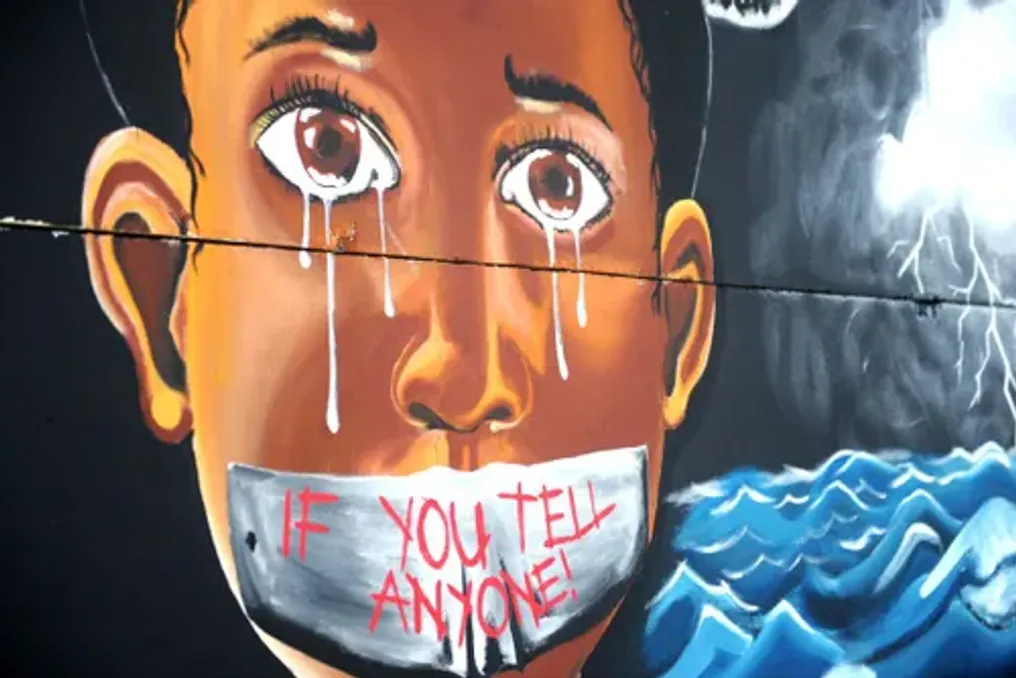
Schools should serve as places for learning, development, and ensuring children's safety. However, a new alarming report has shown that sexual violence is deeply rooted in South African schools, exposing systemic failures in student protection despite the existence of laws, safety policies, and repeated warnings.
Scale of the Crisis in Education
The South African Human Rights Commission (SAHRC) found that sexual violence in educational institutions is widespread and deeply entrenched. It is presumed that the violence is perpetrated by teachers, other students, school staff, service providers, and outsiders. Although the report was initiated by allegations of sexual violence involving teachers at St John's College in Mthatha, Eastern Cape, the commission indicated that evidence points to a much broader national crisis affecting schools across the country.
Statistics and System Gaps
The report, titled 'Sexual Violence in Schools: A Crisis of Fragmentation, Integration Delays, Incomplete Registering and Uneven Application,' notes that 26,855 cases of child abuse were registered in the 2024/25 financial year, including 9,857 cases of sexual violence. During the same period, the South African Police Service (SAPS) registered 2,826 charges related to sexual crimes against children.
The South African Teachers' Council received 826 complaints of sexual misconduct between 2021 and 2025. Nevertheless, the Commission found that only a small fraction of reported cases led to convictions, teacher suspensions, or inclusion in protection registers. Furthermore, the report identified a backlog of 10,748 convicted offenders who have not yet been entered into the National Register of Sex Offenders, highlighting significant discrepancies between criminal convictions and protective measures.
Systemic Deficiencies and Response
The Commission stated that the allegations at the Eastern Cape school, along with subsequent media reports and additional complaints, demonstrated that this is not an isolated incident but a reflection of systemic failures in protecting children in the educational environment. The SAHRC noted in its report: 'Statistical data from South African Police Service (SAPS) presentations, government departments, and regulatory bodies shows that child sexual violence is not episodic or anecdotal, but systemic and entrenched.'
Recognizing that the failures extend beyond individual schools, the commission convened government departments, regulatory bodies, independent school associations, and civil society organizations to identify gaps in legislation, reporting mechanisms, and implementation, as well as to study a coordinated national response.
Expert and Organizational Views
Mara Glennie, founder of TEARS Foundation, stated that the report confirms long-standing concerns that schools have become a reflection of the country's wider gender-based violence crisis, rather than an isolated space. She emphasized that the SAHRC report validates what grassroots organizations have known: 'Schools are not separate from the gender-based violence crisis in South Africa. They are a reflection of it.'
Glennie added that instances of child abuse in schools indicate that the country's protection systems failed long before cases reached the police or courts. She believes that schools should be the first line of defense, not environments where violence goes unnoticed or unreported. 'Every teacher must know how to respond to disclosures and activate appropriate support systems. Schools must be places of protection, not places where violence is ignored.'
Shahida Omar from Teddy Bear Foundation agreed that the report reflects the observations of child protection specialists over decades. She argued that the report uncovered systemic weaknesses in child protection in schools, insisting that vetting teachers should never be viewed as a one-off administrative exercise, but rather as a continuous duty of care. Omar also expressed concern about institutional cultures that prevent children from speaking out, as many fear they will not be believed or that reporting violence will lead to retaliation.
The National Association of Professional Teachers of South Africa (NAPTOSA) expressed deep concern over the findings, although they aligned with concerns voiced by educators for years. Representative Lovica Matthews stated that while the vast majority of schools remain safe learning environments, even one child subjected to violence is unacceptable. She agreed that the report correctly identified sexual violence in schools as a systemic problem, not a collection of isolated incidents, noting that one victim is too many.
Matthews also pointed to a major issue—a lack of trust in reporting and judicial mechanisms. Director of Childline KwaZulu-Natal, Adeshini Naiker, reported that many children continue to suffer in silence. She called on adults to take every report seriously and act quickly to protect children, emphasizing that child protection is a shared responsibility.
Government Response
The Department of Basic Education welcomed the SAHRC report, calling its recommendations an opportunity to strengthen collaboration between the government and improve systems designed to protect learners. A Ministry representative, Terence Hala, stated that ensuring child safety requires a coordinated response involving education authorities, law enforcement, the justice system, social development, families, and communities. He affirmed the Ministry's commitment to strengthening prevention, reporting, and support mechanisms, as well as holding perpetrators accountable, mentioning existing measures such as the Protocol on Preventing and Managing Sexual Violence and Harassment in Public Schools, and partnership with SAPS.