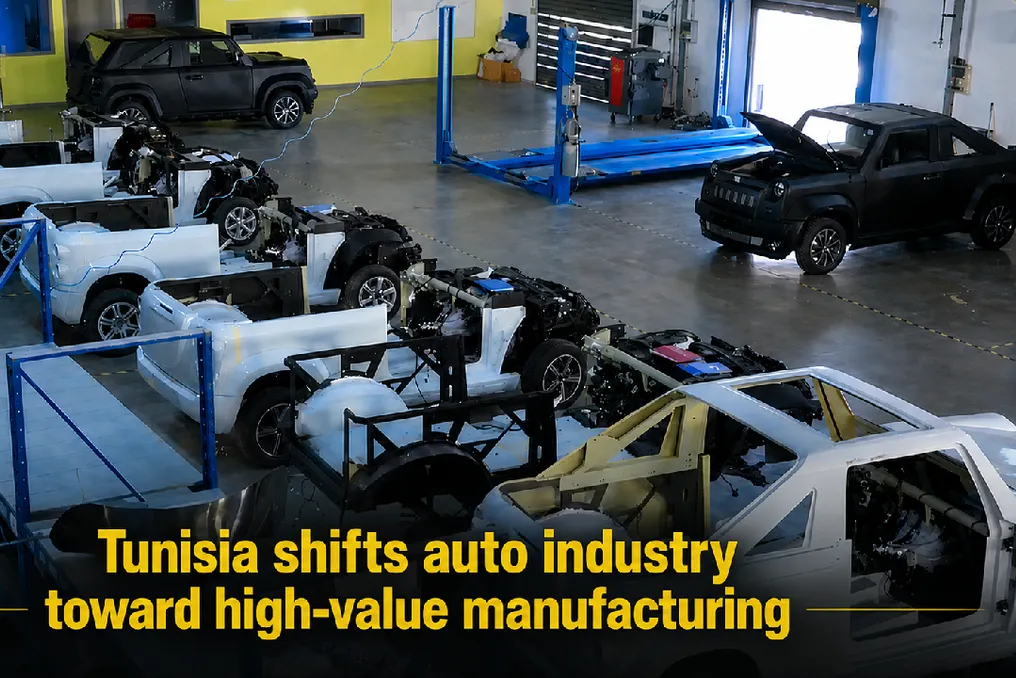
Tunisia's automotive sector has established itself as one of the country's strongest export sectors. This industry annually generates about $4.3 billion in exports, employs over 120 thousand people, and includes more than 300 companies integrated into global and European supply chains.
Strategic Development Goals
Dafer Sagiri, Vice President of Tunisia's Parliamentary Finance Committee, noted that while existing data confirms the industry's strength, the country's future is tied to integration into high-tech manufacturing. He emphasized that the focus is shifting not merely to increasing output volume but to enhancing created value.
Positioning in the Electric Vehicle Market
Tunisia's ambitions extend beyond producing individual components. Policymakers, such as Mohamed Ali, see the transformation of the global automotive industry through electric vehicles as an opportunity for the country to become a regional production hub serving European and African markets. Ali stated that the goal is now to create a fully Tunisian car on Tunisian territory, positioning Tunisia as a regional platform for vehicle production, especially electric ones.
Priorities and Investments in the Ecosystem
Industry leaders believe that Tunisia's next priority should be the development of the entire electric mobility ecosystem. This includes components, charging infrastructure, as well as workforce training and innovation adoption. Miriam Alloumi, President of the Tunisian Automotive Association, stressed the need for investment across this entire ecosystem to maintain the competitiveness of local enterprises and attract new foreign investment.
Currently, over 3000 specialists have undergone specialized training in the automotive sector to meet the growing demand for expertise in advanced manufacturing.