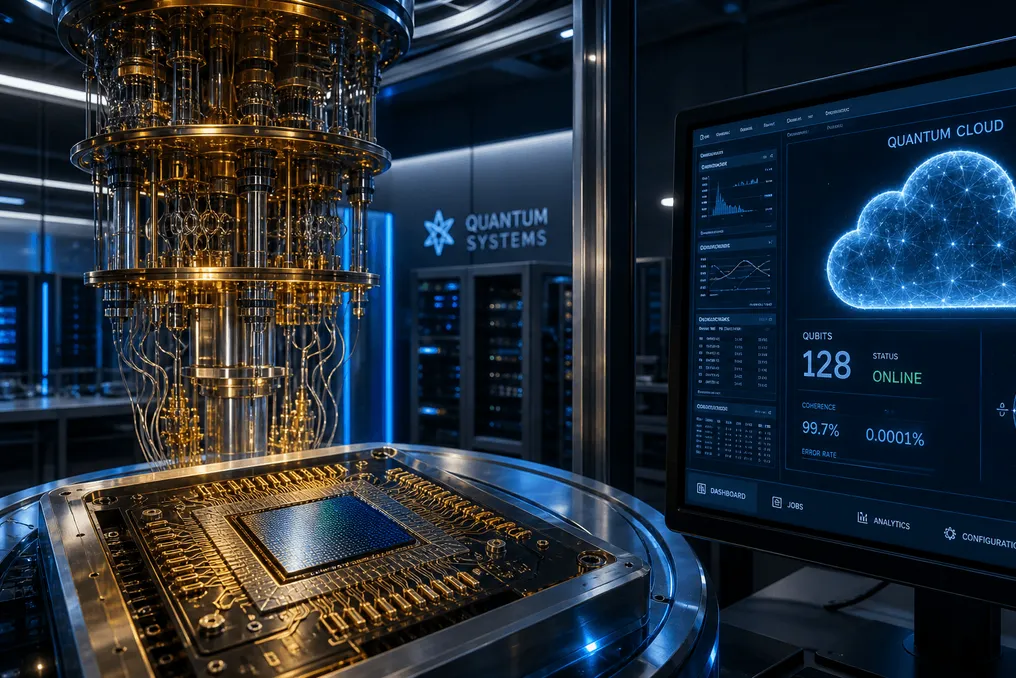
LogicalQubit, a company based in Hangzhou, has introduced its quantum cloud platform, which possesses capabilities for both physical and logical qubits. This move marks the company's transition from selling hardware to providing quantum computing services through cloud infrastructure.
Popular
Company Strategy and Development
LogicalQubit, spun off from the Superconducting Quantum Computing Laboratory of Jiangzijiang University, has officially released its quantum cloud platform. This platform is now accessible to all sectors of the economy, representing a step toward implementing commercial quantum computing beyond mere equipment sales.
Over the past year, the company has already generated tens of millions of yuan in revenue from supplying quantum computers to research institutions. CEO Wang Zhen presented a three-stage strategy: the first stage, related to hardware sales, is largely complete; the second stage is the launch of the quantum cloud, enabling remote access to computational power; and the third stage is the long-term vision of universal quantum computing, which will become feasible after achieving an ideal number of 50–60 logical qubits, allowing practical quantum algorithms to be applied to a wide range of tasks.
Technologies and Partnerships
The LogicalQubit quantum cloud incorporates core technologies such as physical qubits, logical qubits, and wave function control. The company has established collaborations with the pharmaceutical company Pharmaron, as well as software algorithm partners, including Liangguang Zhiyuan, Liangzi Yongxian, Tongyuan Liangzhi, and UnitaryForge. General users can upload their algorithms as code to the cloud platform, where they are converted into quantum circuits and executed.
Sector Dynamics and Forecasts
The quantum computing sector is demonstrating rapid growth. In the first quarter of 2026, domestic quantum computing funding reached $4.6 billion, surpassing the total volume of the entire year 2025. In July alone, LogicalQubit closed a Series A round worth hundreds of millions of yuan led by Ge Weidong Hunton Investment and Kangjun Capital, with participation from numerous other institutions.
The industry momentum was further bolstered by a publication by the LogicalQubit team in the journal Nature in August 2025, where they demonstrated topological edge states on the Tianmu-2 superconducting chip with one hundred qubits. Contributions to development were also made by the 2025 Nobel laureates in physics, awarded to pioneers of superconducting quantum circuits, and the inclusion of quantum technologies in the national 15-year Plan.
Accessibility and Competition
Industry estimates suggest that the gap between Chinese and US technologies in superconducting quantum computing has narrowed to one or two years. Nevertheless, CEO Wang Zhen warned that making quantum computing truly accessible to ordinary users will require reaching a threshold of 50 logical qubits, which he forecasts around 2029. Until then, the quantum cloud will focus on the scientific community and early adopters, helping to build the ecosystem and demonstrate value to industry partners.
The company's approach reflects a pragmatic balance between technological aspirations and commercial reality. Wang Zhen is known for responding to inquiries about cost with the famous saying: 'Let it be strong, the moon shines over the great river.' Following the breakthrough of Tianmu-2, the team began comparing itself to Google Quantum AI, positioning LogicalQubit as one of the leading participants in China's superconducting quantum computing race.