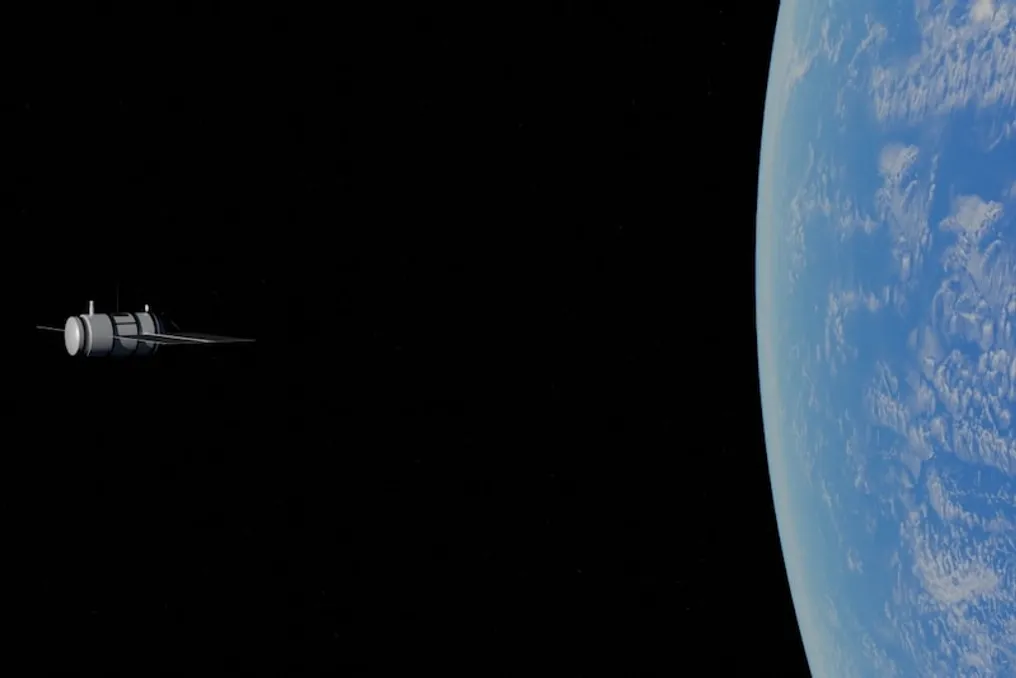
On July 11, 1979, debris from 'SkyLab,' the world's first successful space station, fell into the territories of Australia and the Indian Ocean. This occurred five years after the completion of the last crewed mission on the station. No one was injured as a result of this incident.
History and Characteristics of SkyLab
The 'SkyLab' station was launched in 1973 and became the first successful space station. Although Russia had previously established the 'Salyut' station, its mission was unsuccessful due to technical deficiencies. Nevertheless, the American station demonstrated significant success, ensuring a long and safe stay for three different three-month crews.
Scientific Achievements of the Station
This cylindrical object was 118 feet high and weighed 77 tons. It contained the most diverse set of experimental equipment gathered in a single spacecraft at that time. The 'SkyLab' crews spent over 700 hours observing the Sun and took more than 175,000 solar photographs.
Reasons for the Fall and Mission
Five years after the last flight on 'SkyLab,' due to unexpected activity of sunspots, the station's orbit began to deviate faster than expected. On July 11, 1979, 'SkyLab' made an impressive return to Earth, breaking up in the atmosphere and scattering burning debris over the Indian Ocean and Australia.
The 'SkyLab' station was designed as a platform for researching scientific questions in Earth orbit, including the effect of prolonged weightlessness on the human body. Since this project represented the next step in broad space research, NASA made every effort to successfully launch 'SkyLab' into orbit.
Control Problems
Although 'SkyLab' was designed for nine years of service, NASA did not provide any control or navigation systems for its return to Earth. This deficiency created a problem in late 1978 when NASA engineers discovered that the station's orbit was rapidly decreasing. 'SkyLab' turned into an uncontrolled object weighing 77 tons, approaching Earth.