Scientists from the Indian Institute of Science (IISc) and the National Institute of Hydrology have found that a major hydropower project in the Eastern Himalayas will maintain high resilience to climate change until 2100.
Research Methodology
The researchers combined global climate models with hydrological modeling to determine how the Kameng Hydroelectric Project in Arunachal Pradesh, India, will cope with predicted sharp fluctuations in temperature and precipitation. This finding brings significant relief to regions dependent on mountain rivers for clean and ecological energy.
Modeling Warming Impact
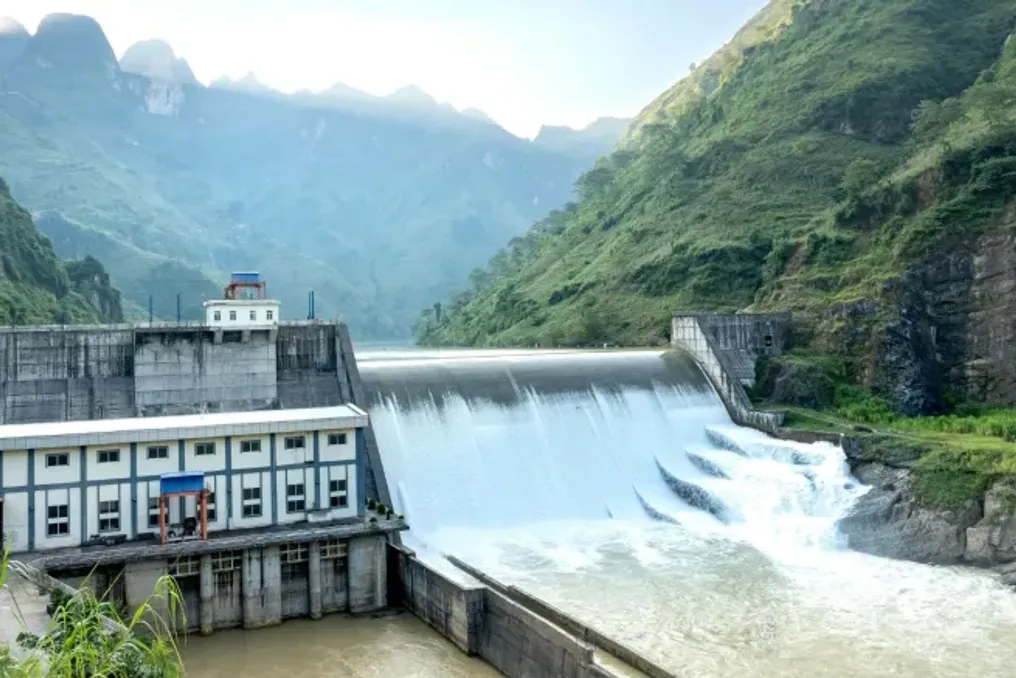
The team studied the impact of global warming on 'run-of-the-river' type hydroelectric stations, which utilize the natural flow and steep elevation drops of mountain rivers, unlike traditional dams with large reservoirs. The Variable Infiltration Capacity computer program was used for forecasting, which creates a digital replica of the river basin, calculating how water is distributed across the landscape between soil absorption and surface runoff.
Climate Change Forecasts
The model was loaded with historical weather data and future projections from seven different global climate models under two warming scenarios. The data showed a future with a temperature increase of up to 2.8 degrees Celsius, characterized by extremely dry winters and significantly wetter summer monsoons. Consequently, natural river flow during the dry season could drop by 80%, while floodwaters during monsoons could sharply increase.
Project Protective Mechanism
Interestingly, the researchers established that the specific design of the hydroelectric station serves as a protective buffer against extreme weather conditions. Since the Kameng installation is designed to operate with a large vertical drop, known as head, and a relatively small required volume of water, it remains highly efficient. Although the station will produce less energy during dry winter months, the huge surplus of water during intense summer monsoons will allow it to operate at maximum capacity for much longer periods. Therefore, the annual energy production of the station is expected to remain stable, exceeding the national operational efficiency benchmark in over 80% of cases until 2100.
Significance for Global Energy
By choosing a major generation facility in the Eastern Himalayas—a region with enormous hydropower potential but lacking scientific data—this study provides a detailed and applicable plan for assessing mountain rivers worldwide. By using an ensemble of multiple climate models, the researchers were able to average out individual model biases, leading to more reliable forecasts.
Limitations and Conclusions
Nevertheless, the scientists note that the computer model uses a simplified approach to estimate groundwater flows, which may cause minor errors during the dry period. Furthermore, due to the absence of physical weather stations in the harsh Himalayan terrain, all computer predictions carry a degree of uncertainty. These results will allow energy specialists and plant operators to adapt turbine maintenance schedules to changing seasons, ensuring grid stability. By proving that thoughtful, site-specific engineering can withstand extreme climatic shifts, this research gives policymakers confidence in continuing investment in sustainable, climate-resilient infrastructure for future generations.