An extreme solar storm might sound like science fiction, but researchers are already studying ways to mitigate its impact before it threatens Earth's technological infrastructure. The proposed concept, named StormWall, involves creating a space shield capable of weakening large coronal mass ejections before they reach the planet.
How StormWall Works
The core idea is to place satellites in geostationary orbit that can release materials such as barium, lithium, or sodium when a super solar storm approaches. When these elements are ionized by sunlight, they form a gas cloud that helps slow down the plasma and reduce its effect on Earth.
Researchers believe this technology could soften rare but potentially devastating events that occur roughly once a century. Although the project currently exists only in theory, its developers claim it can be realized using existing or advanced technologies.
Solar Storm Mechanism
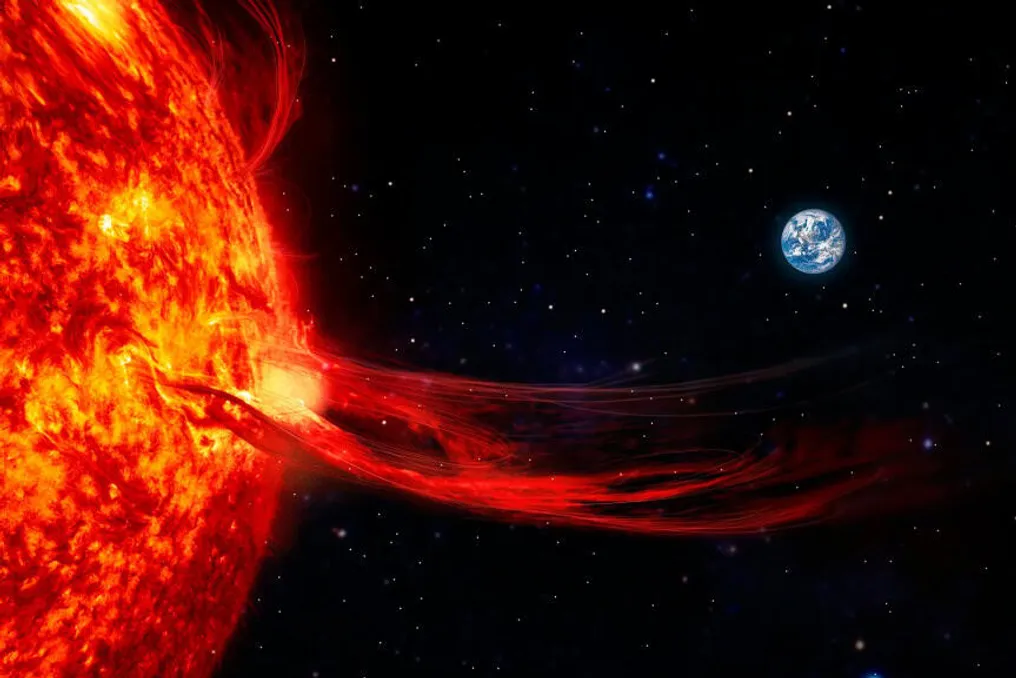
The Sun constantly emits charged particles into space via the solar wind. In most cases, Earth's magnetic field deflects these particles, acting as a natural protective barrier for the planet. Some of this material is directed toward the poles, causing the aurora borealis.
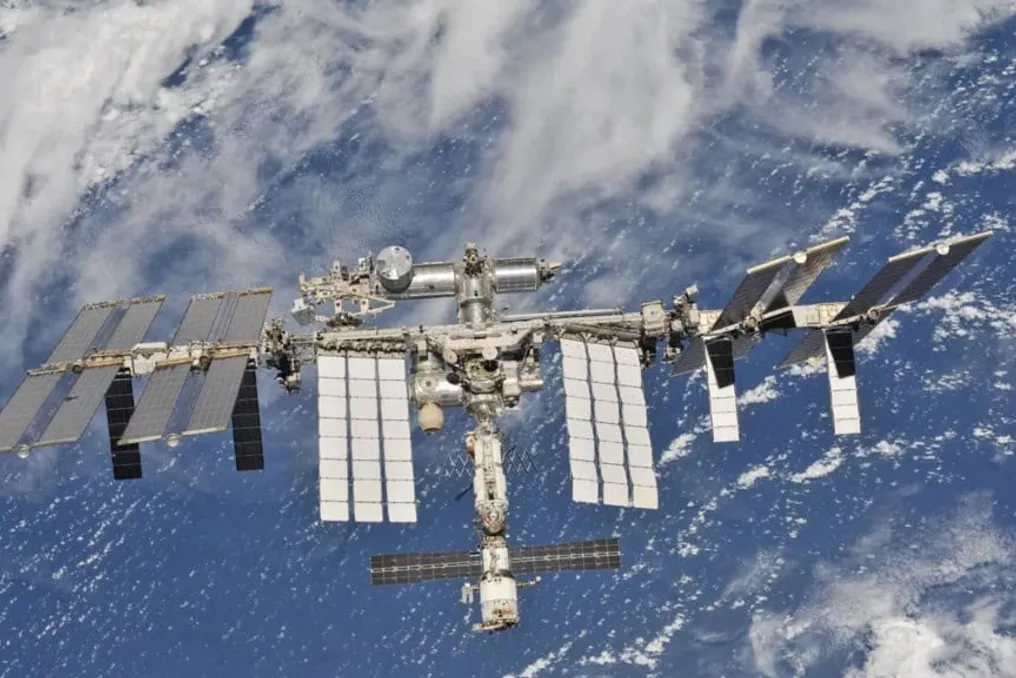
The problem arises when large coronal mass ejections hit Earth. In such cases, the number of energetic particles can be sufficient to cause failures in power grids, communication systems, satellites, and navigation equipment.
As explained by Professor and physicist Allison Jones from the University of Iowa in an interview with the WSJ, 'it is a process that happens every day, several times a day.' She added that the negative consequences manifest precisely when this occurs on a large scale.
Historical Examples of Impact
Similar incidents have been recorded in recent decades: in 1989, a solar storm caused a nine-hour power outage in Quebec, Canada; in 2012, a superstorm passed by Earth without reaching it; and in 2024, a solar storm forced New Zealand energy operators to take mitigation measures and caused GPS disruptions during the planting season in parts of the US, resulting in losses estimated at approximately $1 billion USD.
Comparison to Car Airbag
StormWall developers compare this system to a car airbag—an emergency mechanism used only in critical situations when other protective methods prove insufficient.
Ian Cohen, head of the Solar and Space Physics Department at Johns Hopkins University Applied Physics Laboratory, considers the idea theoretically sound. However, the main obstacle remains space weather forecasting. Unlike terrestrial meteorology, scientists have a limited number of sensors to monitor the Sun's behavior, which makes it difficult to predict coronal mass ejections with destructive potential in advance.
Launching StormWall would require rapid detection of a dangerous storm, tracking its trajectory using observation satellites, and then obtaining approval from an international committee to activate the system.
Arguments for Investment
Brian Walsh, an assistant professor in the Department of Engineering at Boston University and one of the creators of StormWall, argues that while investments in a 'space shield' may seem high, they become justified given the growing global dependence on digital infrastructure. He explained to The Wall Street Journal that a solar storm could 'cause massive outages across entire continents,' disrupting power grids, affecting data centers, satellites, and even missile defense systems.
According to him, 'if the cost is less than sending people to the Moon, and people think it makes sense, it will happen in the very near future.'
Engineering and Financial Challenges
In addition to forecasting issues, the project faces engineering difficulties. Calculations show that forming a space shield would require about 838 thousand pounds of ionizing material. All this material must be placed into geostationary orbit, located approximately 22 thousand miles above the Earth's surface.
This altitude is considered critically important because it allows the ionized material to remain in the so-called 'natural paths' of space, providing protection for about six hours before dispersing. Currently, delivering such a mass to this orbit would require multiple launches of large rockets, which is not yet feasible.
Researchers note that developing spacecraft, such as SpaceX's Starship and China's Longa Marcha 9 rocket, could increase this capacity over the next decade, but there are no guarantees of meeting the project's needs. Even in an optimistic scenario, Walding states that only the research phase will take at least five years before practical application of the concept.
Although StormWall cost estimates could reach $100 billion USD, researchers argue that a single super solar storm alone could cause damage significantly exceeding that amount, disrupting power grids, satellites, and data centers, which are becoming increasingly vital for applications such as artificial intelligence, communication, and digital services.