An incident within OpenMandriva Linux, involving developer Davide Beatrici and maintainer AngryPenguin, raised allegations of sabotage against the distribution.
An incident within OpenMandriva Linux, involving developer Davide Beatrici and maintainer AngryPenguin, raised allegations of sabotage against the distribution.
OpenMandriva emerged in 2012, succeeding Mandriva Linux. The latter, in turn, originated from the merger of the Mandrake Linux project, originating from France, and Conectiva Linux, coming from Brazil. Currently, the OpenMandriva Association maintains the initiative, focusing primarily on home users and enthusiasts.
Recently, the developer known as 'AngryPenguin,' one of those responsible for maintaining the project, used the OpenMandriva forum to report what he perceived as an attempt to sabotage the distribution. According to the report, the controversy involved Davide Beatrici, a developer known for maintaining the open-source instant messaging application Mumble.
Beatrici had joined OpenMandriva and, as part of his contribution, proposed migrating the Linux distribution's repositories from GitHub to a private instance hosted on OneDev. Although there were concerns about directing the infrastructure of a large project to a service controlled by an individual, the proposal was accepted, given that, as AngryPenguin observed, Beatrici was a well-known figure.
Two other people also joined the project along with Beatrici. The problems, according to AngryPenguin, began with one of these individuals, who started exhibiting confrontational behavior with other members. These troubles were so significant that they led other collaborators to abandon the operating system.
The person in question was banned from one of the main channels of the project forum. However, Beatrici did not agree with this decision and consequently chose to cease his collaboration with OpenMandriva. Given this scenario, the maintainers decided that it no longer made sense to keep the Linux distribution repositories on Beatrici's private infrastructure. AngryPenguin reported that this angered Davide, who, using remaining administrative privileges, allegedly sabotaged the distribution during the early morning hours.
This alleged sabotage consisted of deleting certain repositories and publishing an empty package, which, according to AngryPenguin, rendered all Gnome and Cosmic packages obsolete.
In response to The Lunduke Journal, Davide Beatrici denied any intention of sabotaging the distribution. He admitted to modifying the Gnome and Cosmic packages but claimed that such action resulted from a communication failure. Beatrici argued that the measure was taken because OpenMandriva has always prioritized KDE and LXQt, a philosophy supported by most of the team, except for some members.
Additionally, he mentioned that these same members had deleted an automation file from several repositories on OneDev without prior consultation, suggesting that his intervention was necessary for security reasons.
The maintainers informed that the deleted repositories are in the process of restoration, as are the functionalities of the obsolete packages. The incident serves as a warning about the importance of establishing clear hierarchies in projects like OpenMandriva and avoiding the concentration of vital resources in the hands of a single individual, since interpersonal conflicts can represent serious security risks, sometimes surpassing external attacks.
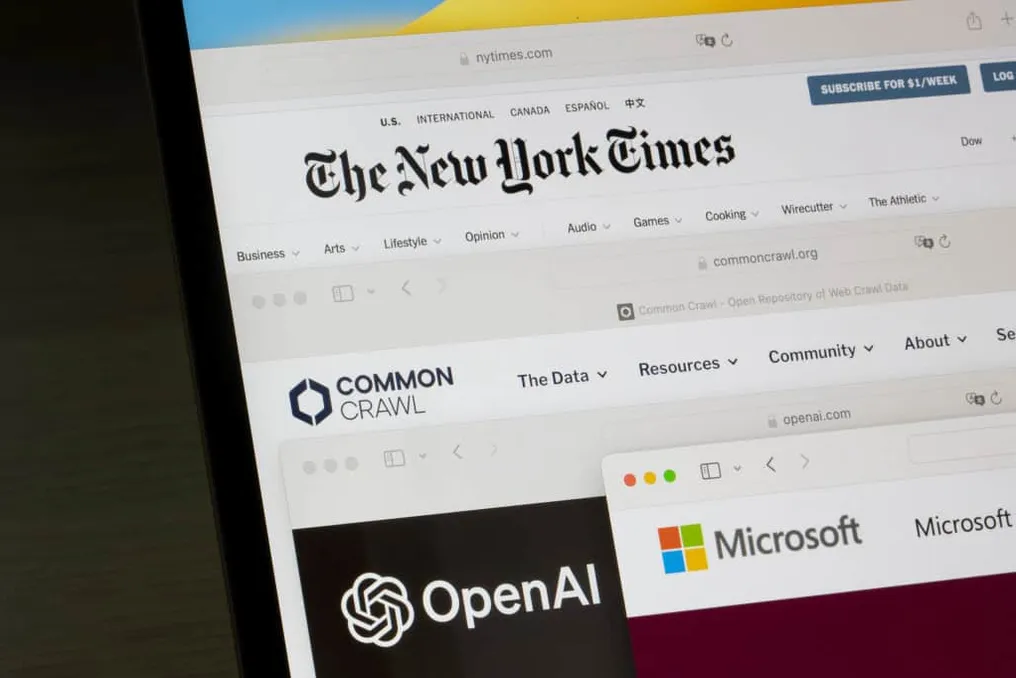
OpenAI is facing a new challenge in a legal dispute brought by media outlets, which accuse it of copyright infringement. The plaintiffs, led by The New York Times, have requested the court to impose 'serious sanctions' against the company. The central allegation is that OpenAI has kept evidence hidden for several years, preventing the analysis of millions of ChatGPT records to find evidence that users were replicating paywalled articles.
These records are considered one of the most crucial pieces of evidence in the case. They could serve both to prove copyright infringement by OpenAI and to strengthen the company's defense that ChatGPT uses journalistic content fairly and transformatively.
In a petition filed this Thursday (9), the journalistic organizations alleged that OpenAI repeatedly lied over two years to conceal evidence that could harm its defense. These alleged falsehoods came to light after the court scheduled a new testimony from OpenAI's privacy engineer, Vincent Monaco, who was initially viewed as a 'poorly prepared witness.' During a new interrogation in April, Monaco allegedly revealed that the company misled the court by claiming for two years that investigating ChatGPT records would be technically complex and costly.
The plaintiffs argue that a fundamental discovery was OpenAI's claim of lacking the technical capacity to analyze large anonymized samples of ChatGPT conversations, even though they had conducted such research before the litigation began. According to the newspapers, retaining this essential information delayed the evidence production phase, increased the cost of the lawsuit, and overburdened the court.
In response to the accusations, an OpenAI spokesperson stated that The New York Times' request for sanctions would constitute a belated attempt to access more records, which would violate the privacy of users not involved in the case. The company representative also suggested that the newspaper's recent withdrawal of some allegations indicated the weakening of the lawsuit. The spokesperson stated: 'As the Times' case weakens and they have been forced to drop allegations against us, they persist in their efforts to invade the privacy of people who have nothing to do with this case, including making these blatantly false claims.' He added: 'We will continue to defend our users' privacy and the long-established principles of fair use.'
However, last month, The New York Times spokesperson, Graham James, countered this view. He explained that the withdrawal of certain allegations did not weaken the case but made it more focused by including accusations against Microsoft. James stated: 'Our core allegations remain the same since the day we filed this lawsuit—that Microsoft and OpenAI stole millions of copyrighted works from the Times to compete with our products and enrich themselves illegally.'
Although much of the motion is under seal, the plaintiffs report that Monaco revealed the existence of two vast already anonymized databases containing about ten million and seventy-eight million ChatGPT records. The newspapers allege that these samples could have been made available from the beginning of the process to expedite evidence collection. They maintain that OpenAI never disclosed the existence of these datasets during the two years of litigation, despite the company having previously researched these databases to find The New York Times content while developing a filter against reproducing protected material.
The plaintiffs accused the company of making the discovery phase 'as burdensome as possible,' as OpenAI was willing and able to search its output records 'when it benefited them.' Ian Crosby, lead attorney for The New York Times, told Ars Technica that OpenAI intentionally hindered access to the records to protect its fair use defense. Crosby stated: 'For more than two years, OpenAI lied to the Times, to the Daily News authors, to the public, and to the court.'
Instead of providing the anonymized samples, OpenAI forced the journalistic organizations to work for eight months in a controlled environment (sandbox), where only a heavily censored sample of twenty million records could be consulted. This volume was considerably smaller than the approximately one hundred and twenty million records initially requested by the plaintiffs. The situation was aggravated because OpenAI used artificial intelligence (AI) to apply about nineteen billion censors to this database. According to the newspapers, the volume of redactions was so large that the court itself classified the sample as 'unusable.' Although part of these redactions was later removed, the plaintiffs allege that domains, names, and other fields relevant to the investigation remain hidden, while OpenAI holds a sample of seventy-eight million anonymized conversations.
The plaintiffs also point out that data search negotiation meetings were excessively long, causing delays in evidence production. Near the end of the discovery phase, OpenAI reportedly communicated that the seventy-eight million record sample had been available for inspection for over a year. To the plaintiffs, this information contradicts the company's stance throughout the process, when it insisted that access to extra records would jeopardize user privacy.
Additionally, OpenAI is accused of randomly deleting parts of the limited twenty million record sample and of excluding or compressing billions of conversations that should have been preserved by court order. The New York Times reported that Monaco said the company simply chose not to comply with the broad court preservation order, deeming it difficult to enforce. The plaintiffs emphasized: 'There can be no doubt about the intentionality of OpenAI's conduct, nor any excuse for its non-compliance. According to Mr. Monaco, OpenAI considered complying with the Court Preservation Order, but then decided not to.'
The journalistic organizations emphasize that their requests for sanctions are not made lightly, but because the gravity of the alleged conduct requires penalties that discourage similar practices by other AI companies. Among the requests made to the court is the prohibition of OpenAI using the twenty million record sample, whose production generated dispute. The plaintiffs also demand that the court recognize that the output records contained substantial reproduction of copyrighted content and prevent OpenAI from denying this.
Another plea is for the jury to be notified about the deletion of billions of records, reinforcing the thesis that the company acted to hide evidence about the impact of its technology on the journalistic market. The plaintiffs argue that 'minor sanctions would not be effective,' maintaining that 'serious sanctions are especially appropriate' due to the alleged misconduct being 'conscious and intentional.' If the court determines the improper conduct, the restriction of access imposed on the journalistic organizations could drastically weaken their defense in the copyright dispute. The plaintiffs concluded that the discussion on whether training AI models with copyrighted content constitutes fair use will largely depend on the ability to prove market harm, with OpenAI's position being affected if the widely redacted record sample is discarded by the court.
On the year of its 250th anniversary of independence, America once again faced a dark chapter of its own history. During hearings in the American parliament, the infamous and dangerous CIA mind control program, 'MK Ultra,' was brought up. These documents have caused a global resonance.
In addition to existing public dissatisfaction regarding the development of the COVID-19 virus in laboratories and funding by American agencies, including the role of Dr. Anthony Fauci, there has been a powerful demand for complete public disclosure of the MK Ultra project files. This raises serious questions about the true nature of a country that proclaims its commitment to democracy and human rights.
MK Ultra was a secret and illegal program of human experimentation conducted by the American intelligence service, the CIA. Officially, this project operated from 1953 to 1973. During the Cold War, there was a fear that people from the Soviet Union, China, and North Korea could control American prisoners and force them to reveal secrets. In response, the CIA launched a project aimed at complete subjugation of the human mind, memory erasure, and turning someone into a 'Manhattan Project candidate.'
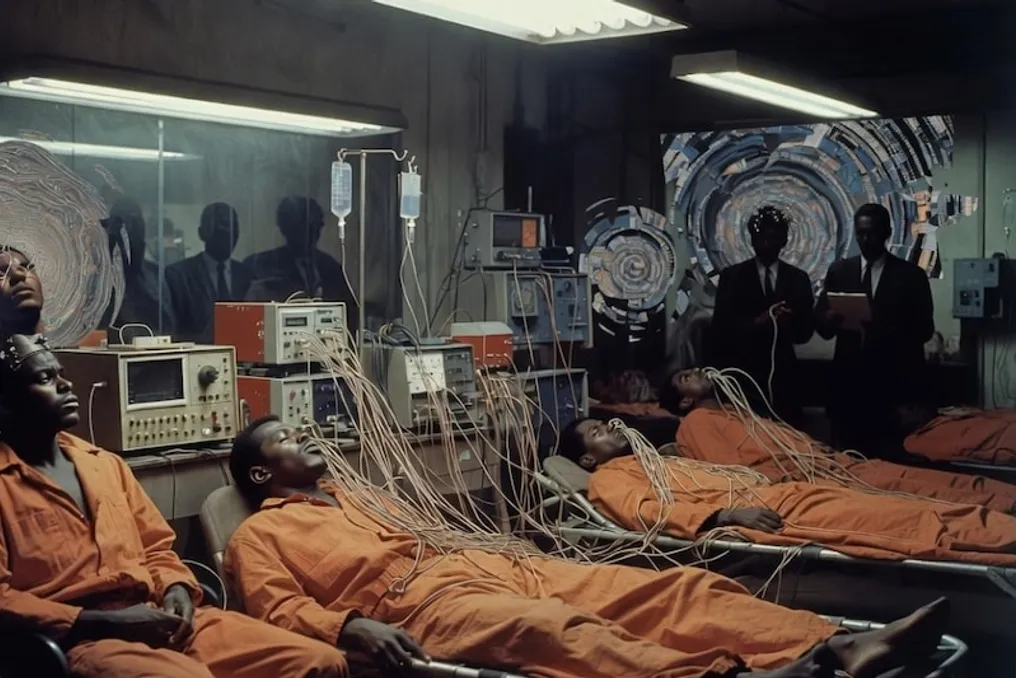
As part of this project, dangerous substances (such as LSD), electric shocks, hypnosis, and extremely painful forms of psychological pressure were applied to American citizens, prisoners, mentally ill patients in hospitals, and ordinary people without their consent or knowledge. Many subjects permanently lost their mental balance, and some died. When the program was concluded in 1973, the then-CIA director ordered the destruction of most of the files so that the truth would never surface.
On June 30, 2026, an extremely tense hearing took place in the American parliament, led by Ana Polina Luna, head of the 'Federal Secrets Declassification Working Group.' Luna stated that MK Ultra was not a mere government mistake but a deliberate and planned network that was subsequently attempted to be covered up by destroying evidence.
Luna emphasized that administering drugs to people without their knowledge or consent, subjecting them to psychological pressure, and using prisoners and hospital patients as research subjects without their consent constitutes a crime against humanity. She added that victims and their families have the right to justice and accountability.
Among the witnesses invited to the parliament were renowned authors of books on this topic. They testified about the existence of secret CIA prisons in Germany and the conduct of biological weapons research during the Cold War. It was also noted that MK Ultra experiments were conducted in detention centers in Japan and the Philippines.
Investigative journalist Dr. Stephen Ginger, who testified, demanded that the committee fully publish these files. He reported that, according to his information, a group of African American prisoners at the Lexington Federal Prison in Kentucky was first isolated and then administered double, triple, and quadruple doses of the drug LSD over 77 days. When asked by Senator Nancy Mace about the fate of these individuals, Ginger replied that he did not know and that this question has concerned him since writing the book.
Senator Mace asked Ginger whether similar experiments are currently being conducted on prisoners or elsewhere. Ginger replied that he was not aware of it.
A significant aspect of the hearing was that it was not limited to historical analysis. The MK Ultra project was linked to the current threat—the origin of the COVID-19 virus and debates surrounding vaccines. The US public is increasing suspicions about whether American agencies are conducting similar dangerous and secret bio-experiments behind the backs of the people today.
Parliamentarian Ellie Crane posed sharp questions to Dr. Elizabeth Gineksi, a former researcher at the National Institutes of Health (NIH). She asked if the same model of opacity demonstrated by the NIH and American agencies regarding the origin of COVID-19 and laboratory funding had destroyed citizens' trust in the government and science. Dr. Gineksi admitted that the lack of transparency causes enormous damage. She noted that the biggest problem undermining trust in American science is the premature termination of clinical trials, which is extremely harmful to patients receiving treatment within the experiments.
Republican Ana Polina Luna expressed concern that the game of mind control might not be over. She asked the witnesses whether the American agency USAID has used to continue secret experiments similar to MK Ultra on prisoners of war abroad. Luna reported receiving recent reports of new files related to MK Ultra containing secrets connected to CIA fabrications or forged documents.
The reality turned out to be far more horrifying than in the Hollywood film 'MK Ultra' (2022), which depicted patient torture using LSD under the guise of treatment. Unlike the movie, where the plot revolves around a few characters, the real network of this project spanned dozens of universities, hospitals, and pharmaceutical companies. The greatest fear is that the public could be involved in some major global experiment under the pretext of virus and vaccine research without any notification.
For Indian citizens, who traditionally view America as a model of democracy, this revelation undermines the image of a 'superpower' and 'defender of human rights.' This dark episode makes the world wonder to what extent the country that preaches morality to the world can fall into the hands of intelligence services in pursuit of power and control. Until the American government discloses all secrets concerning MK Ultra and COVID funding, restoring global trust in the country will be impossible.