Diogo Pires, initially a Magic card collector, discovered that his collection could finance the house of his dreams. This experience reflects the transformation of the collectible card market in Brazil, which has evolved from a niche pastime to a robust financial asset, supported by a professional ecosystem and impressive data.
The global Trading Card Games (TCG) market was estimated at US$ 8.4 billion in 2025, with projections indicating this value could double by 2035, reaching US$ 16.9 billion, representing an annual growth close to 7%. Specifically, the Magic: The Gathering franchise generated US$ 1.7 billion in revenue in 2025, marking a 59% increase compared to the previous year, being the main factor for Hasbro's total revenue of US$ 4.7 billion that year. In the fourth quarter of 2025, driven by the releases of Avatar: The Last Airbender and Final Fantasy, Magic registered a notable growth of 141% compared to the same period in 2024.
In this scenario, Brazil holds a central position, accounting for over 60% of all TCG transactions in Latin America. Nearly 25 years ago, Diogo and his partner Rafael Giovanini founded LigaMagic, initially as an amateur project focused on creating a space for the Brazilian Magic community. The platform's differentiator was not technology, but its focus on the community and, subsequently, support for retail trade. Unlike Argentine and Chilean platforms, LigaMagic provided essential infrastructure, such as a marketplace, an online store system, and tournament support. This resulted in approximately 700 TCG stores in Brazil, compared to a few dozen in Argentina and about 50 in Chile, demonstrating how infrastructure fosters market growth.
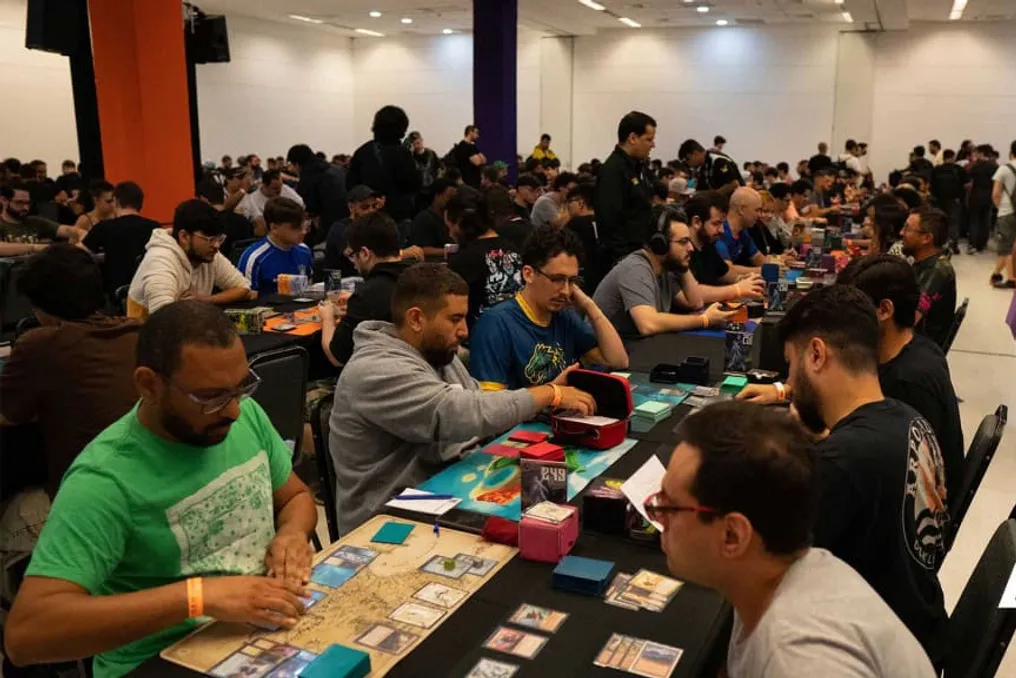
The LigaFest event originated as Circuito LigaMagic about 13 years ago, with the initial purpose of organizing a national tournament bringing together the country's best players. Diogo related that his dream was to attract new participants to the competitive side of the game, which materialized. After the pandemic, there was a strategic expansion: the focus shifted from exclusively Magic to encompass the entire universe of card games. The event was renamed LigaFest and began to include circuits for Pokémon, One Piece, and other titles. The first edition under the new format attracted 7,000 people to Shopping Frei Caneca, in São Paulo. The fourth edition, scheduled for July 11 and 12, 2026, already has over 10,000 registered participants, with a forecast to reach 12,000 attendees. The event takes place twice a year, in July and December, and already has a contract signed for December with a space 60% larger.
The discussion about investing in collectible cards has transcended the niche, gaining presence on YouTube channels, Instagram profiles, and Reddit threads. However, some confusion persists regarding the market dynamics, especially when comparing Magic with Pokémon. In the case of Pokémon, the value is determined by intrinsic rarity and condition (grading), as exemplified by the graded 10 Charizard card, sold for about US$ 18 million in a Netflix documentary, where the game is secondary. In Magic, the logic is different and more accessible; the cards that appreciate in value are mainly those used in competitions and that are no longer reprinted. An example cited is the Dual Lands, lands that Diogo kept for decades, whose value rose from R$ 10 to R$ 1,000. Diogo states that those who play Magic view the expense as an investment, unlike activities such as going to the cinema. Although not everyone invests in houses with decks, the secondary market demonstrates liquidity and attracts both experienced players and speculators.
The current scenario is marked by the rapid rise of new titles. At the 4th LigaFest, besides the big names, there will be tournaments for One Piece, Lorcana (Disney), Riftbound (League of Legends card game), Star Wars, Dragon Ball, and five TCGs produced in Brazil: Oromã, EDTCG, Fábula, Seia, and Ecos da Guerra. This Brazilian group is notably important because they are developing games that have a loyal audience and dedicated space in the event for promotion. These initiatives strengthen the long-term foundation of the ecosystem. Furthermore, integration with popular intellectual properties is changing the profile of players. Diogo observed that his brother, previously uninterested in Magic, started playing after acquiring cards from the Final Fantasy collection, migrating to something more tactical and physical.
The market shows a pattern of consecutive growth over fifteen years, challenging conventional analyses, with 2025 being the strongest year. Diogo maintains a well-founded optimism, recognizing that challenges such as saturation caused by rapid Magic releases are already being addressed by companies. Wizards has reduced the pace of releases, and The Pokémon Company actively monitors the distribution chain to prevent overvaluation. These adjustments signal a market seeking to ensure its longevity, not just accelerated growth, with Diogo predicting a very positive future for the sector.
The fourth edition of LigaFest will take place on July 11 and 12, 2026, at Shopping Frei Caneca, in São Paulo (SP), with free entry upon online check-in. The event will feature over 60 tournaments, distributing R$ 260,000 in prizes, including finals of LigaMagic National Circuits (R$ 72 thousand), LigaPokémon (R$ 13 thousand), and LigaOnePiece (R$ 12 thousand). There will be a Magic: The Gathering Legacy Tournament with prizes up to R$ 50,000 and a Pauper Trio Tournament with R$ 15,000 in prizes. Live card grading services, trading areas, and learning spaces with Copag, Asmodee, and Geek Culture will be offered. The five Brazilian TCGs will have a dedicated area, and a meeting with content creator Gaveta is scheduled for Sunday, the 12th. It is estimated that the event will move over R$ 2 million in card transactions.