India confirmed on Friday that the Indus Water Treaty (IWT) will remain suspended until Pakistan convincingly and unequivocally ceases supporting cross-border terrorism.
India's Stance on the Treaty
The Indian Ministry of External Affairs emphasized that the country's position regarding this treaty remains unchanged. Official spokesperson Randhir Jaiswal stated that 'the IWT is on standby in response to Pakistan's continued support for cross-border terrorism. Pakistan must convincingly and unequivocally cease supporting cross-border terrorism.'
Reasons for Suspension
Following the incident in Pahalgam last year, India suspended the 1960 IWT, stating that blood and water cannot go together. These statements came after Pakistan rejected an alleged attempt by India to control the rivers this week, viewing water as a 'strategic asset.'
Pakistan's Reaction
Pakistani Foreign Ministry spokesperson Tahir Andrabi reported that Pakistan rejected 'India's attempt to level baseless accusations of terrorism as a pretext for suspending the IWT and obstructing the legitimate flow of Pakistani waters.' Andrabi also asserted that 'the real problem is not terrorism. The real problem is the growing tendency in the Indian leadership to view the entire international river system as a strategic asset that can be controlled, held, or diverted at its discretion.'
Water Resource Distribution
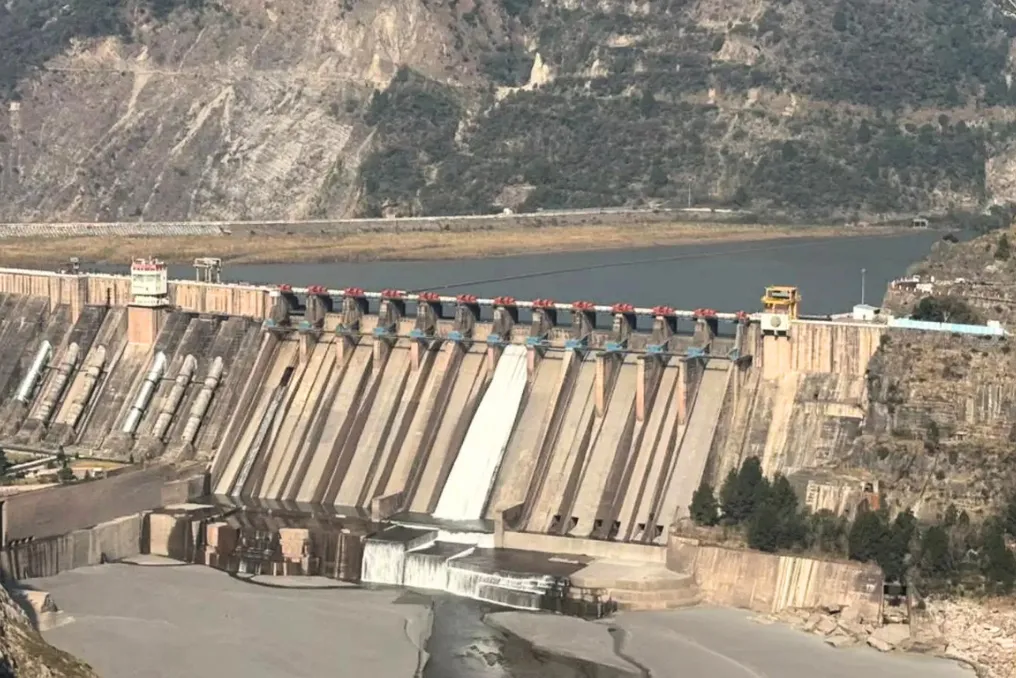
The IWT, mediated by the World Bank, allocates eastern rivers (Beas, Ravi, and Sutlej) between India, and western rivers (Indus, Chenab, and Jhelum) between Pakistan. Certain provisions also allow India to use the western rivers for limited irrigation and non-consumptive needs such as power generation.
International Reaction and Proposals
During an 'international seminar' on the IWT on Wednesday, Pakistani Foreign Minister Ishaq Dar stated that India's position constitutes 'the militarization of water' and could have serious consequences for regional peace and security. The seminar was also attended by PPP leader Bilawal Bhutto, who compared India's decision to suspend the IWT to blocking the Strait of Hormuz.
Randhir Jaiswal's assertion that negotiations with Pakistan cannot resume until the cessation of terrorism support also marked a rejection of the call by 'notable' citizens of India and Pakistan to initiate bilateral talks. This group included former Jammu and Kashmir Chief Minister Farooq Abdullah, former RAW chief A. S. Dulat, and Humayun Kabir, a West Bengal legislator who caused controversy by attempting to build a replica of the now-demolished Babri Masjid.