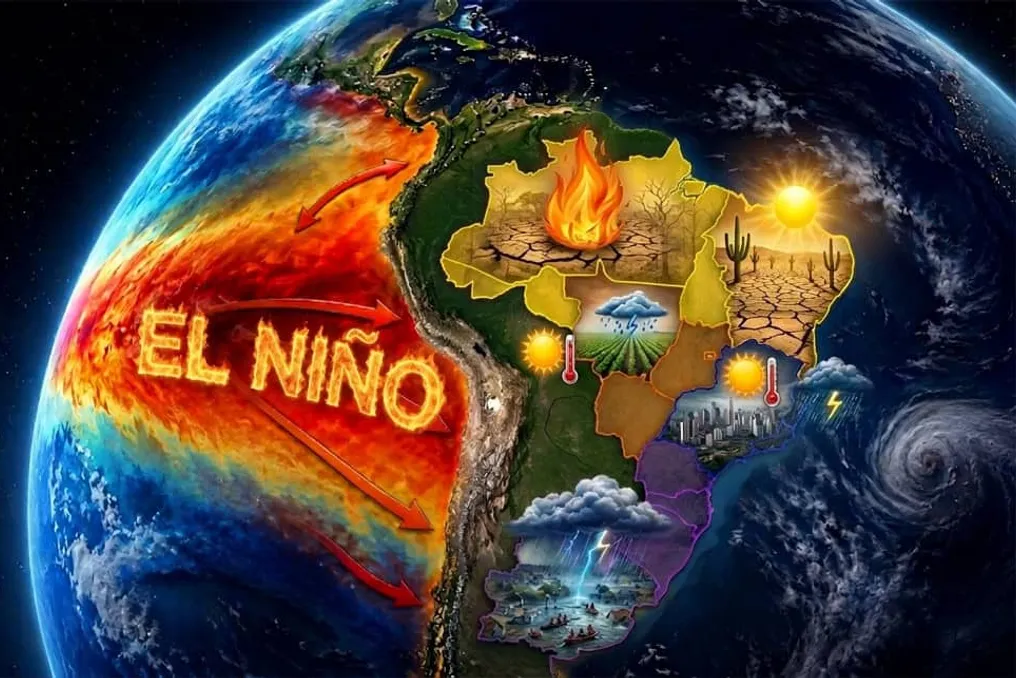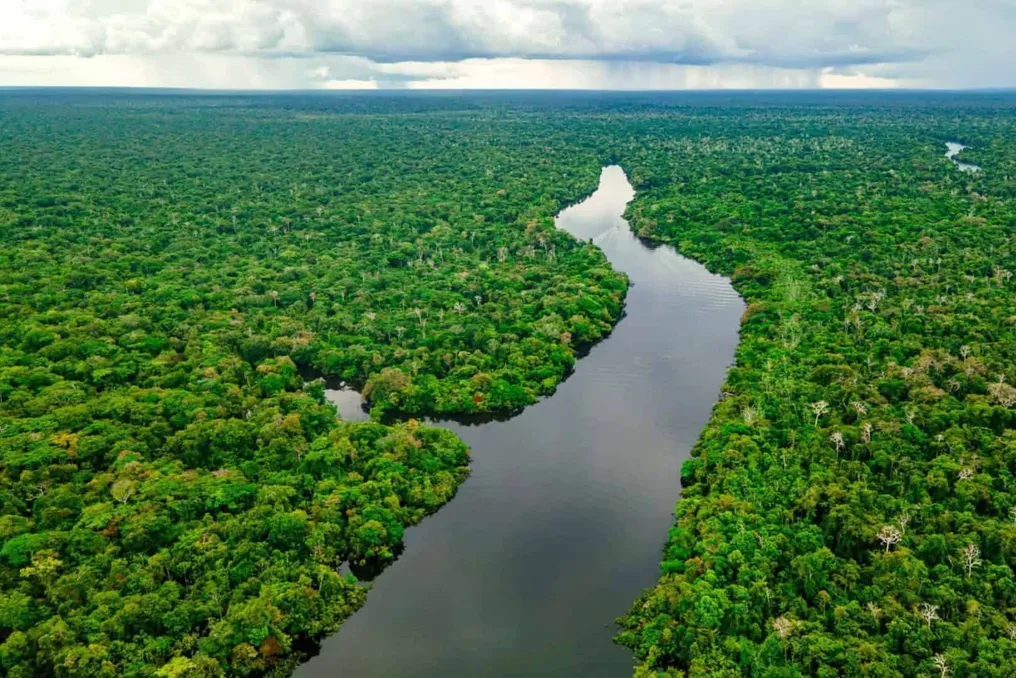
A new study indicates that the Amazon, which currently stores approximately 123 billion tons of carbon—surpassing any other global terrestrial ecosystem—risks becoming a source of climate threat instead of a protective mechanism.
El Niño's Impact on Forests
During intense El Niño periods, tropical forests in South America may cease absorbing carbon dioxide (CO₂) and, conversely, begin releasing carbon into the atmosphere, as detailed in a 2023 study published in the journal Nature Climate Change.
This study was conducted by scientist Tom Pugh from the University of Birmingham, with the collaboration of over one hundred researchers. The concern becomes even more pressing because the NOAA, the American meteorological agency, recently confirmed the start of a new El Niño event, warning that 2026 could record the highest temperature ever observed.
Climate Change Mechanisms
Normally, tropical forests capture CO₂ through photosynthesis, converting this carbon into biomass. However, this balance is sensitive and critically depends on temperature and water availability. Under conditions of severe heat and drought, plants close their leaf pores to conserve water, but it is through these pores that they absorb the CO₂ essential for growth. Without CO₂, photosynthesis stops.
Additionally, when trees succumb to climate stress, the carbon accumulated in their trunks is returned to the atmosphere during decomposition, an effect that lasts for several decades. The study demonstrated that during the 2015-2016 El Niño, when land temperatures exceeded the average by at least 1°C, a portion of South American tropical forests effectively stopped sequestering carbon.
Methodology and Vulnerability
To support its conclusions, scientists monitored over 500,000 trees across six South American nations over more than three decades, using measuring tapes to track the development of more than 4,000 distinct species. This data allowed for precise estimates of the carbon contained in above-ground biomass.
The findings revealed that the driest forest areas, located on the margins of the Amazon—regions where trees already suffer from recurrent water scarcity—showed greater susceptibility. On average, a 0.5°C increase in temperature resulted in a 0.5% loss of carbon in these above-ground forests.
Effect on Larger Trees
An increase in the mortality rate of trees in South American tropical forests was observed, jumping from 1.8% to 3% annually during the El Niño period. However, the death rate specifically doubled for medium and large trees, those with a diameter greater than 20 cm.
Researchers noted that larger trees, but with less dense wood, died in significantly higher proportions compared to smaller trees or those with denser wood. This pattern is attributed to hydraulic failure, a phenomenon where high atmospheric demand for moisture breaks the tension within the tree's water column, comparable to the snapping of a stretched rope.
Near-Future Concerns
The current warning transcends past records, given that there has never been an El Niño that began with oceans already so warmed and atmospheric temperatures already elevated. Furthermore, in the last three decades, the edges of the Amazon have recorded some of the fastest and highest temperature increases ever documented in the tropics.
When a major climate change occurs before the forest can recover from the accumulated stress of previous years, its fundamental structure is already compromised. The combination of these elements establishes the risk of carbon and tree losses on unprecedented scales. The researchers concluded the article published in The Conversation stating: 'The future of the Amazon depends on this—and so does ours.'