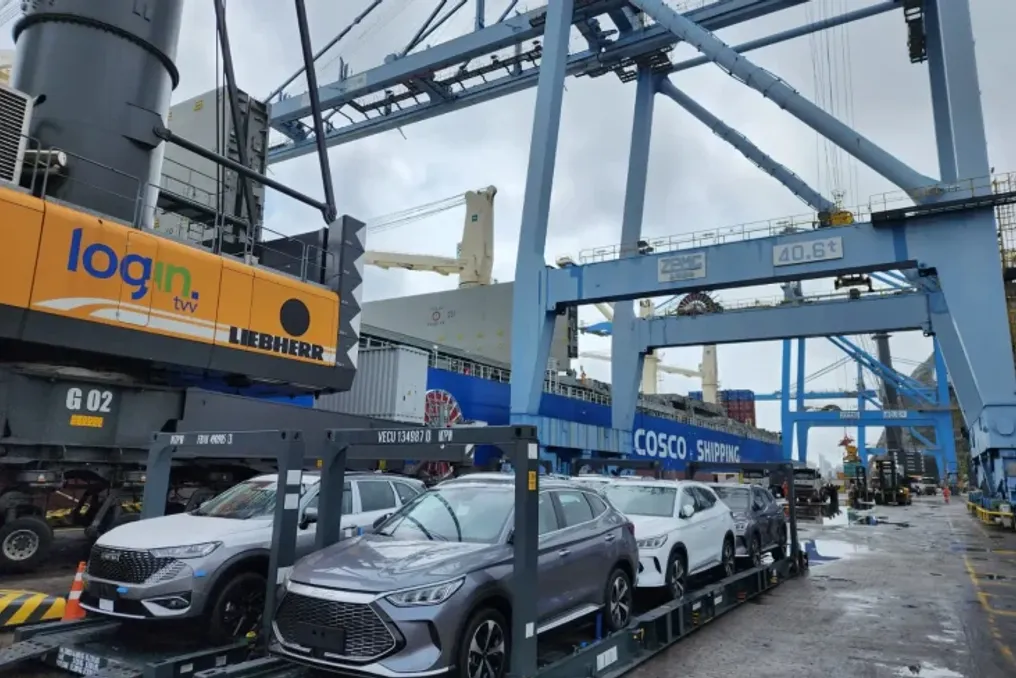
The federal government decided to extend the import quotas for electric and hybrid vehicle kits (CKD and SKD) which benefit from a total tax exemption. This determination, validated by the Executive Management Committee of the Foreign Trade Chamber (Gecex-Camex), ensures that the fiscal benefit, which was scheduled to end in January 2026, remains active for another six months.
Automotive Sector Reactions
The renewal generated strong dissatisfaction from major industry entities, such as the National Association of Automotive Manufacturers (Anfavea) and the Federation of Industries of the State of São Paulo (Fiesp). Established automakers express discontent, arguing that maintaining zero tax favors Chinese manufacturers who are establishing themselves in the country.
In a statement, Anfavea classified the measure as contrary to the interests of both workers and national Brazilian vehicle and auto parts industries. The association also highlighted that the decision was made without consulting the productive sector, abruptly altering a previous Federal Government policy aimed at balancing the expansion of electromobility with attracting long-term investments.
Details of the New Resolution
The new resolution issued by the Ministry of Development, Industry, Trade and Services (MDIC) determines that, starting July 1st of this year, electrified vehicles imported in disassembled or semi-disassembled formats will have a zero tax rate. This benefit has a ceiling established at US$ 463 million, corresponding to approximately R$ 2.4 billion.
If this limit is exceeded, semi-disassembled models (SKD regime) will be taxed at the full tariff of 35%, while fully disassembled models (CKD regime) will be taxed at 14%. It is important to note that the importation of complete electric and hybrid vehicles remains outside the scope of the benefit, maintaining the maximum rate of 35% according to the gradual imposition schedule defined at the end of 2023.
Differences Between Production Methods
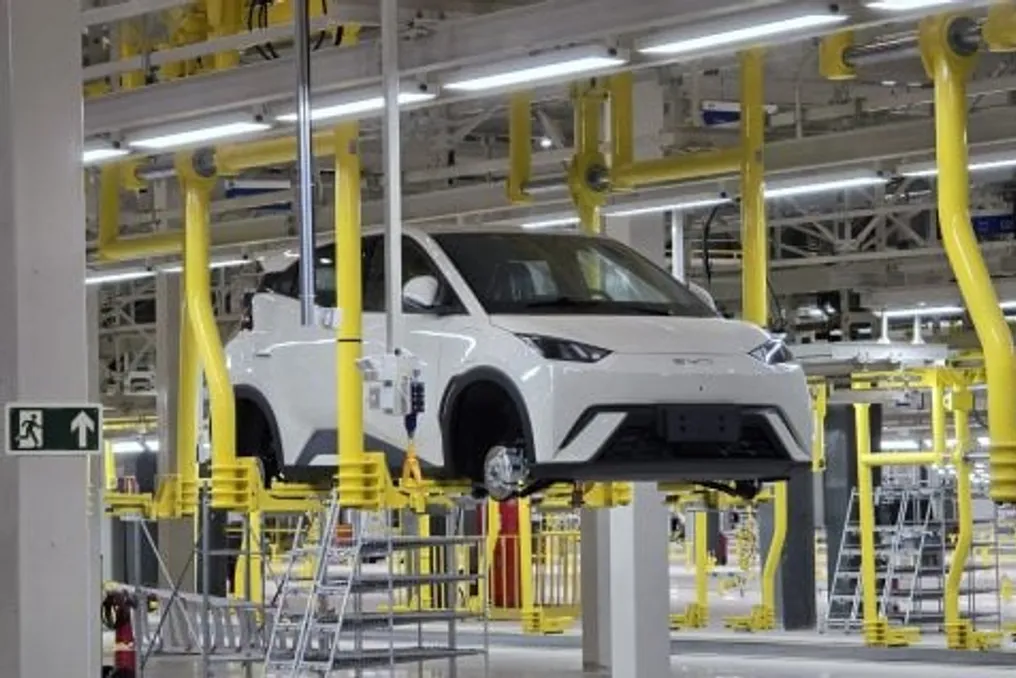
The terms SKD and CKD refer to simplified assembly processes that use imported components. In the SKD method (semi knocked-down), the car arrives at the assembly line in an almost ready state, requiring only simple assembly, with the body painted, finishes and mechanics already ready, in addition to tires mounted on wheels.
In the CKD method (complete knock-down), the kit arrives more disassembled, allowing for the participation of local suppliers and, in some cases, the body painting occurs on the assembly line, requiring greater production complexity and more labor.
Full production, on the other hand, implies that practically all manufacturing phases, including engineering, welding, painting, final assembly, and extensive use of local suppliers, occur within the national territory.
Impact of Chinese Manufacturers
The discontent of traditional automakers stems from the fact that the reactivation of the zero tax benefits Chinese manufacturers, who are beginning to produce domestically, specifically citing BYD. BYD, for example, is finalizing the installation of its factory complex in Camaçari, Bahia, utilizing former Ford facilities.
Igor Calvet, president of Anfavea, vehemently criticized the lack of transparency in the process and the sudden change in rules, stating that the government excluded the main agents of the national automotive industry from fiscal negotiations. The entity declared that, despite valuing institutional dialogue, it will not hesitate to resort to the Judiciary.
View of Chinese Companies and Experts
Milad Kalume Neto, executive director of K.LUME and industry expert, argues that the temporary maintenance of incentives for kits is crucial to prevent a price increase in electrified models for the final consumer and accelerate the energy transition. According to him, this decision allows partner companies to:
- Increase their stocks while factories are not operational;
- Expand their market presence, maintaining their local reputation;
- Avoid raising prices when restocking, protecting their margins;
- Strategically attack higher-value segments, such as SUVs;
- Implement more commercial incentives, such as discounts or subsidized rates.
Kalume also observes that the zero tax until the end of the year supports the transition from CKD/SKD to local production, giving time for automakers to complete factory installation. He recalls that most traditional companies started with the importation of complete vehicles (CBU) and progressed to CKD/SKD before achieving local production, and that no company would enter a market without first testing it.
Conversely, Ari Araújo Jr., coordinator of the Economic Sciences course at Ibmec BH, argues that the measure fosters competition and may result in price drops. He adds that the quotas can accelerate the acceptance of electric vehicles, facilitate the entry of new automakers, and promote Brazil's inclusion in global production chains.
Risks of Uncertainty and Economic Impact
Anfavea warns that relaxing the import tax collection on electric cars via SKD/CKD kits puts the sustainability of the Brazilian manufacturing ecosystem at risk. A technical study by the entity points to a potential loss of R$ 24.3 billion in federal tax revenue and the risk of eliminating 68 thousand direct jobs, totaling 191 thousand jobs in the production chain.
Fiesp joined the criticism, accusing the federal government of violating the principle of legal certainty by changing tax directions unexpectedly. For Milad Kalume, the main damage lies in the lack of predictability, something heavily questioned by foreign investors. Ari Araújo Jr. reinforces that the automotive industry requires substantial and long-term investments, and constant changes increase uncertainty and investment costs, potentially leading companies to postpone or reduce projects in the country.
Regarding employment, there is a negative risk in the existing chain, especially in auto parts, which depends on local production. However, there may be compensation in assembly and distribution, depending on company strategy. The economist also points out that lowering the import cost of kits reduces the stimulus for complete local manufacturing, decreasing national added value. It is a dilemma between immediate price gains and efficiency versus potential future losses in productive capacity.
Milad Kalume adds that the jobs generated in Brazil through the SKD regime, linked to tooling, welding, and assembly, are becoming obsolete due to advances in the Chinese industry. New emerging functions in the chain include software development and low-cost ADAS technologies. He emphasizes the need for local production with long-term technological exchange, warning that the Federal Government must end import quotas to prevent companies from indefinitely accepting the extension of benefits.
Harm to the Auto Parts Sector
Anfavea's study also predicts that the massive assembly of imported kits could cause losses of about R$ 96.8 billion in sales for the national auto parts sector, represented by Sindipeças. Milad Kalume explains that the SKD and CKD regimes reduce demand for local parts, resulting in lower investment and less local technological advancement, in addition to hindering knowledge transfer between headquarters and branches. He concludes that Brazil has the capacity and intelligence to develop this area, but it requires non-political long-term planning, mentioning new Chinese investments exceeding R$ 130 billion.
} , {